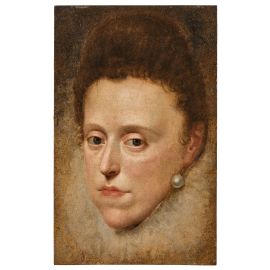


Frans Pourbus the Younger
(Antwerp, ca. 1569 – Paris, 1622)
PORTRAIT OF ELEONORA DE’ MEDICI GONZAGA
oil on paper laid down on canvas, 35x21.5 cm
RITRATTO DI ELEONORA DE’ MEDICI GONZAGA
olio su carta applicato su tela, cm 35x21,5
The painting is accompanied by a critical catalogue entry by Raffaella Morselli, dated 14 December 2023.
Son of the painter Frans Pourbus the Elder and nephew of Pieter Pourbus, Frans Pourbus the Younger (Antwerp, 1569 – Paris, 1622) was one of the most celebrated European portraitists of the late 16th and early 17th centuries. Trained in the Flemish tradition and later active at the major Italian and European courts, he achieved an extraordinary reputation thanks to his ability to combine the analytical rigor of the Northern tradition with the grandeur and elegance of Italian portraiture.
After an initial stay in Italy, in 1600 he was summoned to the court of Mantua by Duke Vincenzo I Gonzaga, who appointed him court painter. During his service to the ducal family, which lasted until 1609, Pourbus became the principal artist responsible for the official image of the Gonzagas, creating numerous portraits of members of the dynasty and the aristocratic circle, intended not only for family representation but also to promote the political and cultural prestige of the Mantua court among other European courts.
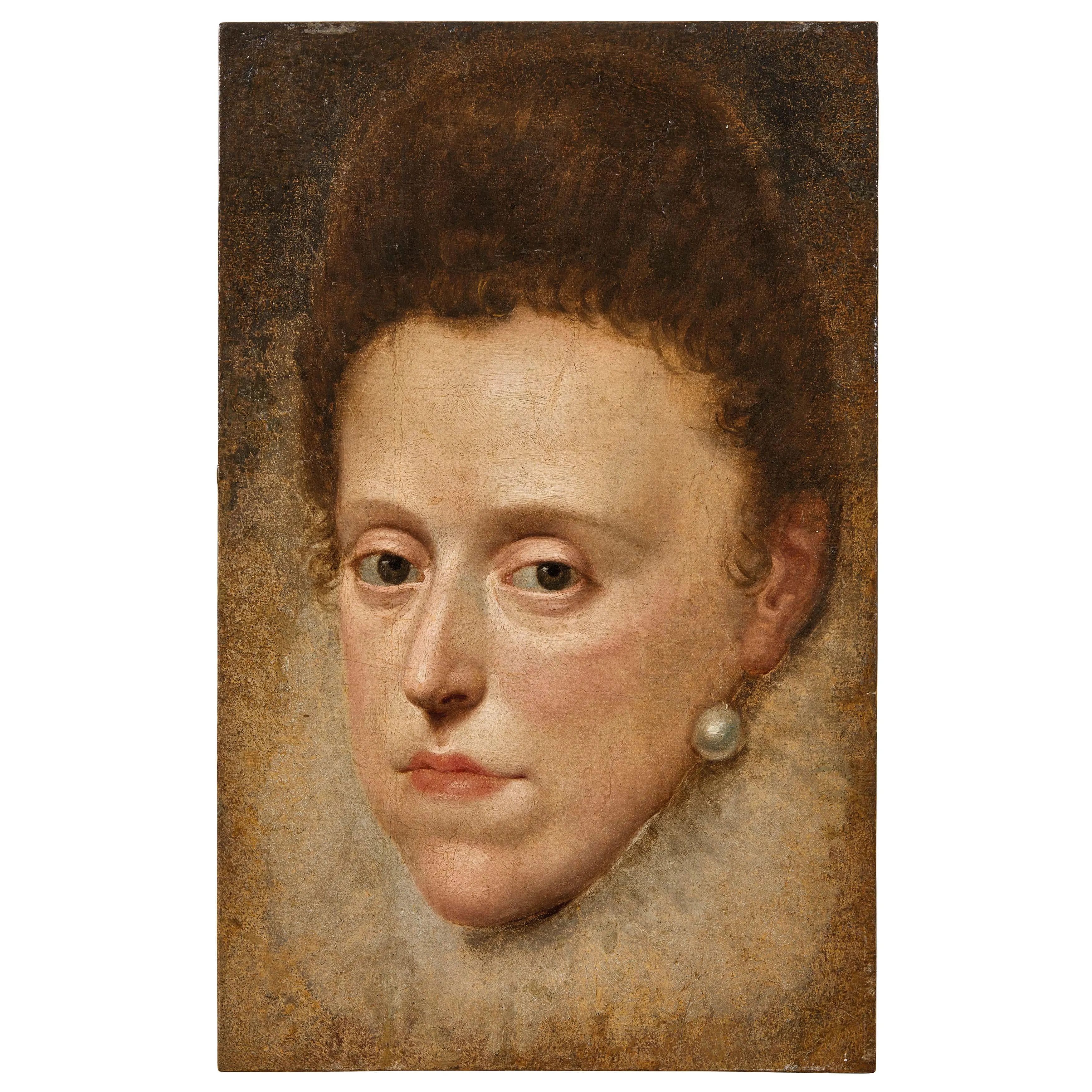
Our drawing depicts Eleonora de’ Medici, the eldest daughter of Grand Duke Francesco I de’ Medici and Giovanna of Austria, who married Vincenzo I Gonzaga, the future Duke of Mantua, in April 1584.
Based on current knowledge, it is not yet known whether a full-length portrait of the duchess has survived. However, the existence of the Portrait of Vincenzo I Gonzaga (formerly in the Cavriani collection, now in a private collection in Rome) suggests the existence of a similar portrait of Eleonora, likely conceived as a pendant (as in the case of the paintings of Albert VII of Habsburg and Isabella Clara Eugenia of Habsburg). Supporting this hypothesis is the mention of a “Portrait of the Duchess of Mantua” signed by Francesco Pourbus and dated 1602, formerly in Pietro Caminati’s Mantua collection and published in the Gazzetta di Mantova on August 7–8, 1809. The signature and date suggest that this was the original painting, from which numerous copies in various formats -primarily half-length portraits - were derived, in accordance with the Flemish painter’s customary practice.
The circulation of such images is confirmed by the 1626–1627 inventory of the assets of the Ducal Palace in Mantua, which lists “a painting depicting Madame Eleonora with a frame adorned with gold” and “a painting depicting the portrait of Madame Mother, half-length, with a frame.” It is likely that one of these versions corresponds to the canvas now preserved in Florence, in the Palatine Gallery of the Palazzo Pitti (inv. no. 187), which was sent in 1654 to Cardinal Leopoldo de’ Medici by his Venetian agent Leopoldo del Sera. Another version, however, could be identified with the painting mentioned in the 1665 inventory of the Ducal Palace in Mantua as “portrait of Madam Eleonora by Purbes.”
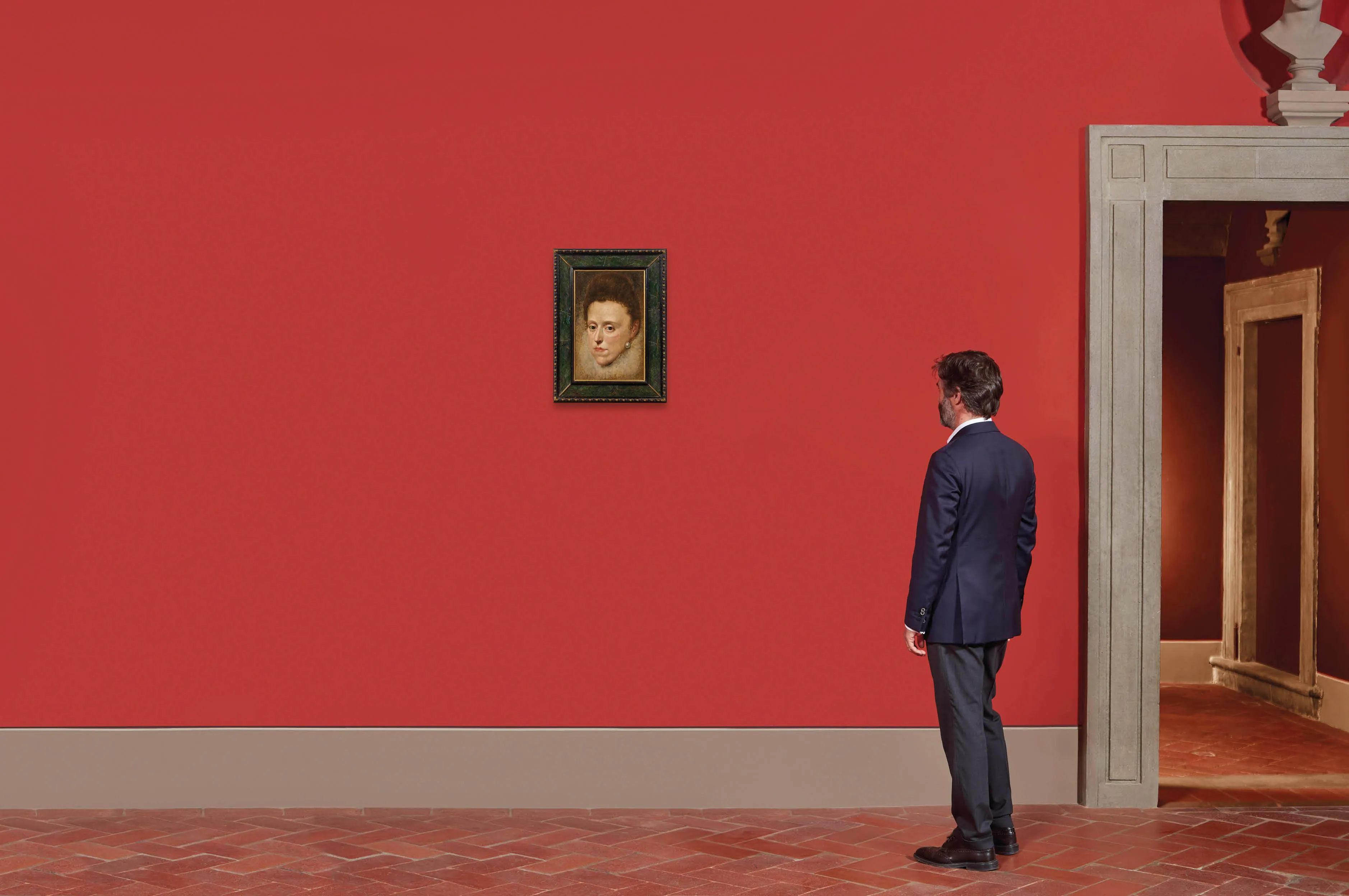
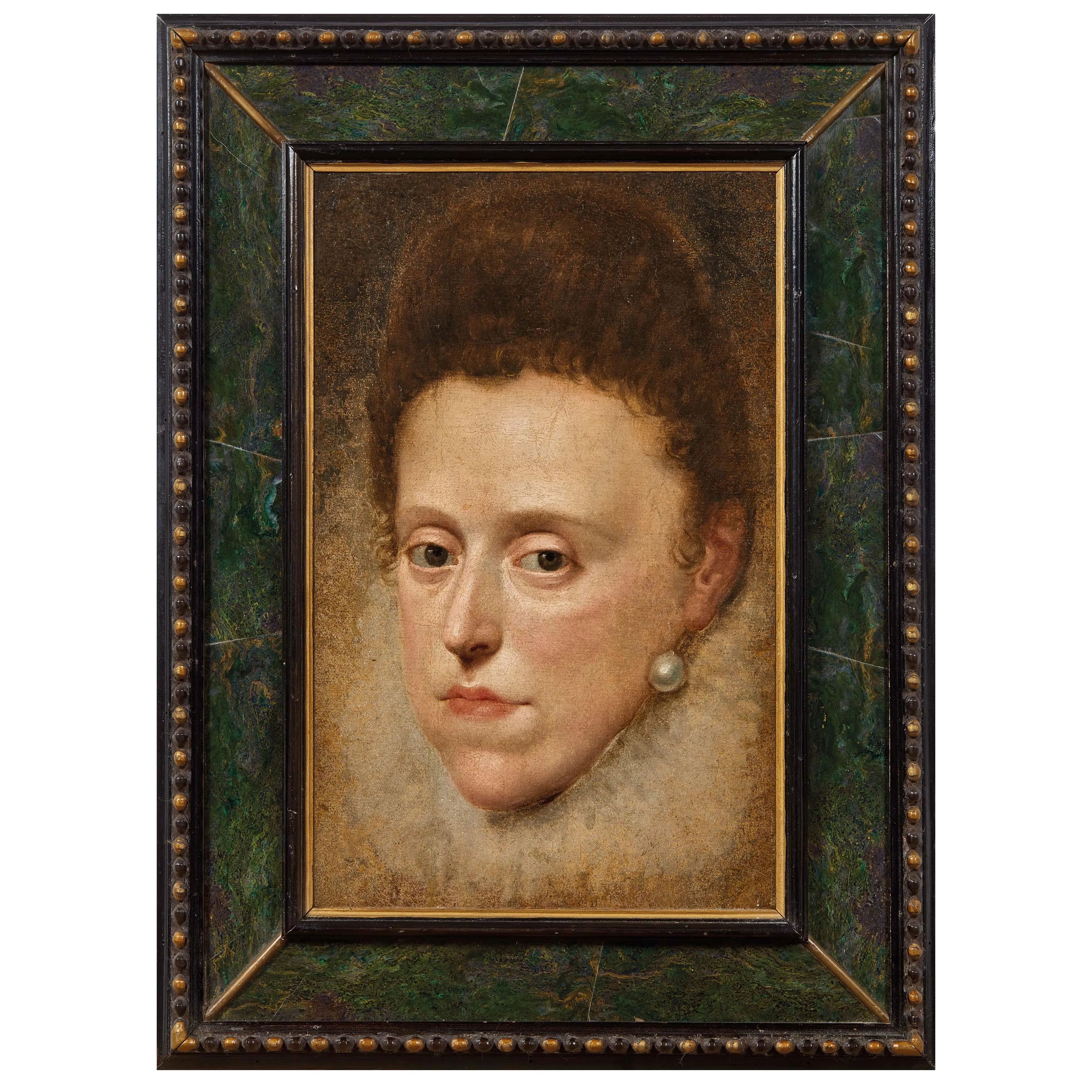
If, therefore, the full-length portrait of the duchess remains to be identified, this head study takes on a very special significance: the subject is depicted with a solemn and proud gaze, framed by a snow-white ruff and simple hairstyle, rendered with delicate and vibrant brushwork. The face, modeled through soft chiaroscuro transitions, is enlivened by touches of color on the eyes, lips, and the elegant earring, while subtle highlights emphasize its contours and foreshadow the future development of the official portrait. This drawing captures the duchess’s features with extraordinary immediacy, revealing Pourbus’s refined sensibility as a portraitist and bearing witness to the deep rapport between the Flemish painter and his illustrious patron.