
Antonio di Donnino del Mazziere
(Florence, active between the third and fifth decades of the 16th century)
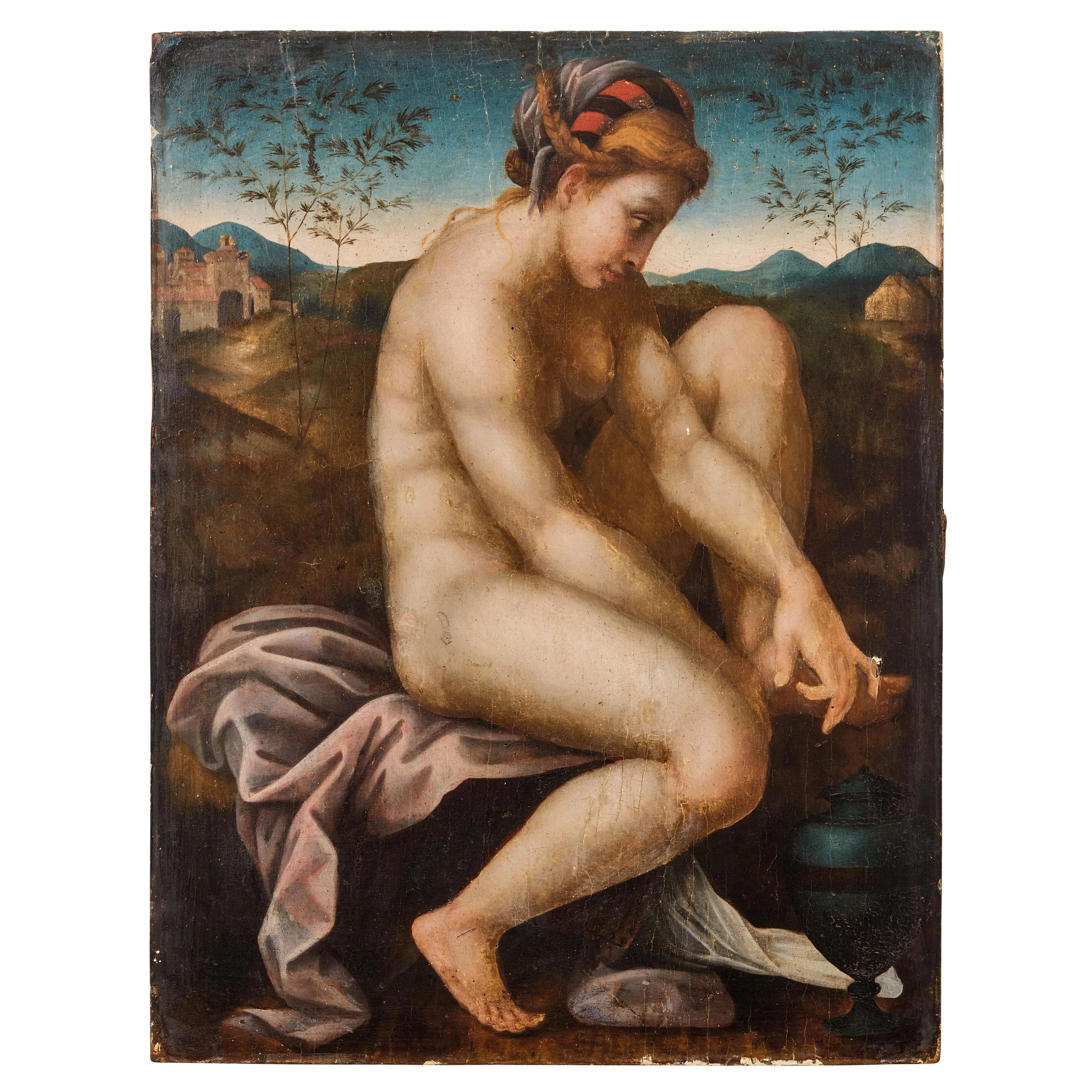
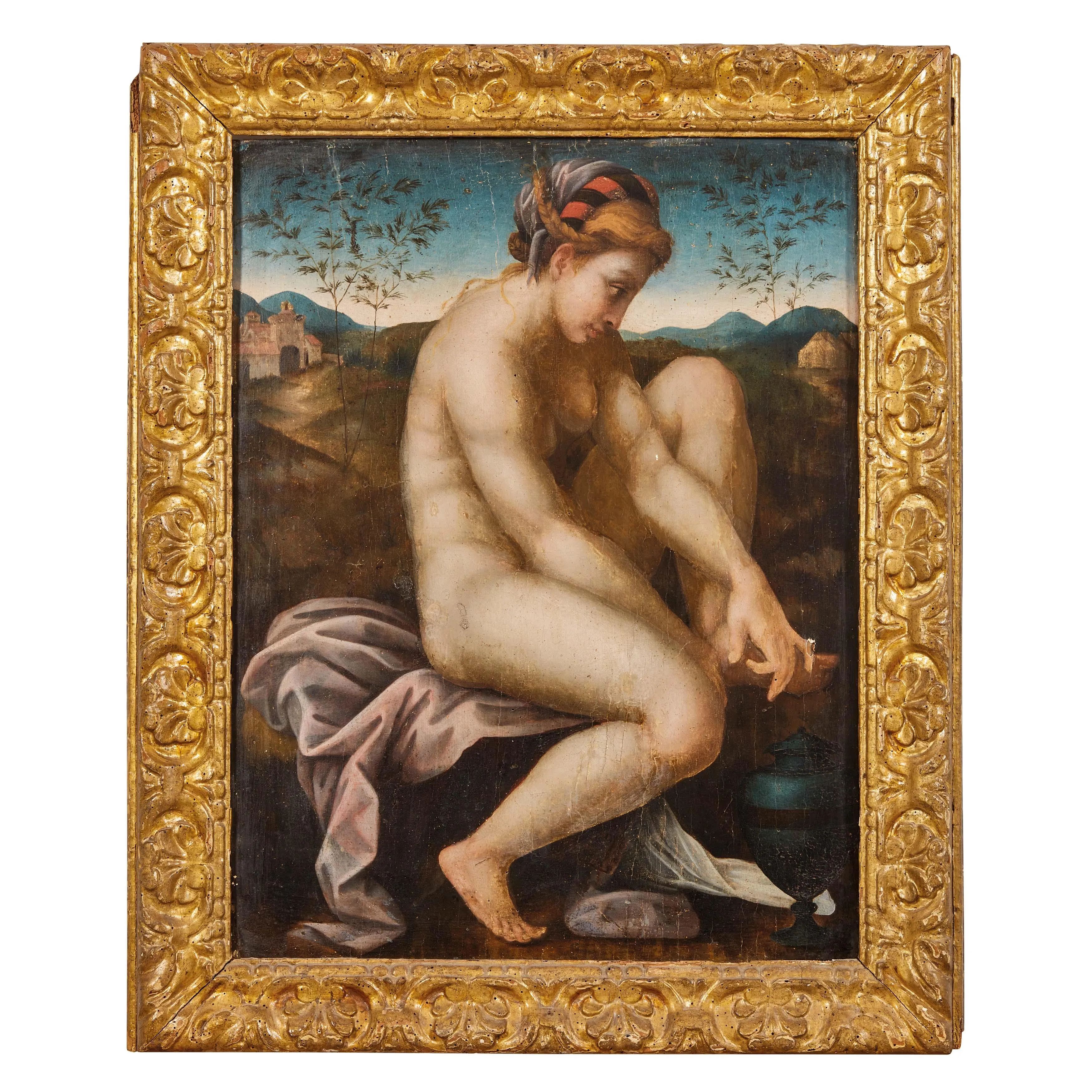
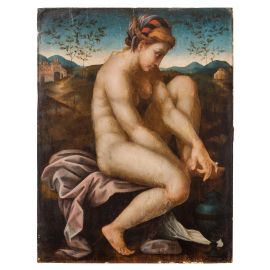
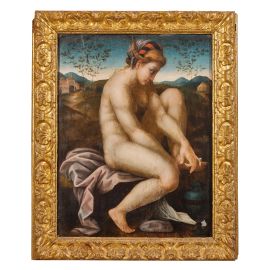
SPINARIA VENUS
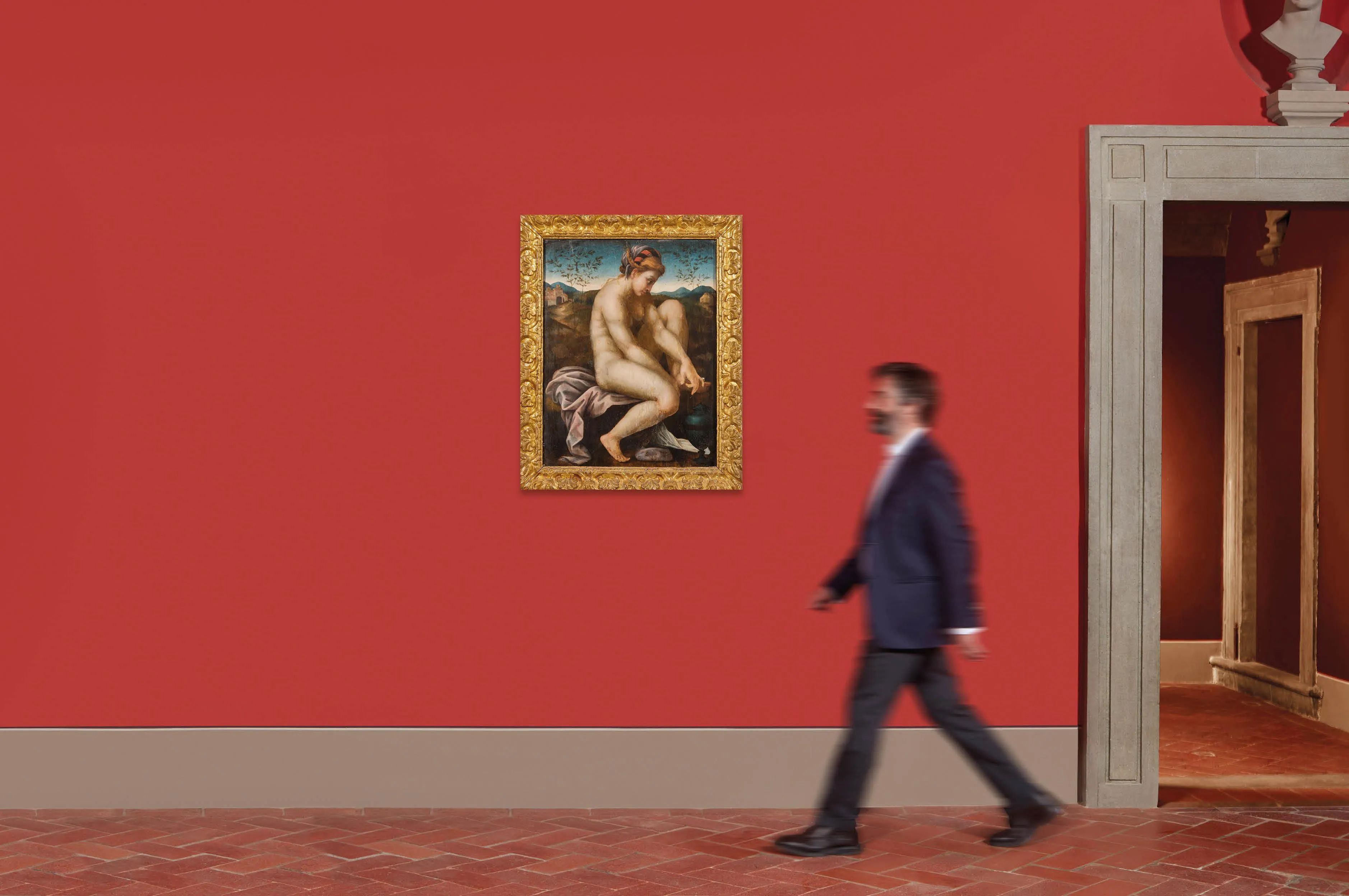
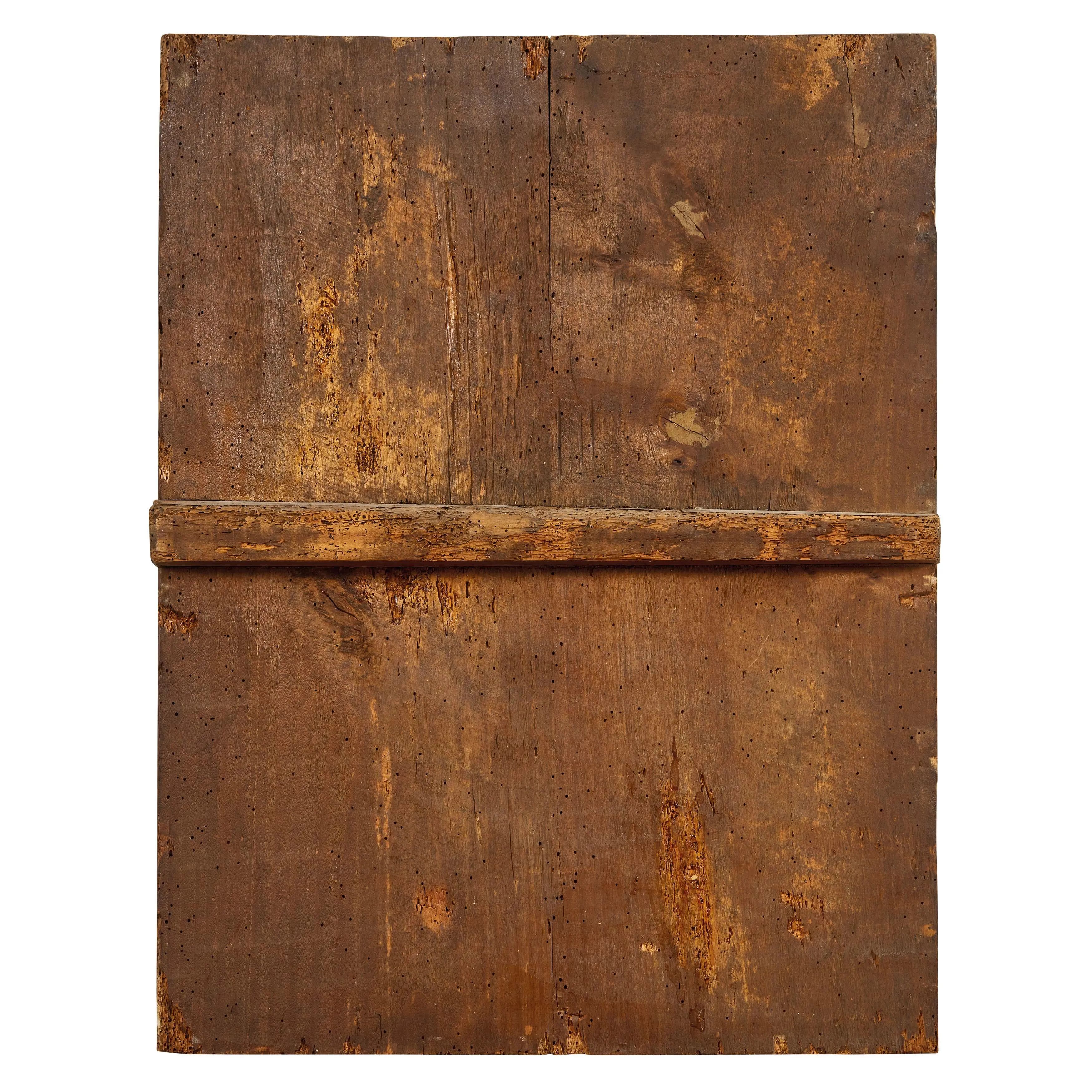
oil on panel, 78x60 cm
VENERE SPINARIA
olio su tavola, cm 78x60
The painting depicts the Spinaria Venus, a Renaissance iconographic motif showing the goddess seated as she removes a thorn from her foot. The subject arises from the fusion of the famous ancient model of the Capitoline Spinario and the Greek Anacreontic tale, according to which Venus, wandering after Adonis’s death, pricked herself on a rose thorn, staining the white roses with her own blood, causing them to turn red.
The composition is generally attributed to a lost fresco painted by Raphael for Cardinal Bibbiena’s “Stufetta” in the Vatican, part of a cycle dedicated to Venus and Adonis. The motif enjoyed widespread popularity in the sixteenth century thanks to the engravings by Marco Dente, known as Marco da Ravenna (approximately 1516), and by the Master of the Die (1532; see: A. Imolesi Pozzi, Marco Dente: An Engraver from Ravenna in the Tradition of Raphael; Prints from the Pincastelli Collections, Ravenna 2008, cat. 5, p. 67; B. Sébastien, “Venus Spinaria”: The Legacy of a Legendary Motif Between Antiquity and the Renaissance, in Vivendo vincere saecvla, 2022, pp. 133–151). In particular, Dente’s engraving, which most closely resembles the painting, appears to be derived from a lost Raphael drawing, known through a copy preserved in Stockholm and published by Konrad Oberhuber (Raphaels Zeichnungen. IX, Entwürfe zu Werken Raphaels und seiner Schule im Vatikan 1511/12 bis 1520, Berlin 1972, p. 144, fig. 145).
Compared to the preparatory drawing, the engraver enriches the background with a detailed landscape, characterized by a meticulous naturalistic rendering that reveals the influence of Dürer’s prints.
The work can be attributed to Antonio di Donnino del Mazziere (Florence, 1497–1547), a painter trained in the family workshop and closely associated with the figurative style of Franciabigio, as noted by Giorgio Vasari. His work combines the teachings of Andrea del Sarto with a marked attention to narrative, landscape, and naturalistic details. His artistic personality has been defined primarily by the studies of Federico Zeri, who included him among the “Florentine eccentrics”.
The panel finds significant parallels in the artist’s oeuvre, particularly in the rendering of the landscape. It is also plausible that it belonged to the same decorative series as an unfinished Venus and Cupid (London, Bonhams, December 18, 1998, lot 74), with which it shares iconographic, dimensional, and stylistic affinities.
The attribution is further supported by a comparison with several idealized female heads. The depiction of the braided hair, the headdress, the facial features, and the drapery, in fact, shows precise correspondences.
These elements, combined with the particular sensitivity in the rendering of the landscape and the characteristic attention to naturalistic details, allow us to attribute the panel to Antonio del Mazziere, placing it within the context of early 16th-century Florentine painting.
We thank Marta Villadei for proposing the attribution and for drafting the description published here.
We also thank Christopher Daly for independently recognizing the work as authentically by Mazziere.