
Master of Marradi
(active between the late 15th and early 16th century)
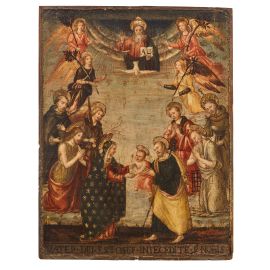
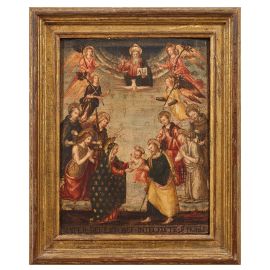
THE HOLY FAMILY AMONG SAINTS, ANGELS AND GOD THE FATHER BESTOWING HIS BLESSING
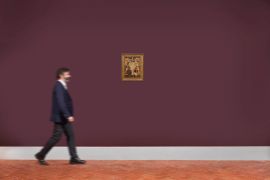
tempera grassa on panel, 35x27 cm
SACRA FAMIGLIA TRA SANTI, ANGELI E DIO PADRE BENEDICENTE
tempera grassa su tavola, cm 35x27
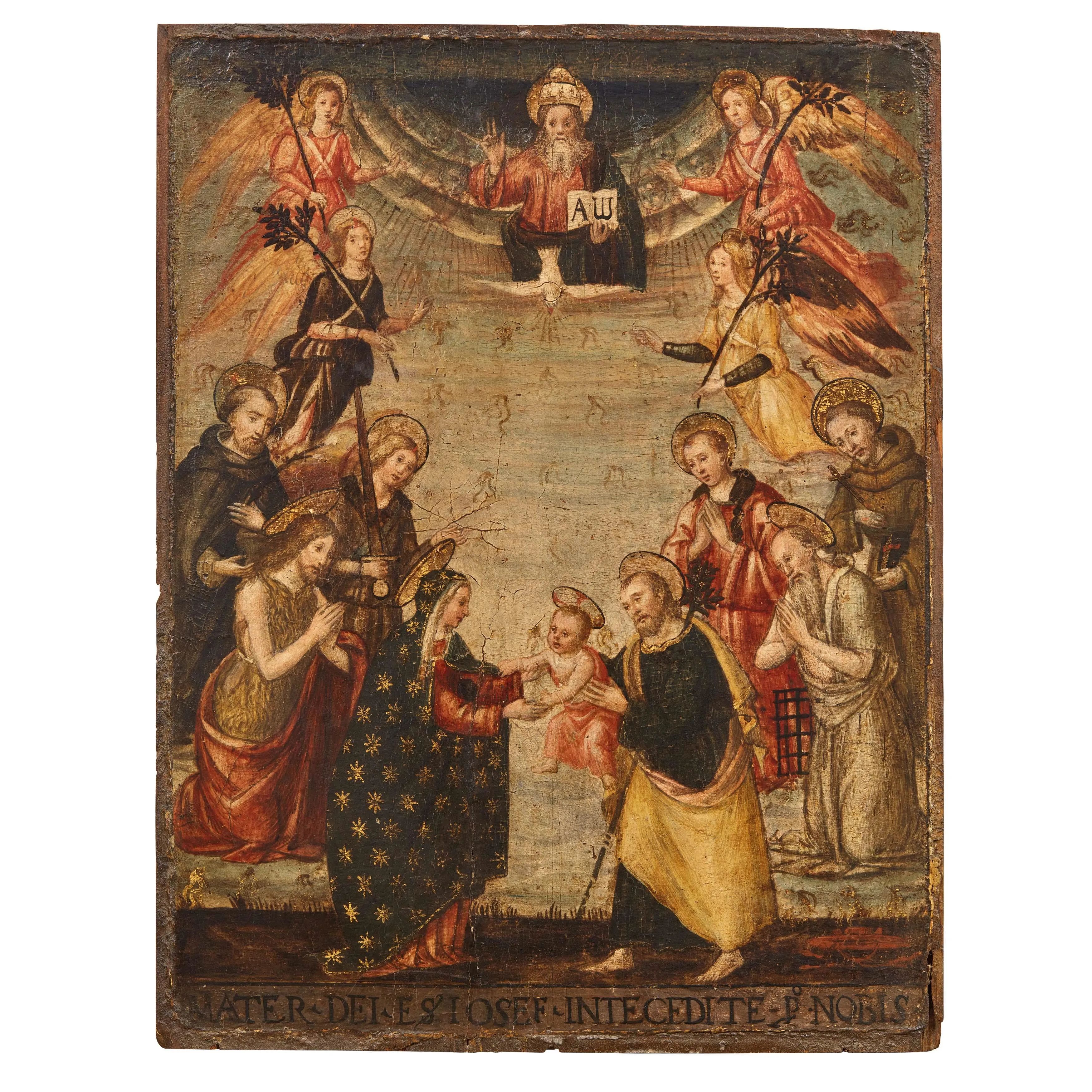
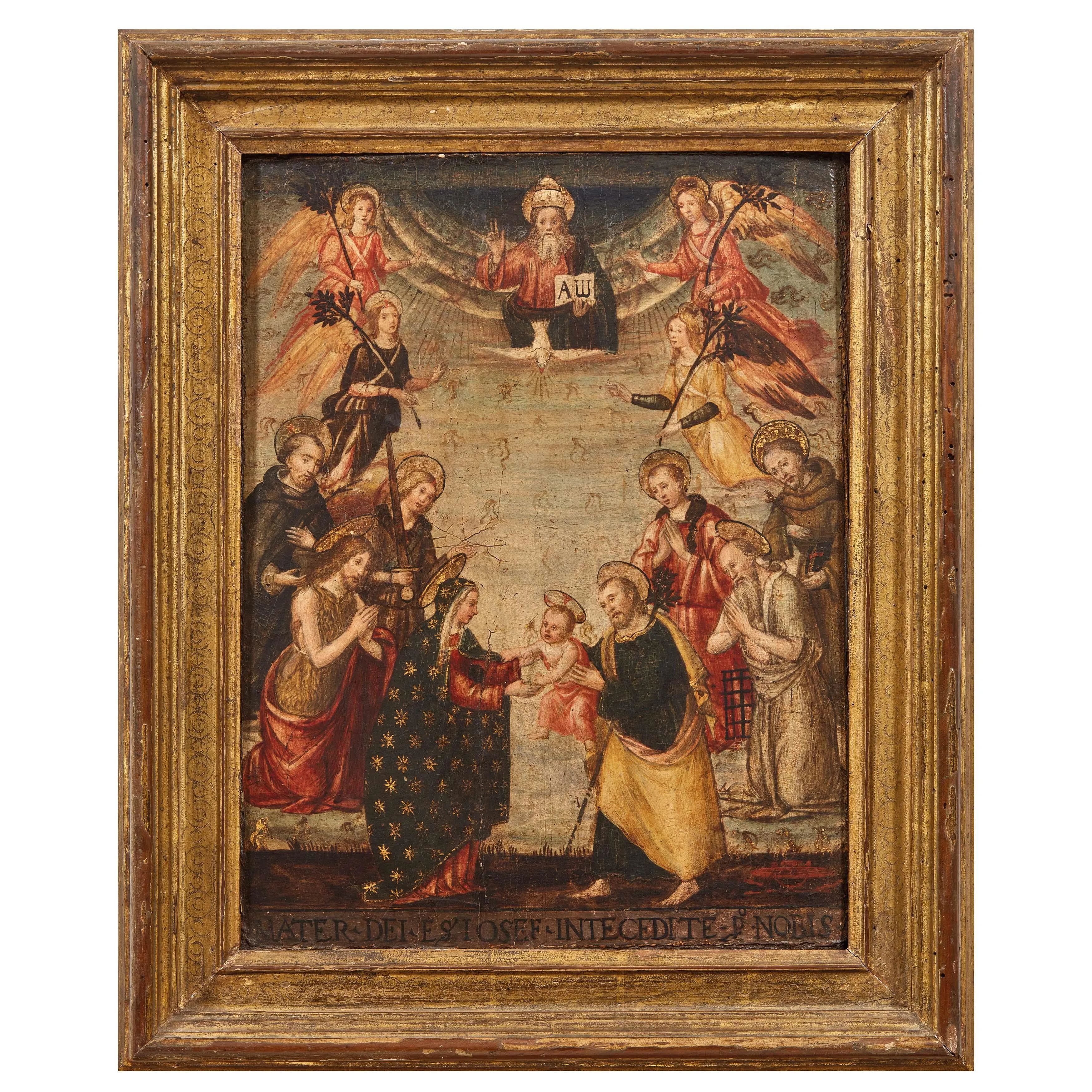
The panel features a refined and intriguing devotional composition centered on the Holy Family, gathered within a space of intense spirituality and embellished by the presence of saints, angels, and the figure of God the Father bestowing his blessing, who dominates the scene from above according to an iconographic scheme whose origins are still firmly rooted in the 15th century. The pyramidal structure of the composition, the balance of the figures, and the exquisite quality of the painting all point to the Florentine artistic culture of the late 15th century, interpreted through the distinctive language of the Tuscan artistic milieu.
The work is attributed to the so-called Master of Marradi, an artist who remains anonymous but is well defined by art historians, active between the final decades of the 15th century and the early years of the following century in the area encompassing the Mugello, Marradi, and the Tuscan Romagna. This master’s body of work consists primarily of altarpieces and panels intended for private devotion, characterized by a painting style with an archaic flavor, in which the linearity inherited from the Florentine tradition coexists with a delicate exploration of color and a meticulous rendering of decorative details.
This panel stands out for the finesse of its execution, evident in the rendering of the faces, the modulation of the drapery, and the refined application of oil tempera - a technique that allows for greater softness and transparency than traditional egg tempera. The luminosity of the color palette, combined with the composure of the figures and the elegance of the drawing, attests to the assimilation of the innovations introduced by Florentine painting in the circles of Domenico Ghirlandaio and Filippino Lippi.
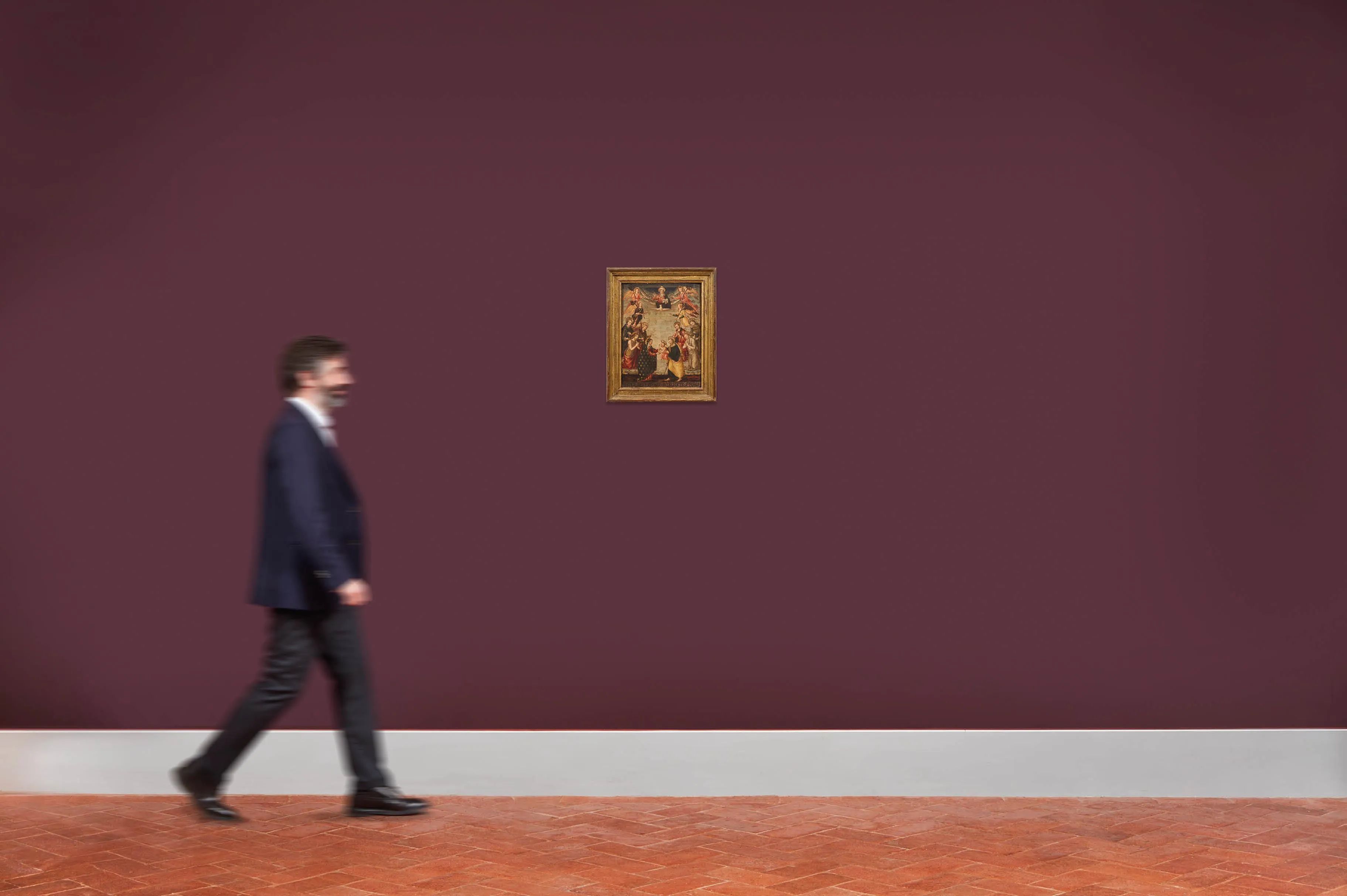
The nature of the work, its modest dimensions, and its rich iconography suggest that it was originally intended for domestic devotional use by a cultured patron, in accordance with a practice that was widespread in late 15th-century Tuscany. The combined presence of the Holy Family, the intercessory saints, and God the Father emphasizes the meditative value of the image, conceived as a synthesis of the history of salvation and an aid to private prayer.