
2
Raffaello Piccinelli, known as Raffaello del Brescianino
€ 8.000 / 12.000
Estimate

Raffaello Piccinelli, known as Raffaello del Brescianino
(Siena, late 15th century - Florence, ca. 1545)
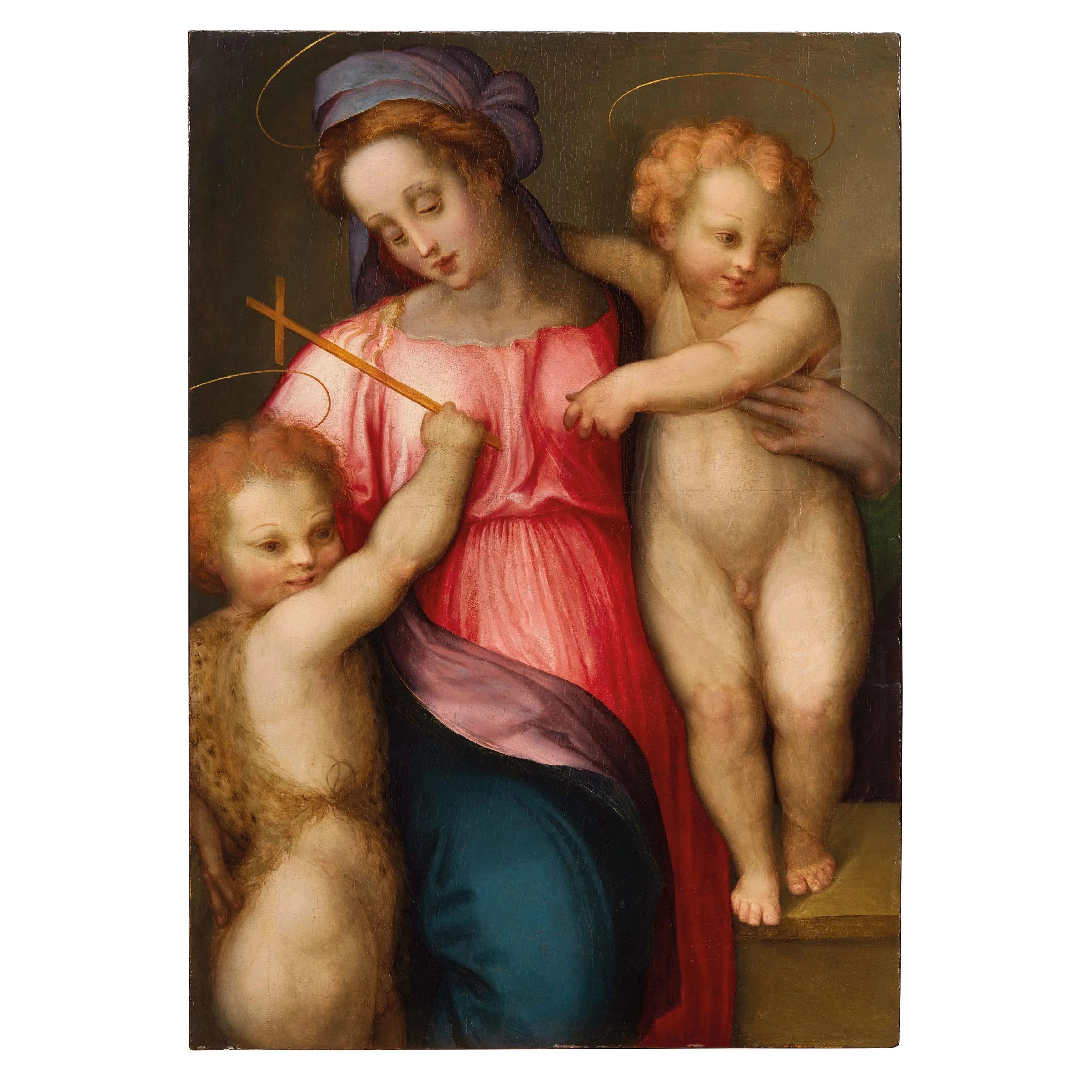
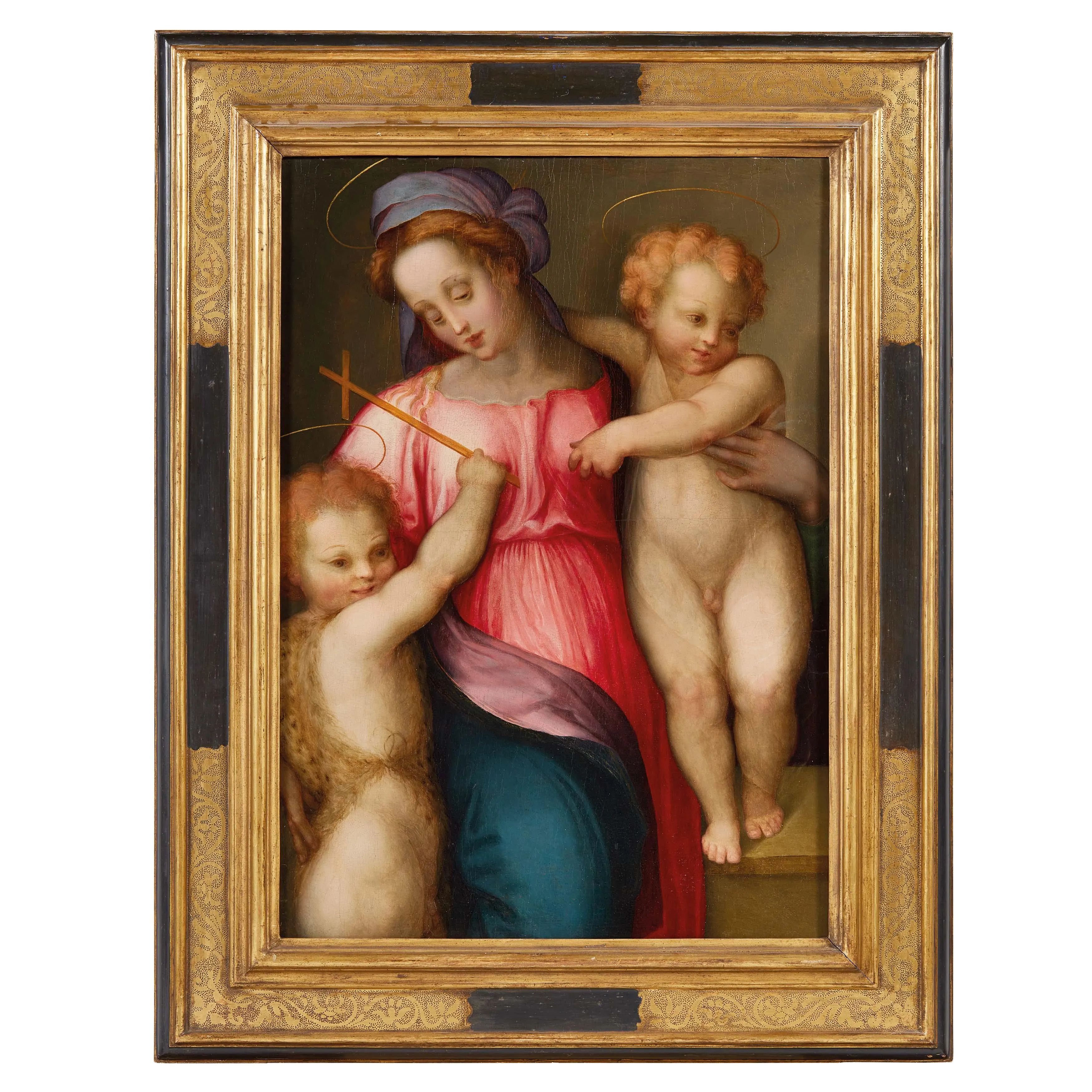
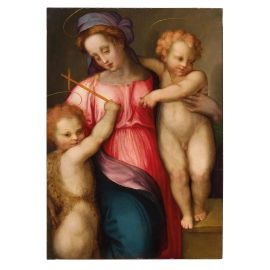
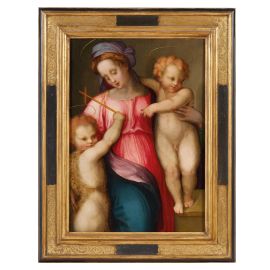
VIRGIN AND CHILD WITH SAINT JOHN THE BAPTIST
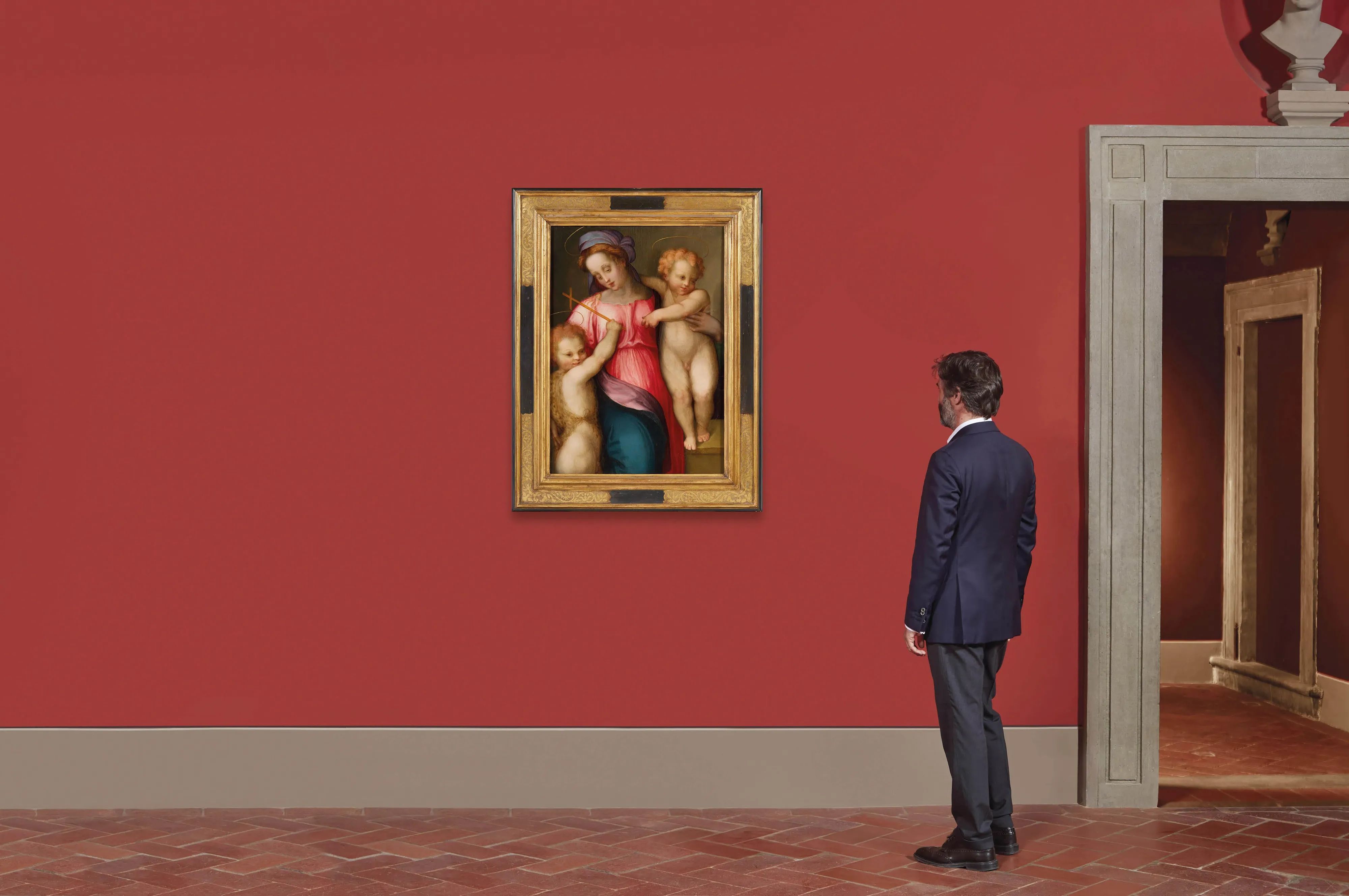
oil on panel, 87x67 cm
MADONNA CON BAMBINO E SAN GIOVANNINO
olio su tavola, cm 87x67
Provenance
- Kansas City (MO), Nelson-Atkins Museum of Art (inv. 40-44/2);
- New York, Christie's, 3 June 1987, lot. no. 86.
Literature
- B.B. Fredericksen, F. Zeri, Census of Pre-Nineteenth-Century Italian Paintings in North American Public Collection, Harvard University Press 1972, p. 589.
Photographic References
- Bologna, Fototeca di Federico Zeri, file no. 37630.
This panel is a fine example of the mature work of Raffaello Piccinelli, known as “il Brescianino,” one of the leading figures in Sienese painting of the early sixteenth century. Trained in the figurative tradition of late fifteenth-century Siena, the artist was able to adapt his artistic language in light of the innovations coming from Florence, developing a style of balanced composure in which the linear grace of the Sienese tradition coexists with the monumental classicism of Raphaelite and Fra Bartolomeo-inspired origins.
The painting depicts one of the most popular devotional subjects of the Tuscan Renaissance: the Virgin and Child standing on a platform while the young Saint John the Baptist approaches in an attitude of adoration, alluding from childhood to Christ’s future redemptive mission. The composition, structured according to a solid pyramidal framework, stands out for the naturalness of the gestures and the delicate exchange of glances that unites the protagonists of the scene - elements that imbue the image with intense emotional resonance without sacrificing the artist’s characteristic classical restraint.
The painting’s provenance is also of considerable interest. The panel belonged to the Nelson-Atkins Museum of Art in Kansas City (inv. 40-44/2), one of the most important public collections of Italian painting in the United States, before being offered on the international market at the Christie’s auction in New York on June 3, 1987 (lot 86). Its inclusion in Burton B. Fredericksen and Federico Zeri (1972, p. 589) confirms the critical recognition of the work and documents its significance within the history of collecting Sienese Renaissance painting.