
Francesco Trevisani
(Capodistria, 1656 - Rome, 1746)
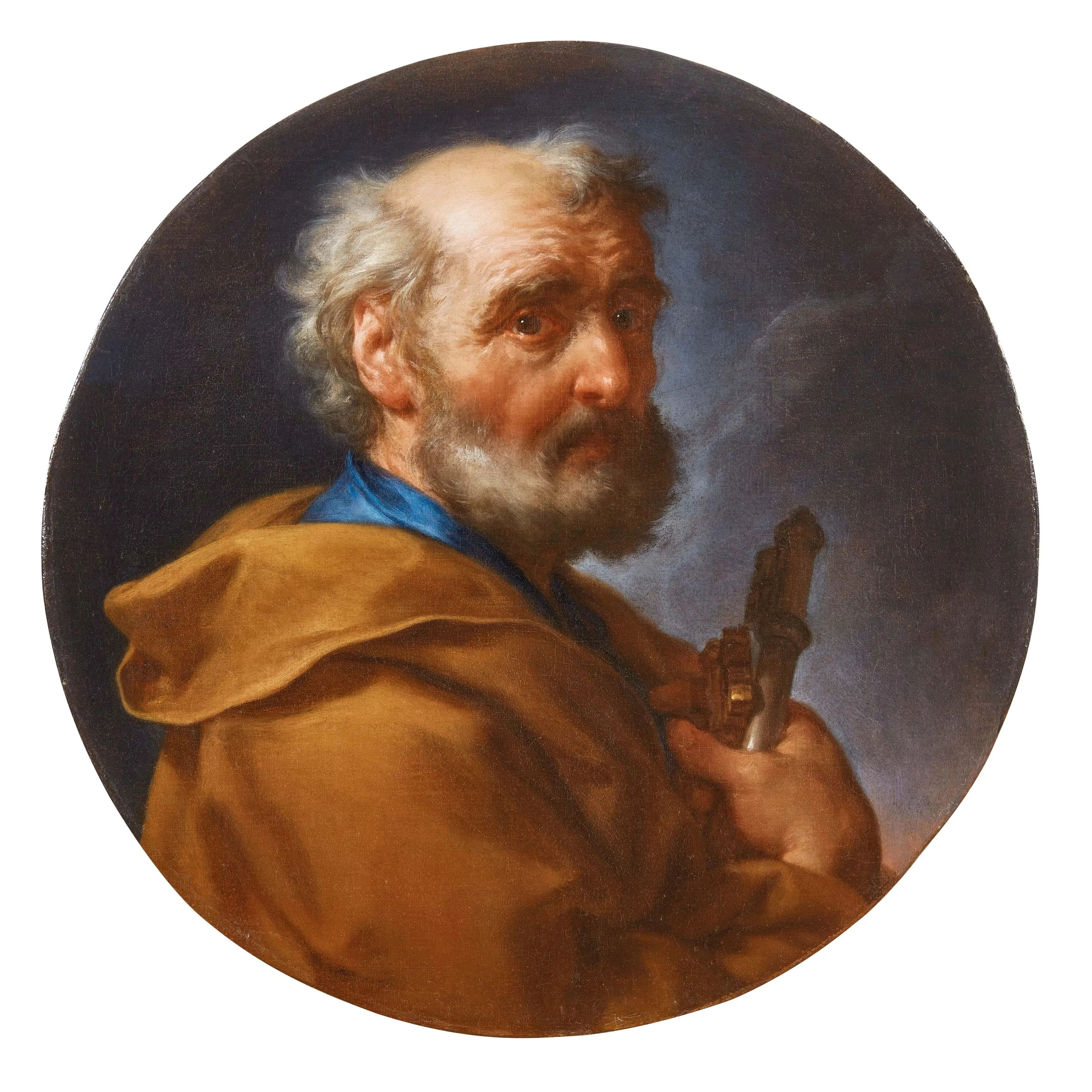
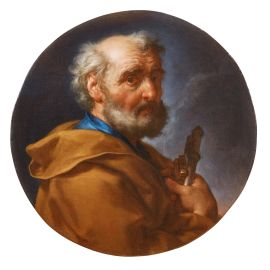
SAINT PETER
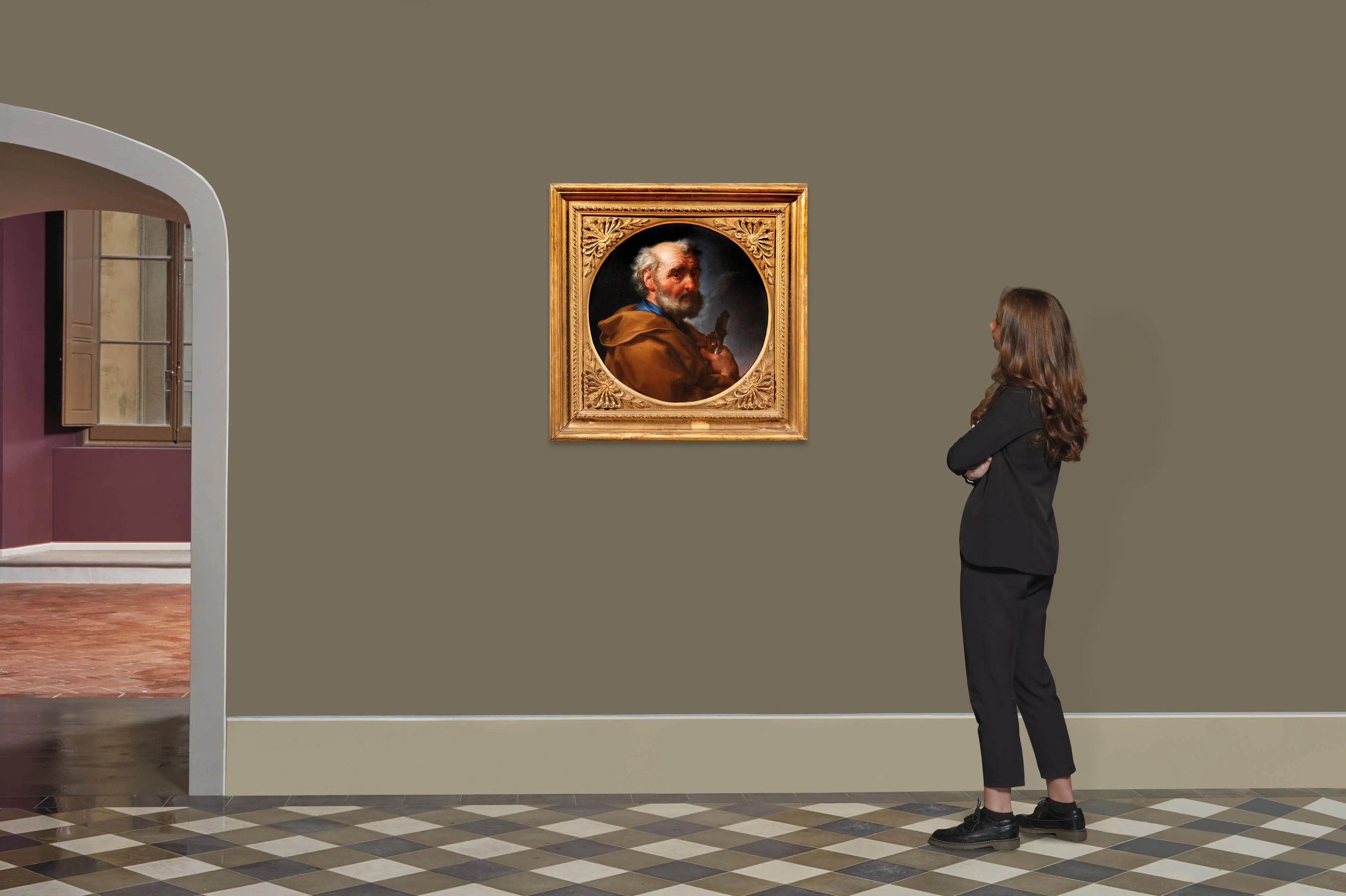
oil on canvas, diam. 51.5 cm
SAN PIETRO
olio su tela, diametro cm 51,5
The previously unpublished painting presented here is an autograph version of the highest quality of the composition previously known only through the canvas in the Vatican Art Gallery, published alongside two other figures of Apostles by Carlo Pietrangeli, who was the first to reconstruct its commission by Cardinal Pietro Ottoboni (Venice 1667-Rome 1740), nephew of Pope Alexander VIII and a leading figure in the Roman art scene of the first half of the 18th century ( “Alla ricerca di una serie di dipinti ottoboniani,” in "Strenna dei Romanisti" XLI, 1980, pp. 395-406).
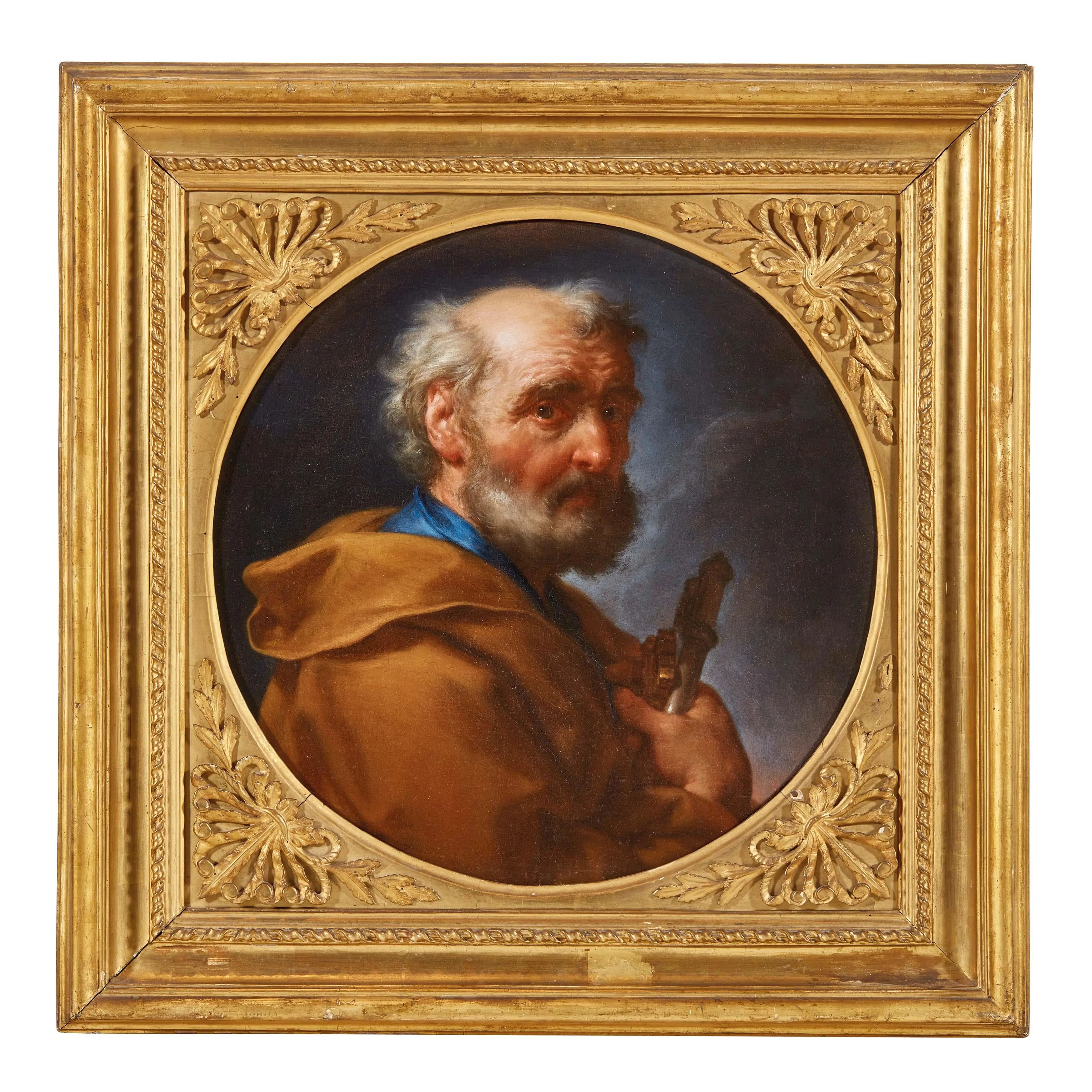
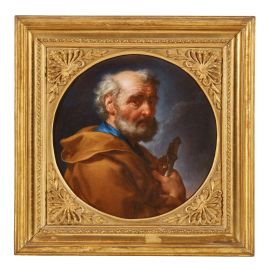
As the scholar established, the series of “sixteen tondos in rich square frames depicting Our Lord, the Virgin Mary, and the Apostles, commissioned specifically from distinguished living painters” was exhibited in 1713 in the cloister of San Salvatore in Lauro on the occasion of the annual exhibition organized by the Sodalizio dei Piceni.
It is precisely the documents of Giuseppe Ghezzi, secretary of the Sodalizio and responsible for organizing the exhibition, that provide us with the names of the artists involved: The leading figure in this undertaking was Francesco Trevisani, Cardinal Ottoboni’s favorite and, since 1698, a resident of the Palazzo della Cancelleria; he was responsible - the only such instance in the series - for two of the sixteen canvases, namely those depicting Christ (unidentified) and Saint Peter.
The paintings exhibited in 1713 are also mentioned in the inventory drawn up upon Pietro Ottoboni’s death in 1740, which again specifies the names of the artists involved and the subject depicted by each of them (E.J. Olszewski, Pietro The Inventory of Paintings of Cardinal Ottoboni, New York 2004, doc. C86, passim).
As is well known, the Ottoboni series of the Apostles has been only partially identified: in addition to the tondos in the Vatican Library published by Pietrangeli, four others were presented in 2007 at the Palazzo Corsini Biennale by the Fabio Massimo Megna Gallery and analyzed on that occasion by Anna Lo Bianco and Miriam Di Penta (Quattro Apostoli ritrovati della collezione del cardinale Pietro Ottoboni. Fabio Massimo Megna Gallery, Rome 2007, pp. 18-35).
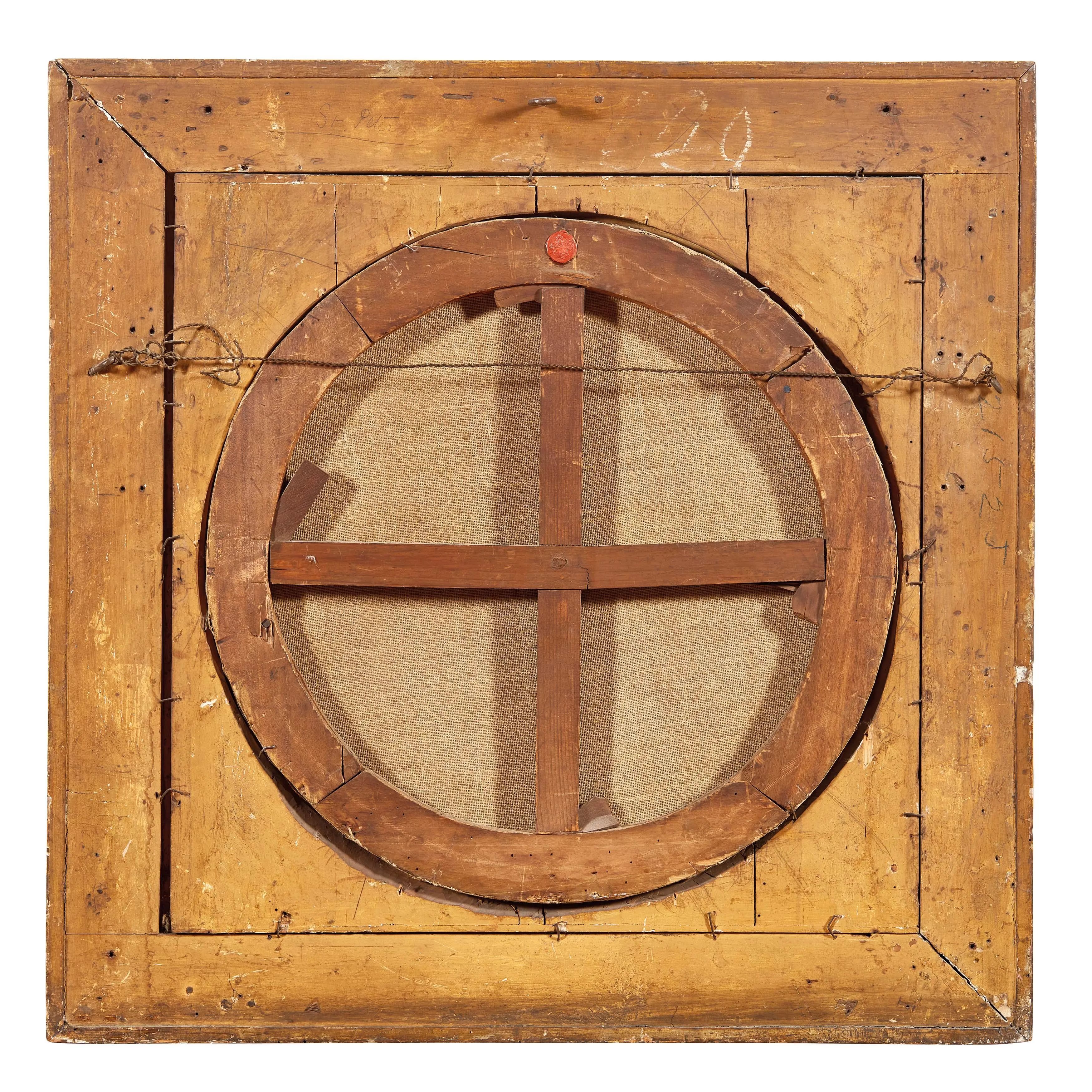
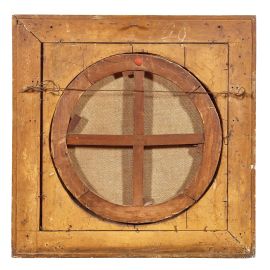
The discovery of the painting in question, its splendid quality, and its execution on a circular canvas with a curved stretcher now suggest further reflection on the Saint Peter in the Vatican Pinacoteca, which - unique among the identified works in the series - features a circular image inscribed within a square canvas whose neutral-colored corners are hidden by the frame. In observing this discrepancy, Pietrangeli wondered whether that painting had a different history and whether, having been executed independently, it had subsequently inspired the creation of the other fifteen.
Today, however, one might ask whether the Saint Peter presented here is in fact the painting from the Ottoboni series, replicated by Trevisani in the Vatican version.
As Karin Wolfe has demonstrated in her numerous studies on the artist, reproducing his own work - sometimes with only minor variations - was a common practice for Francesco Trevisani, both to satisfy the requests of collectors eager to possess proof of his talent and to document in its entirety a career marked by great public and private success: this is attested to, among other documents, by the biography by Lione Pascoli, a contemporary of the artist, and by his own inventory, which has not yet been published in its entirety but has been extensively commented on by Wolfe.
Regarding our St. Peter, it is significant that the same model reappears - as a roundel of the same dimensions but with the attributes of St. Joseph - in a beautiful painting sold at Christie’s in London in 2008, further proof of the success of this Ottobonian invention.