
Master of the Grotesque Vase
(active in the 17th century)
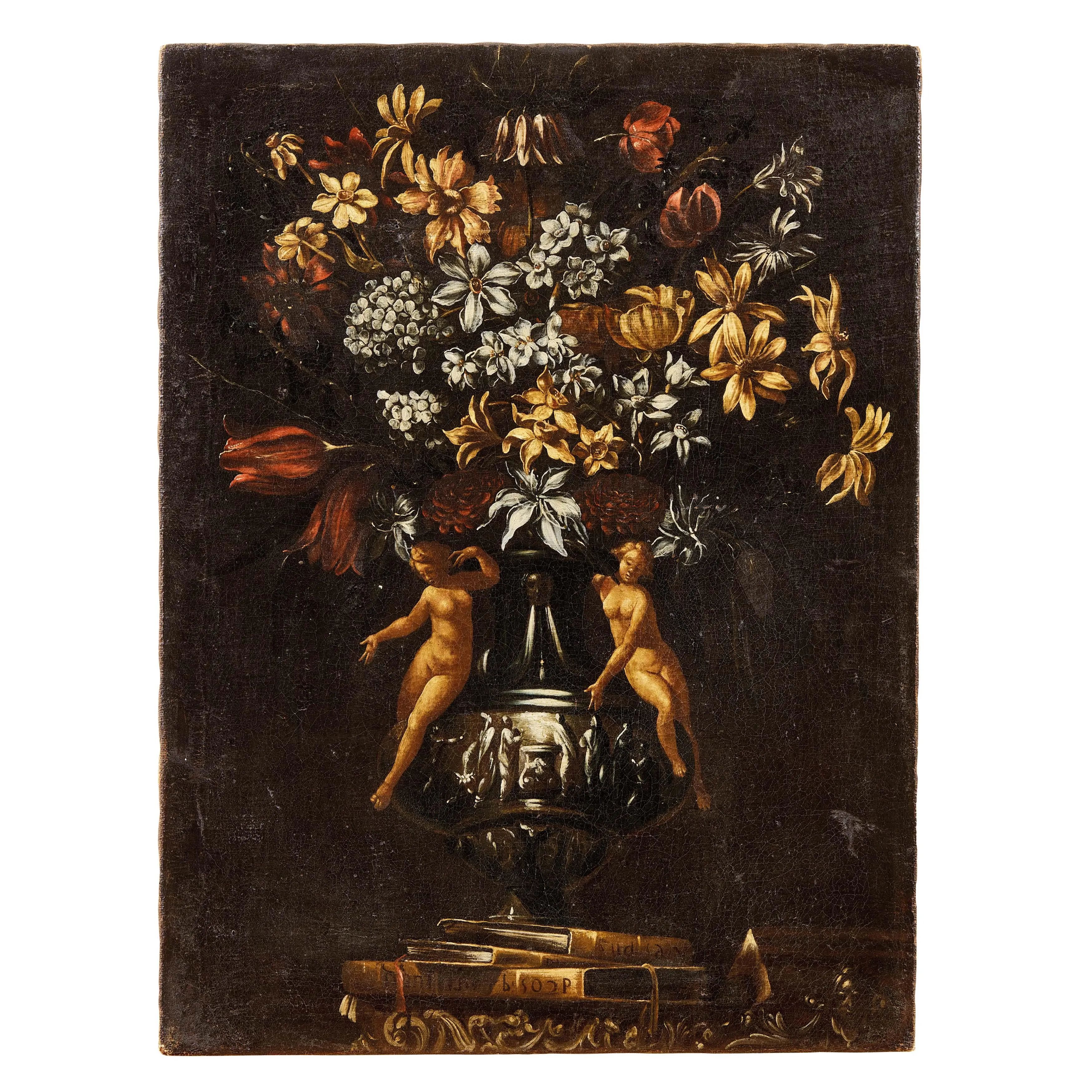
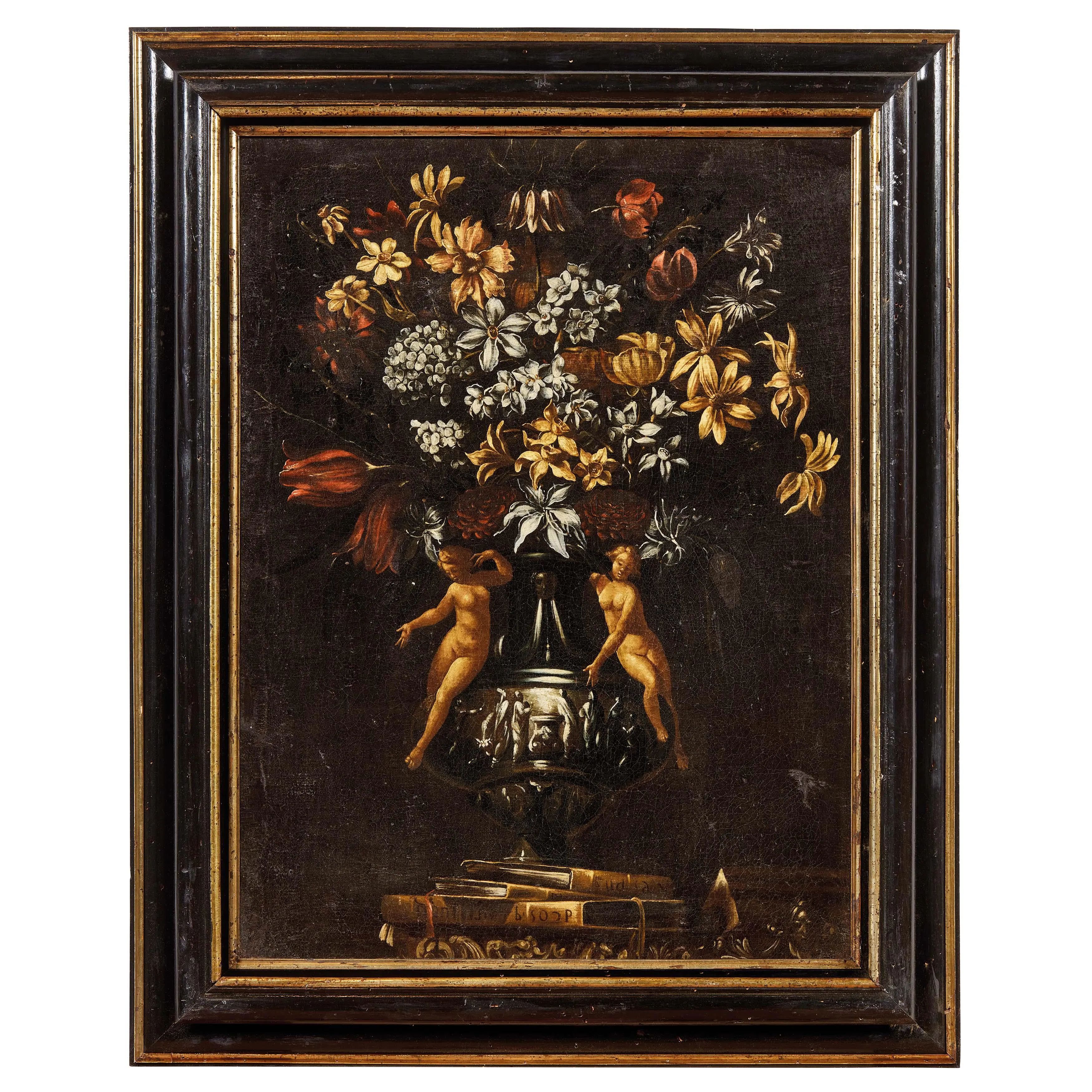
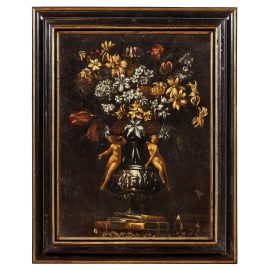
VASE OF FLOWERS WITH TULIPS, ANEMONES AND ORANGE BLOSSOMS ON A STACK OF BOOKS
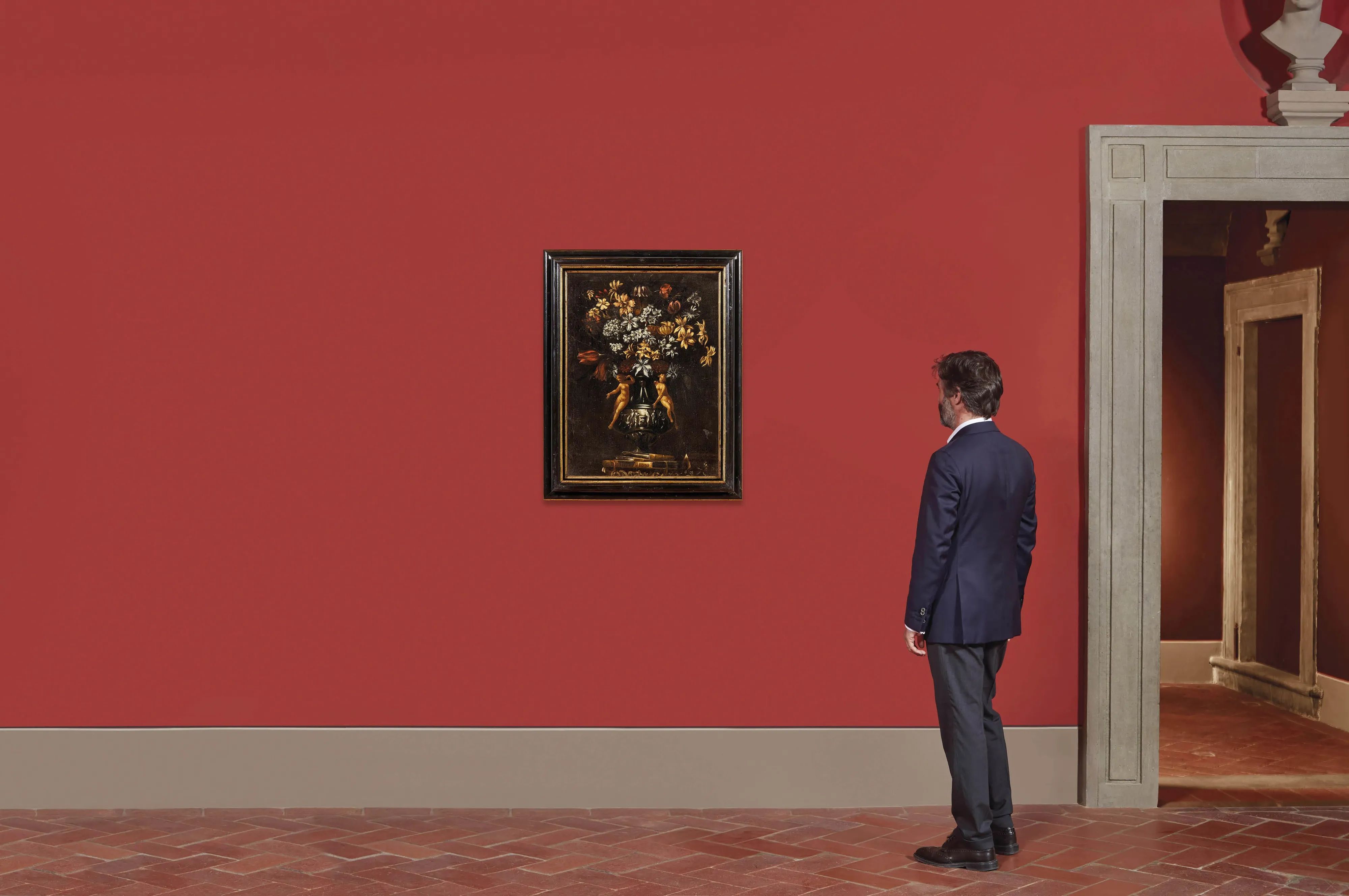
oil on canvas, 70.5x53 cm
VASO DI FIORI CON TULIPANI, ANEMONI E FIORI D'ARANCIO SU UNA PILA DI LIBRI
olio su tela, cm 70,5x53
This still life belongs to the small group of paintings grouped by art historians under the conventional name “Master of the Grotesque Vase,” an anonymous artist active in the early decades of the 17th century, whose body of work has been progressively identified through studies of Italian still life. The body of work comprises pieces united by the consistent presence of precious Renaissance-style vases, decorated with grotesques, masks, coats of arms, or small figurative scenes, which constitute the artist’s distinctive style.
The composition features a sumptuous bouquet arranged in an elegant antique-style vase, in which tulips, lilies, carnations, and other flowers are arranged in a balance that is as natural as it is skillfully constructed. The composition is strictly frontal and symmetrical, while the botanical depiction reveals particular attention to the varying textures of the petals and leaves, achieved through a fine and controlled application of paint. The soft, diffused light shapes the forms without compromising the work’s eminently decorative character. Of particular interest and remarkable rarity is the choice to place the vase atop three bound books - a compositional device that lends the scene a tone of greater intellectual rigor and refined sophistication, alluding to the cultured taste of the patron or the work’s intended recipient.
Critics have long pointed out that the Master of the Vase with Grotesques does not necessarily correspond to a single individual, but rather to a group of painters united by figurative models and an extremely recognizable compositional repertoire. Their work appears to have been produced in Lombardy, Piedmont, and Rome, reflecting a figurative culture in which Northern and Italian influences converge. In particular, the precision in the depiction of flowers and the preference for monumental vases have suggested, in some of the group’s works, links to painting north of the Alps, not far removed from the circle of Georg Flegel (1566–1638), while the decorative conception of the composition points to the Roman school.
These paintings enjoyed considerable popularity among collectors as early as the seventeenth century, when still lifes featuring flowers were among the most sought-after genres in private collections. In addition to their evident ornamental value, these compositions reflected a taste for scholarly collecting and for the depiction of nature as a repository of botanical rarities, without forsaking the traditional symbolic meaning of the cut flower as an allusion to the transience of life and beauty.