

Jan Mertens van Dornicke, the Master of 1518
(Antwerp, ca. 1470 - 1527)
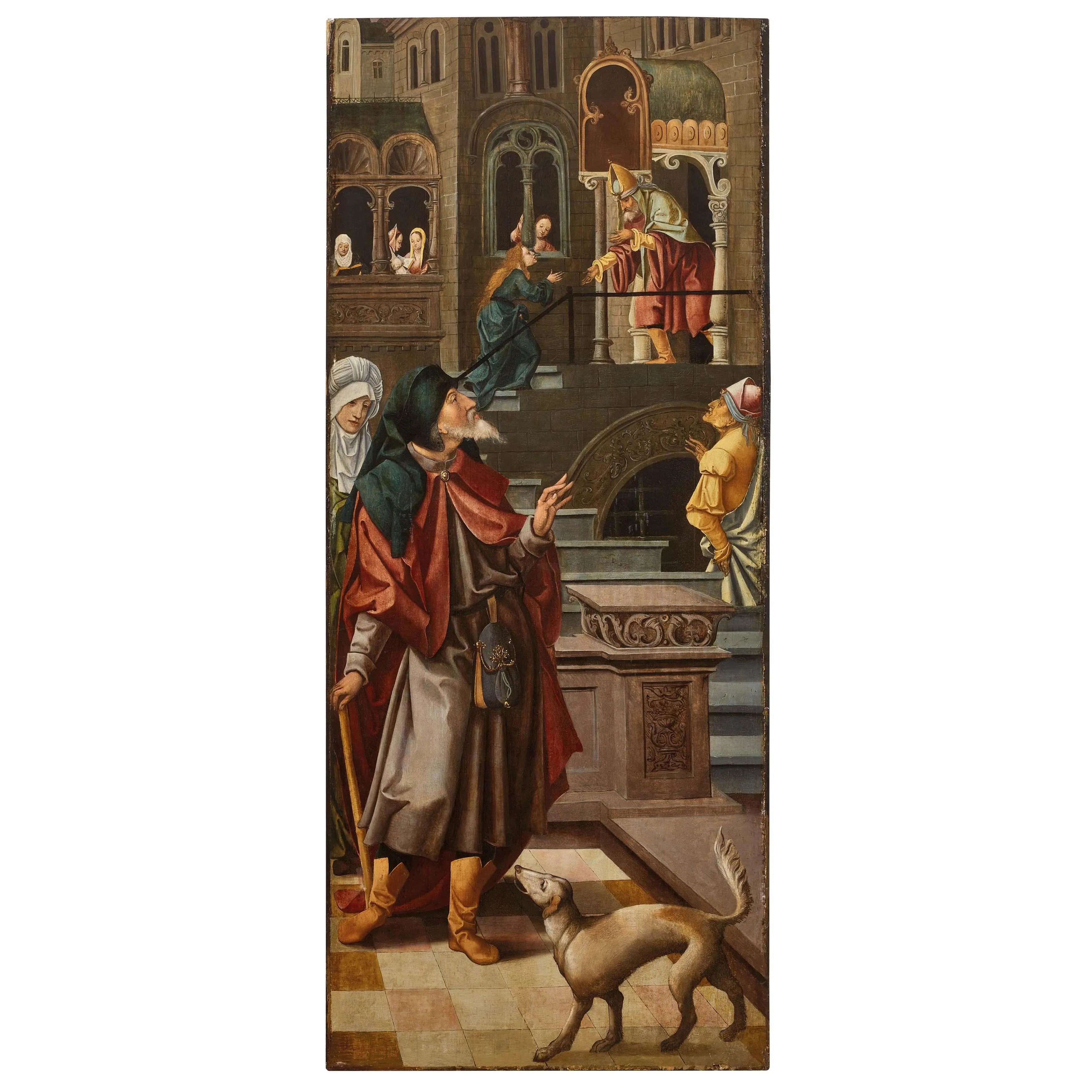
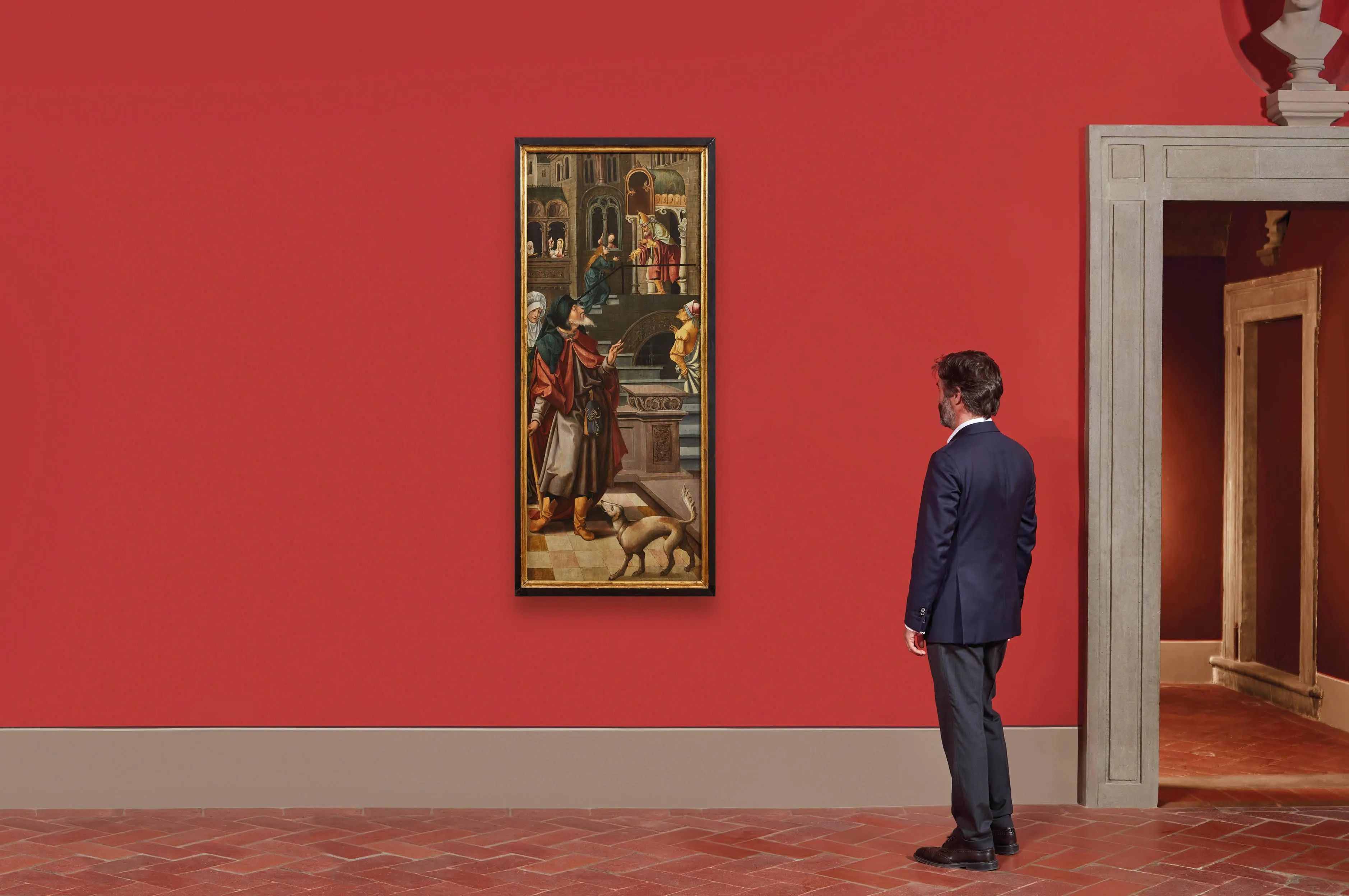
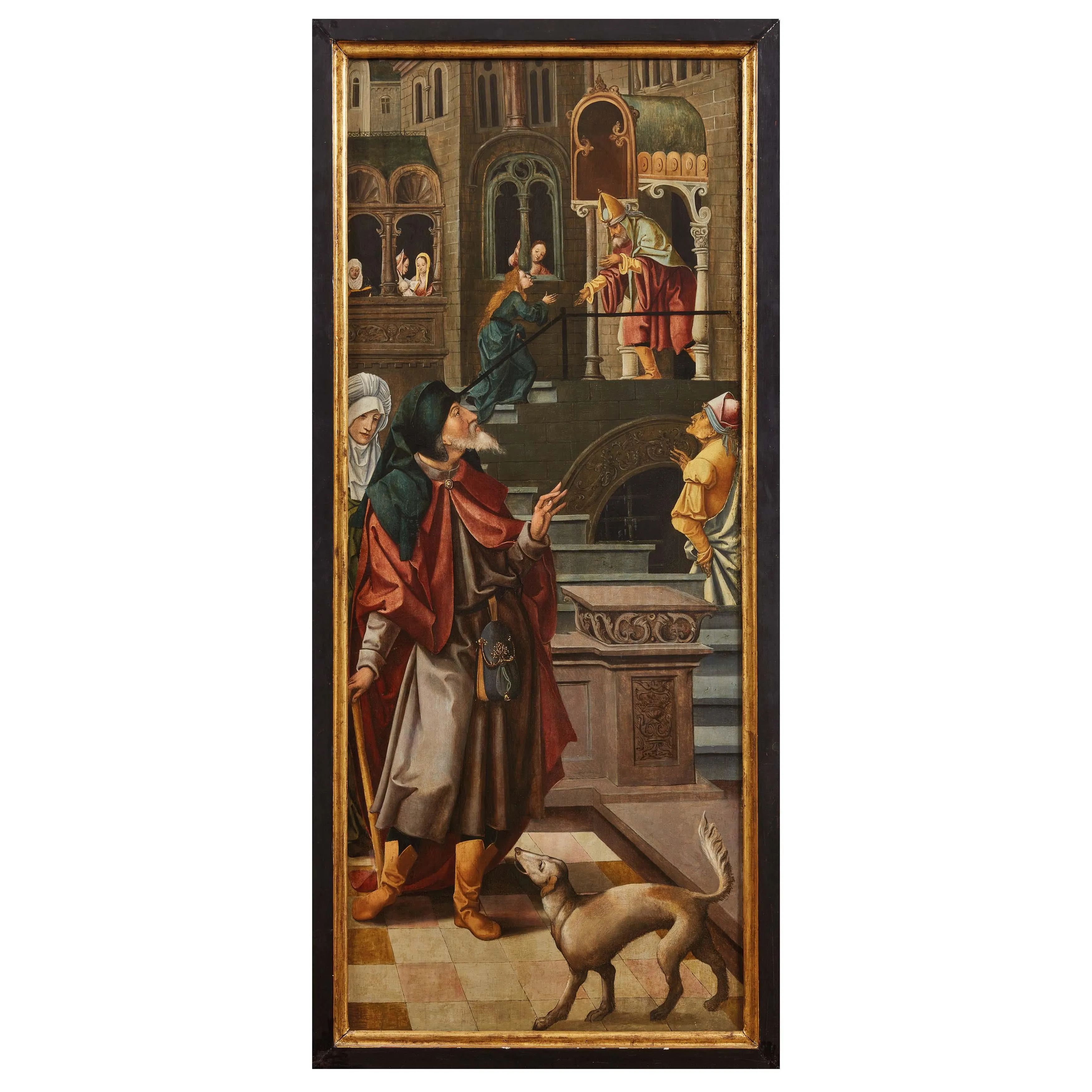
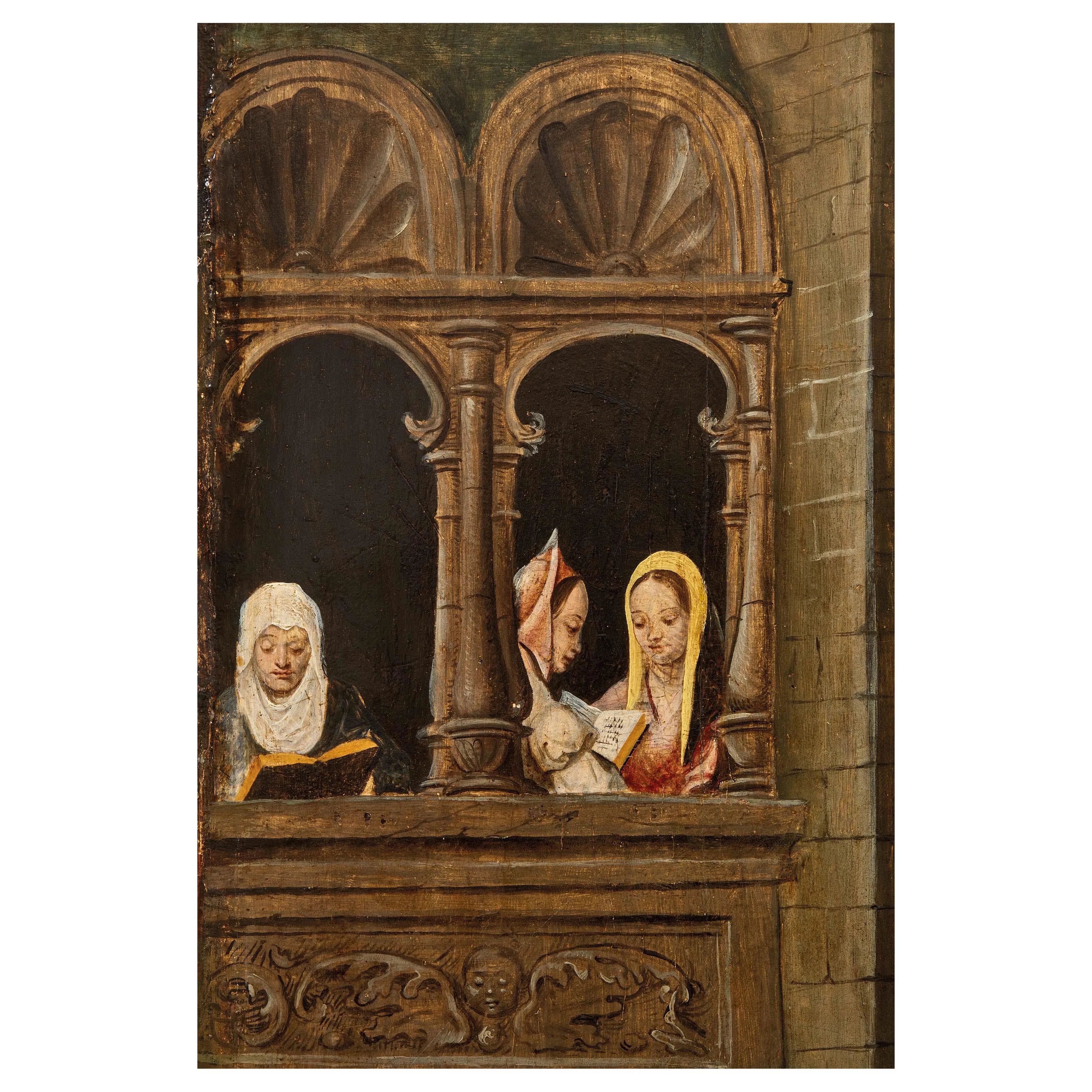
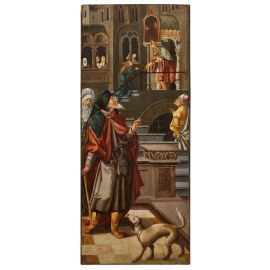
THE PRESENTATION OF THE VIRGIN IN THE TEMPLE WITH SAINT ANNA AND SAINT JOACHIM
oil on panel, 148x62 cm
PRESENTAZIONE DELLA VERGINE AL TEMPIO CON SANT'ANNA E SAN GIOACCHINO
olio su tavola, cm 148x62
Provenance
- Belgium, noble collection;
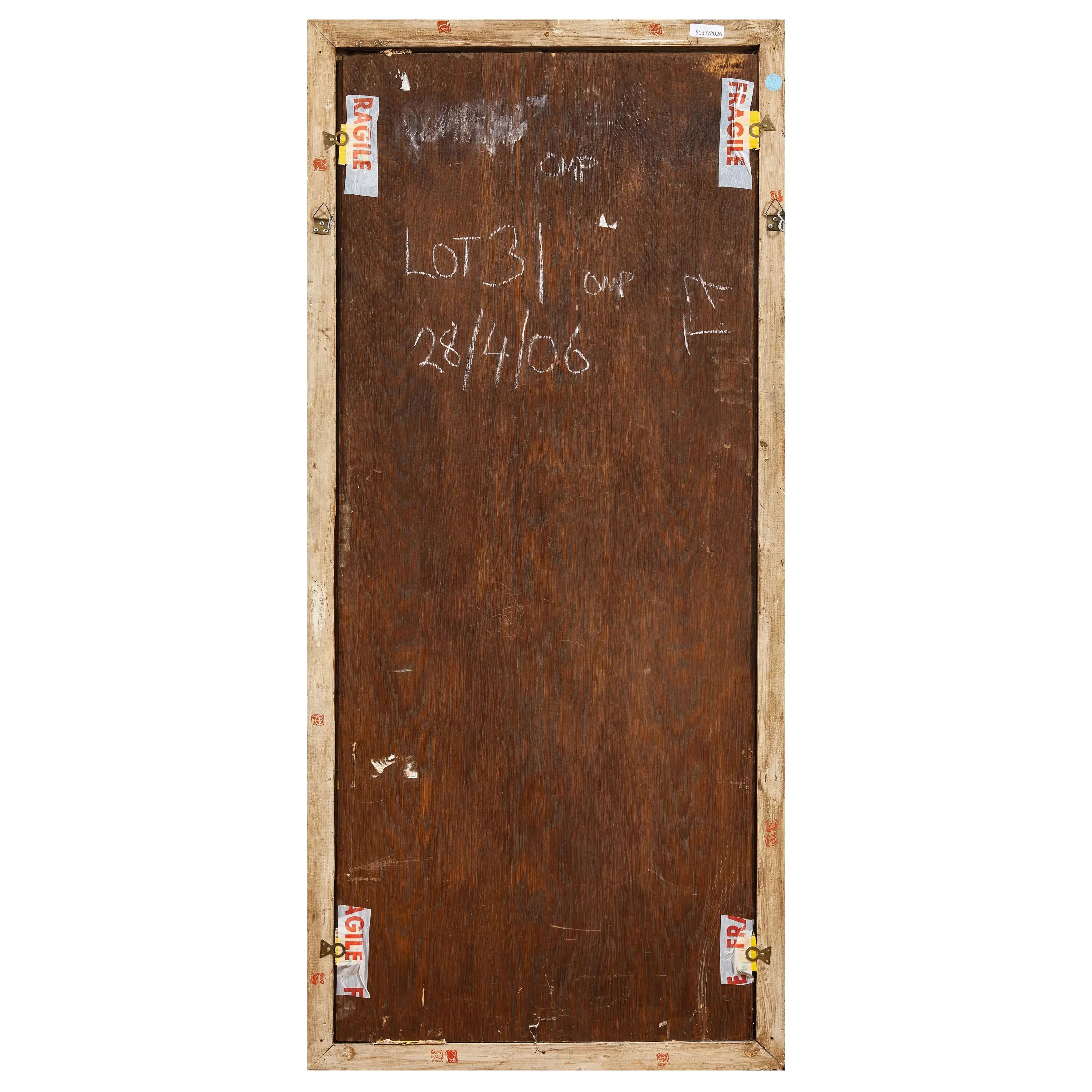
- London, Christie's, Old Master Pictures, 28 April 2006, lot. no. 31.
Jan van Dornicke was the son of the sculptor Jan Mertens I, who was active in Antwerp between approximately 1473 and 1509, and whose family appears to have originated in the city of Tournai. In 1505, the young artist began his training in the workshop of the painter Jan Gossaert, and in 1509 he was granted the title of master by the Guild of Saint Luke in Antwerp. He held a prominent position within the city’s artistic community, so much so that he was called upon to serve as regent of the guild in 1478, 1481, and 1487. Considered one of the leading figures in the Antwerp painting scene of the time, Mertens ran a particularly active workshop, where Pieter Coecke van Aelst - who later became his son-in-law - also trained.
It was precisely the study of Coecke van Aelst’s artistic work that contributed to the gradual identification of Jan van Dornicke with the so-called Master of 1518, a conventional name attributed to a painter active in Antwerp and derived from the date inscribed on the painted panels of the large wooden altarpiece depicting the Life of the Virgin, now housed in the Marienkirche in Lübeck. The dynamic narrative qualities and the strongly accentuated poses of the figures on the Lübeck panels are typical elements of Antwerp Mannerism; however, Van Dornicke’s work is also distinguished by its chromatic brilliance, the solidity of its compositional structure, and a particular elegance of execution.
The painting under consideration, likely identifiable as the left panel of an altarpiece, probably belongs to the early phase of Van Dornicke’s career. Compared to the artist’s later works, it displays a greater emphasis on Mannerist elements and a more intense ornamental richness. A particularly significant aspect of his painting is the limited attention paid to the rendering of perspective: the main figures in the scene, including the dog, are conceived almost as cut-out forms lacking depth, according to a compositional approach that directly echoes the 1518 altarpiece of the Marienkirche in Lübeck (see M.J. Friedländer, Early Netherlandish Painting, Leiden, 1974, pp. 29-33 and 74, no. 70, pls. 70-2).
Among the most characteristic elements is Joachim’s contrapposto pose, a motif that finds a direct parallel in the figure of Melchior in the Adoration of the Magi on the Lübeck altarpiece and in other compositions attributed to the master. Equally recognizable is Joachim’s raised hand as he watches his daughter ascend the staircase.
From a stylistic perspective, the work appears to date to around 1520. In fact, it bears similarities to the altarpiece depicting Christ in the House of Simon the Pharisee, housed at the Musées Royaux des Beaux-Arts in Brussels and dated to around 1516, as well as showing clear connections to the famous altarpiece of the Life of the Virgin created in 1518 for Lübeck.