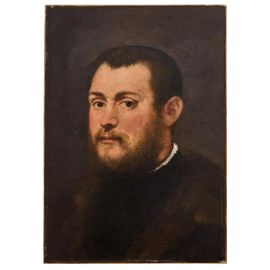


Jacopo Robusti, known as Tintoretto
(Venice, 1581 - 1594)
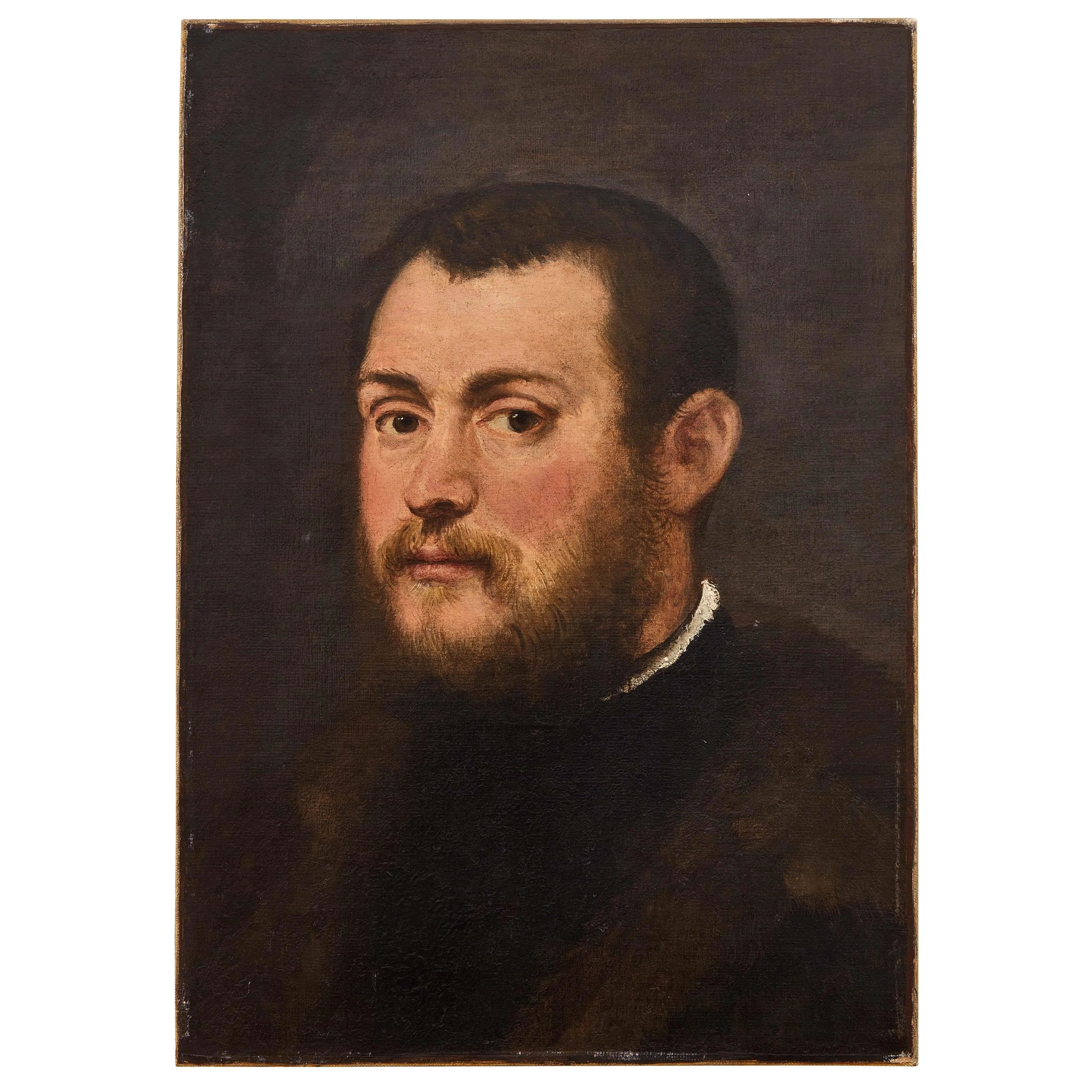
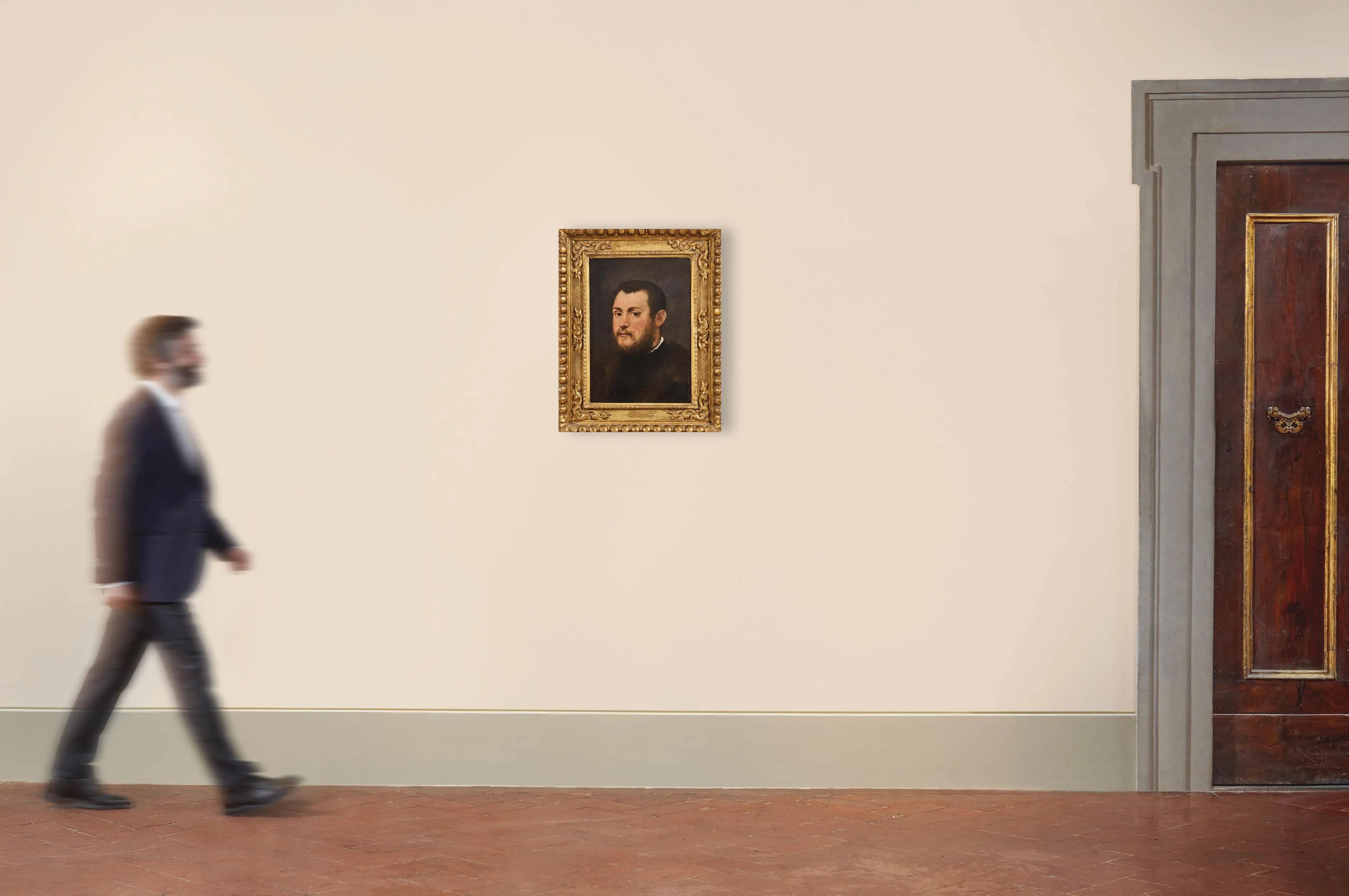
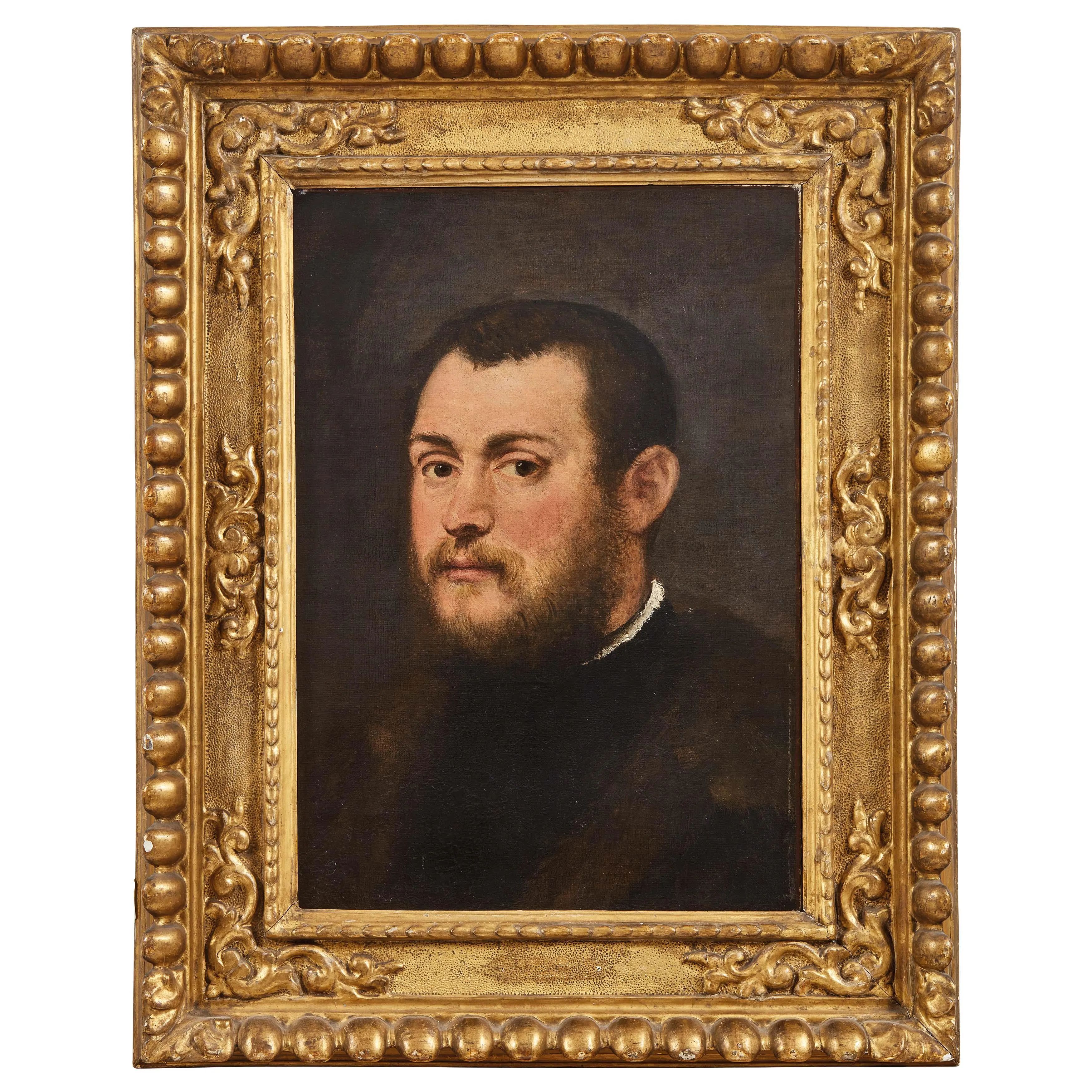
PORTRAIT OF A GENTLEMAN
oil on canvas, 50x35 cm
RITRATTO DI GENTILUOMO
olio su tela, cm 50x35
Provenance
- Paris, Hotel Lambert, Principe Adam Jerky Czartoryski (1770-1861);
- Springfield (MA), The Springfield Museum of Art (until 2001);
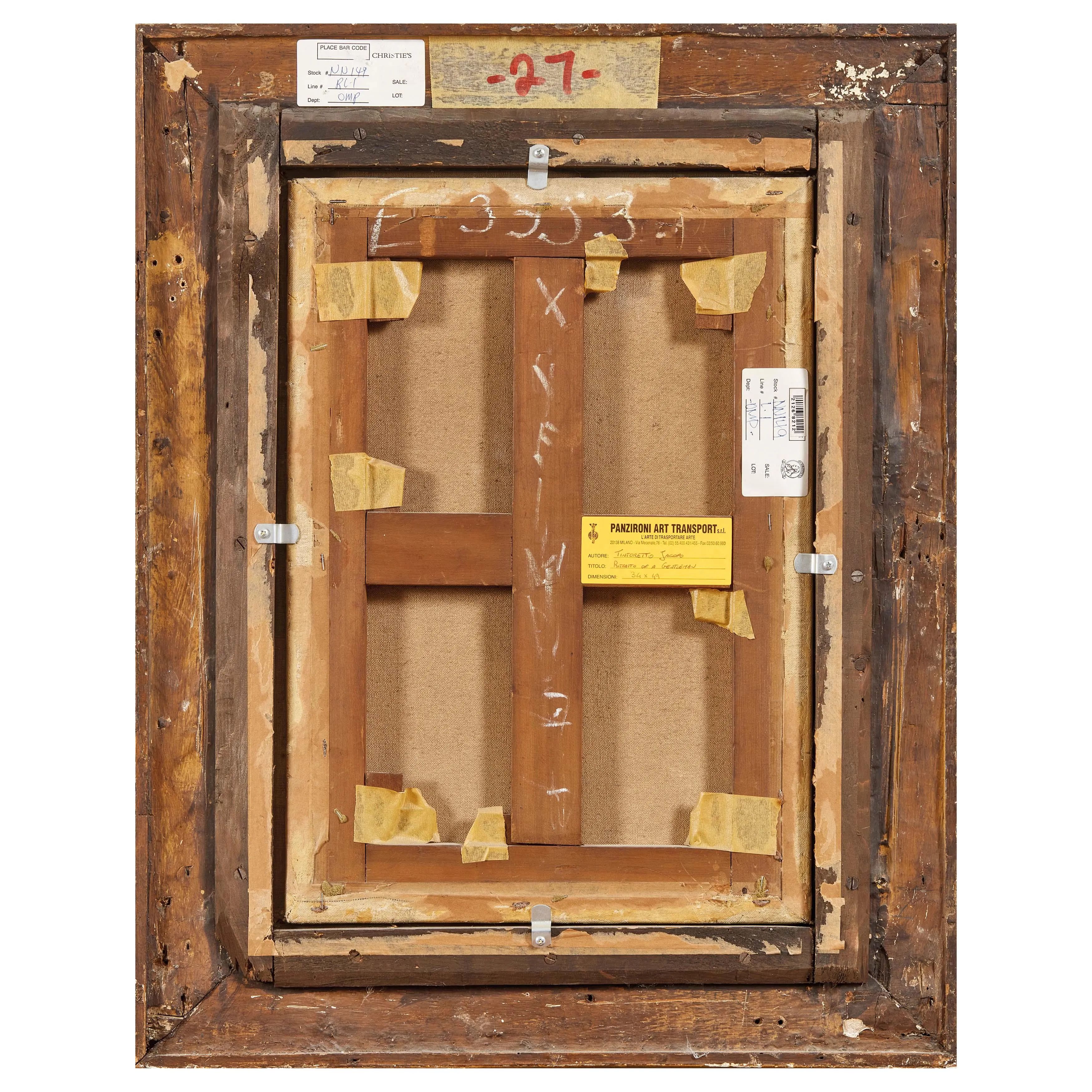
- New York, Christie's, Important Old Master Paintings, 25 January 2002, lot. no. 27.
The painting was correctly attributed to Tintoretto in the 2002 Christie’s auction, where the opinion of Paola Rossi (6 December 2001) was cited.
The work in question was formerly part of the collection of Prince Adam Jerzy Czartoryski (1770–1861), a member of one of Poland’s oldest and most illustrious families. An active participant in public affairs, Adam was close to Alexander I (1777–1825), Tsar of Russia, whom he accompanied to the Congress of Vienna and from whom he secured the Polish Constitution of 1815, after Alexander was recognized as King of Poland by the congress. However, opposing the subsequent Polish policies of Alexander and Nicholas I, he took part in the 1830 uprising and led the provisional government (1830–1831). When the provisional government fell, he emigrated to Paris, where he was the leader of the Polish aristocratic party until his death in 1861. A man of culture, he served as rector of Vilnius University (1803–1823) and was a passionate art collector. During a trip to Venice in 1799, he purchased a series of paintings, likely including the work in question. Among his acquisitions were two Renaissance masterpieces: Leonardo da Vinci’s Portrait of a Lady with an Ermine and Raphael’s Portrait of a Young Man, which were destined to become the centerpieces of the museum of European history that his mother, Princess Izabella (1746–1835), opened in Puławy in 1809. At the time of the 1830 uprising, the museum’s collections were dispersed, and these two works were subsequently smuggled to Paris, where Adam, on Delacroix’s advice, had purchased the Hôtel Lambert in 1842 to display his collections.
Upon his death in 1861, the collections passed to his son, Prince Władysław (1828–1894), who brought them back to Poland to a new museum in Kraków that opened to the public in 1876. Both works were confiscated by the Nazis in 1939, and although the Leonardo has been returned to the family and is now on display at the National Museum in Kraków, the Raphael remains missing.
Among the works in his collection, this important portrait of Jacopo Robusti - better known as Tintoretto - must have played a significant role; it was returned to him in 2002 by Paola Rossi.
The painting is part of the Venetian painter’s prestigious body of portraiture, a field in which the Venetian master achieved results of extraordinary modernity, balancing his large-scale decorative commissions for confraternities and public buildings with a continuous stream of work commissioned by the patriciate and the wealthy bourgeoisie of the Venetian Republic. Portraiture, in fact, constituted a fundamental part of his body of work, appreciated for its swift execution and his extraordinary ability to capture the subject’s features and character.
The painting depicts a gentleman in half-length portrait, turned slightly to the left, set against a neutral background that focuses all attention on the figure. The black suit, embellished by a snow-white collar and shirt, reflects the understated taste of the Venetian aristocracy in the second half of the sixteenth century, while the absence of attributes or accessories helps to enhance the psychological power of the portrait.
The work stands out for the liveliness of its brushwork, achieved through rapid, concise brushstrokes that shape the face through a refined interplay of light and shadow. The fluid and vibrant paint texture defines the hair, beard, and folds of the garment with just a few strokes, giving the figure an immediate and intensely natural presence. It is precisely this ability to blend formal simplicity with introspection that constitutes one of the most original aspects of Tintoretto’s portraiture, which stands in stark contrast to both Titian’s official monumentality and Paolo Veronese’s luminous elegance.
In terms of technical skill and expressive intensity, the work stands as a significant testament to the portraiture of the great Venetian master, in which the depiction of social rank gives way to a deeper exploration of the subject’s individuality, achieving that balance between naturalness and nobility that made Tintoretto’s portraits among the most highly regarded in 16th-century European painting.