
Jacob Ferdinand Voet
(Antwerp, 1639 - Paris, 1689)
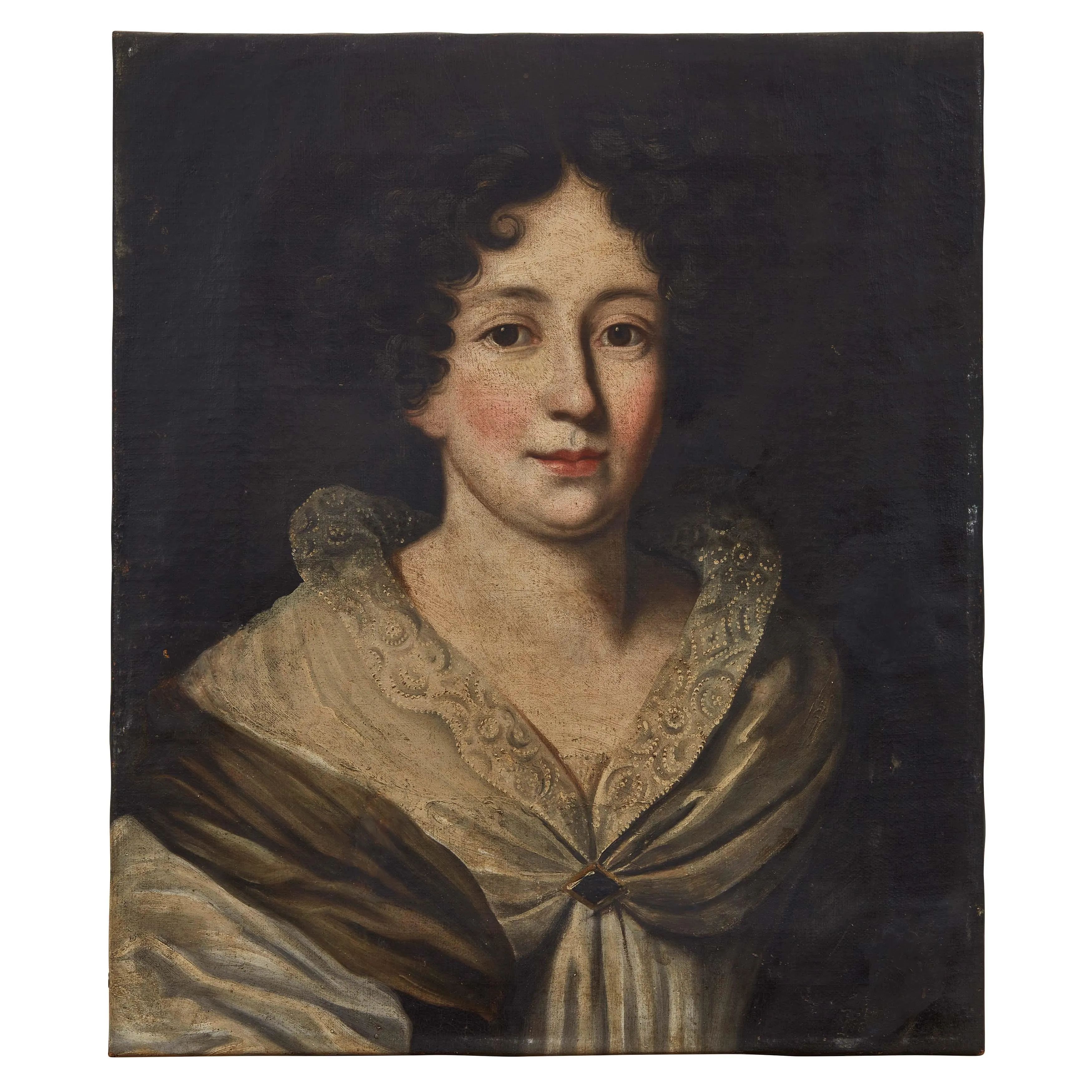
PORTRAIT OF A YOUNG WOMAN (MARIA MANCINI?)
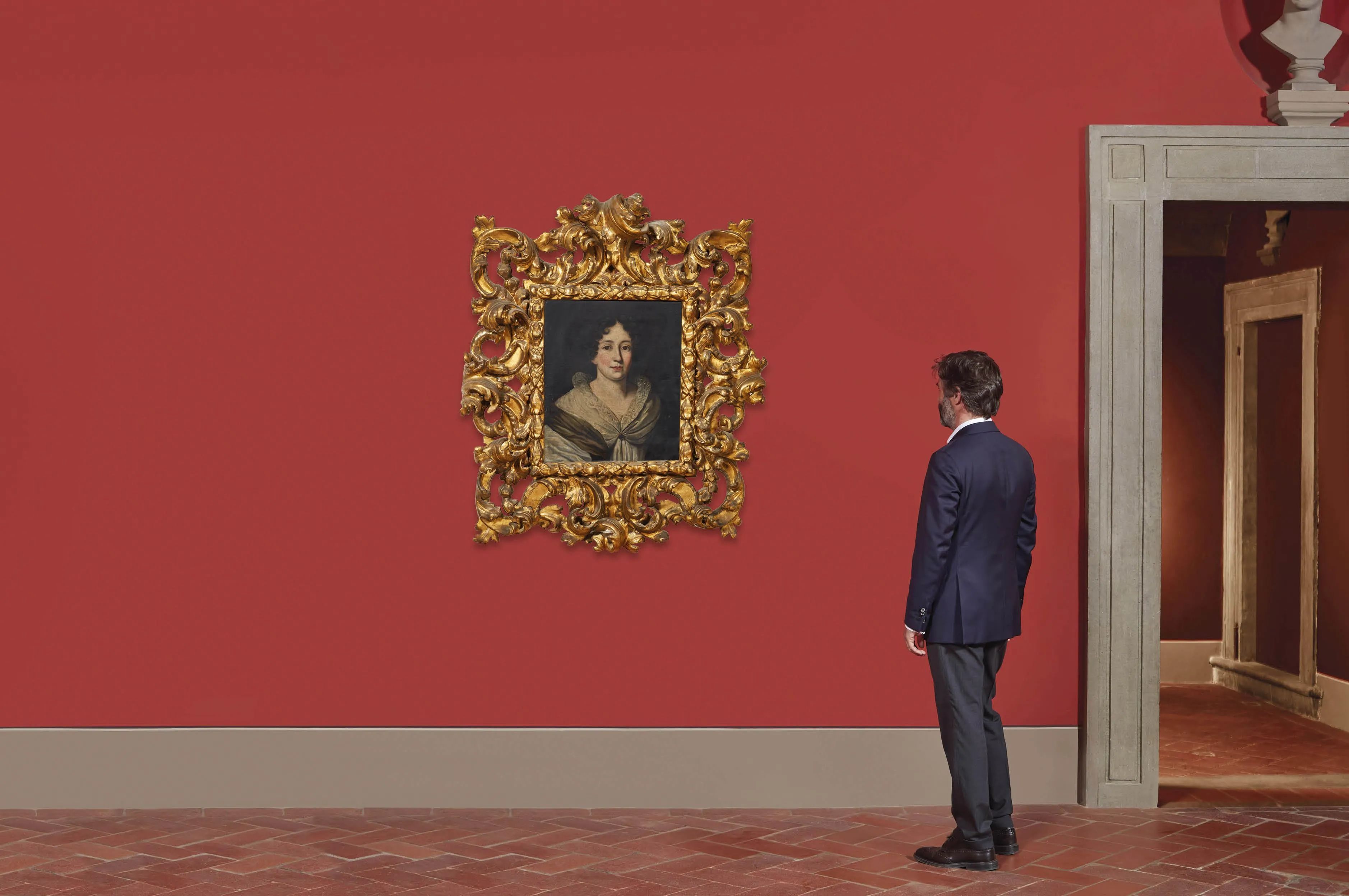
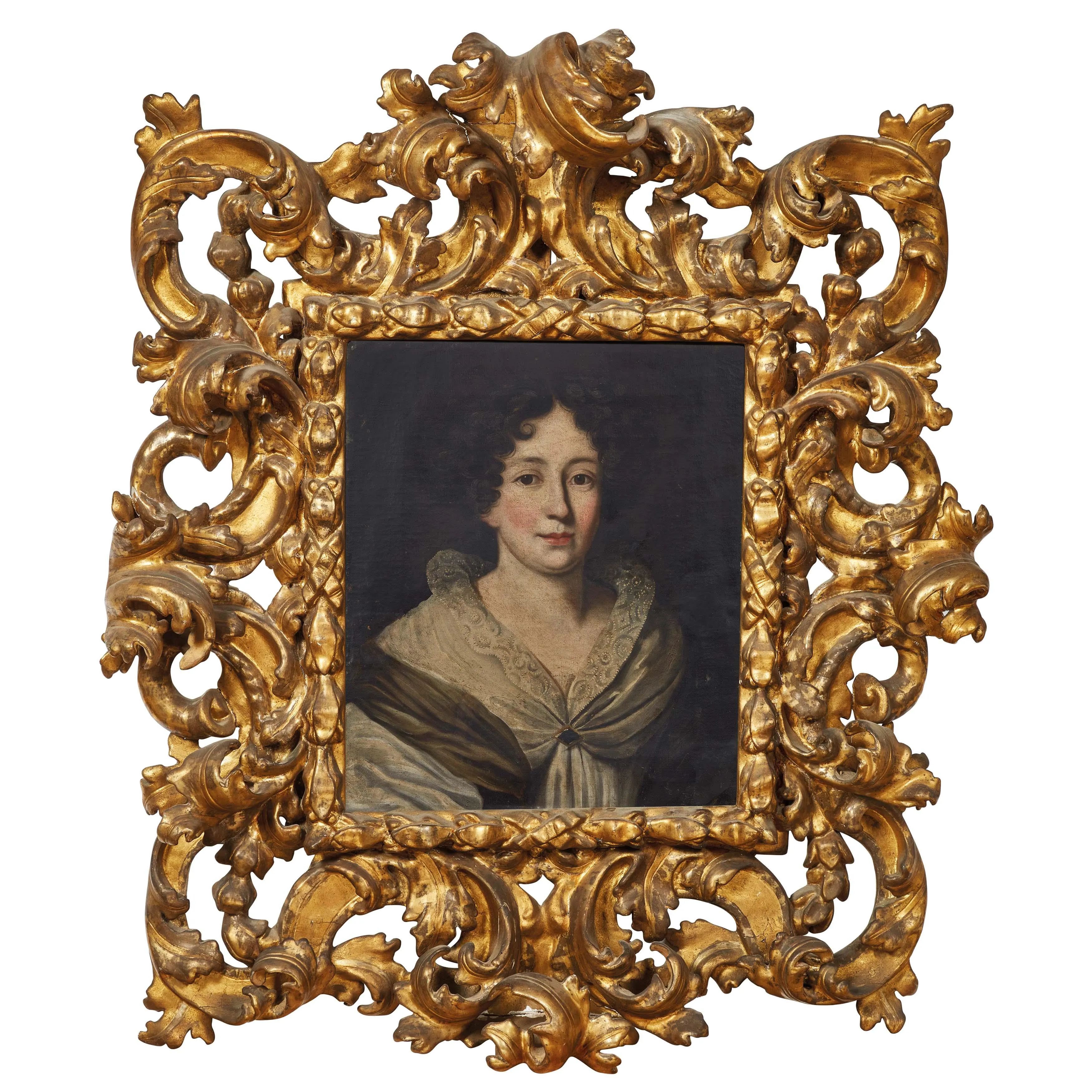
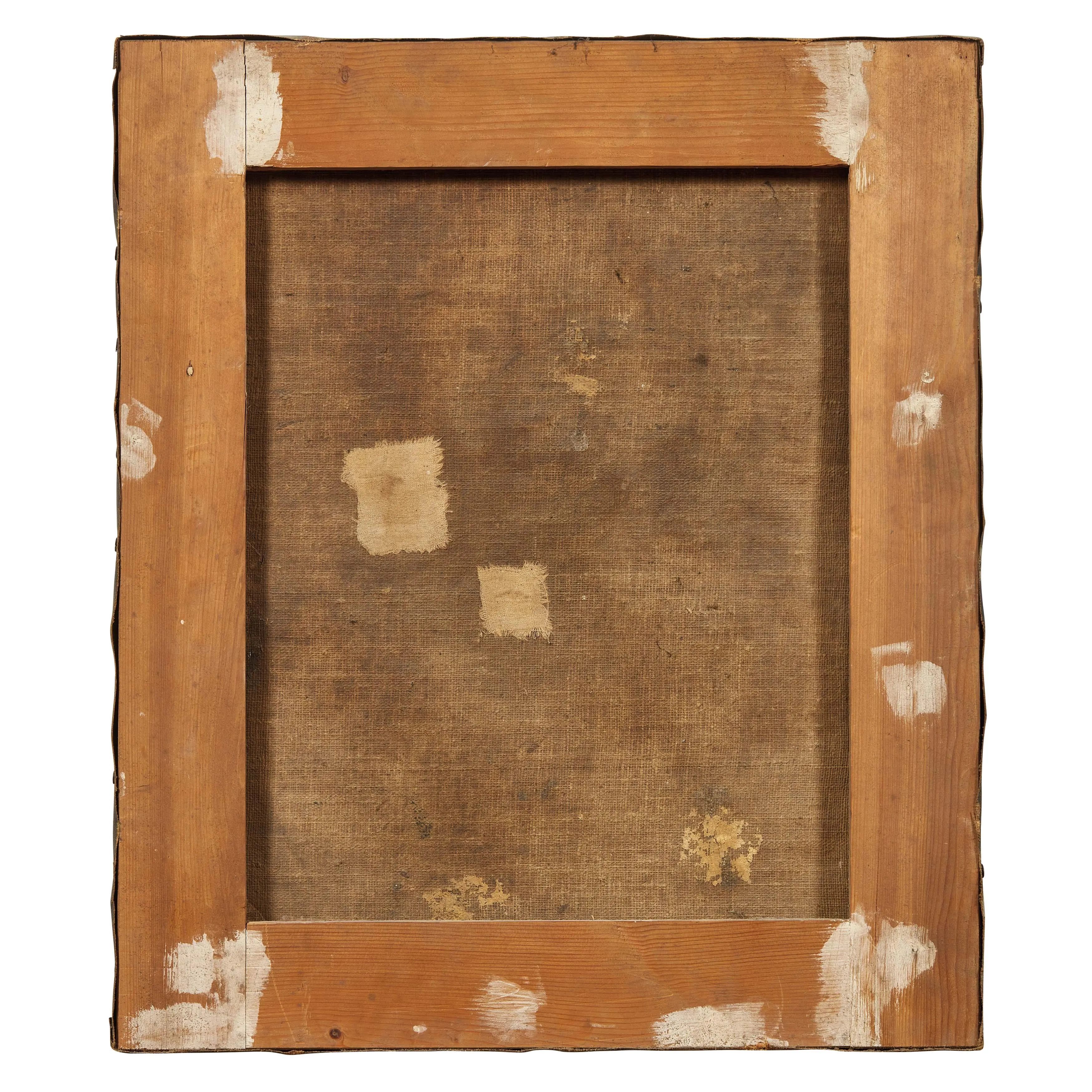
oil on canvas, in a carved and gilt frame, 55.5×47.5 cm
RITRATTO DI GIOVANE (MARIA MANCINI?)
olio su tela, in cornice dorata e intagliata, cm 55,5x47,5
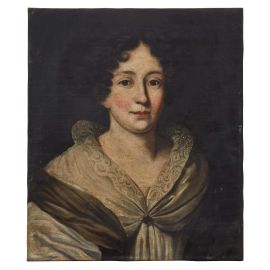
An elegant example of Jacob Ferdinand Voet’s refined portraiture, the painting depicts a young woman in a half-length portrait, captured in a composed and noble pose, in the style of portraiture that made the Flemish painter famous at the major European courts of the second half of the 17th century.
Trained in Antwerp and active primarily in Rome from the 1660s onward, Voet established himself as the preferred painter of the Roman aristocracy, creating a vast collection of portraits of noblewomen belonging to the most influential families of the era. His painting is distinguished by the extraordinary softness of the skin tones, the subtle psychological rendering of the faces, and the exquisite depiction of silks, velvets, lace, and jewelry - elements rendered with a luminous and highly elegant technique.
The identification of the young woman as Maria Mancini, proposed by traditional scholarship, remains plausible but not definitive. The niece of Cardinal Mazarin and a celebrated figure at the court of Louis XIV, Maria Mancini was among the most frequently portrayed women of her time, and her face appears in several versions attributed to or associated with Voet and his circle.
The work displays all the distinctive characteristics of the artist’s style: the figure emerges against a dark background with carefully calibrated lighting that focuses attention on the face, while the delicate twist of the torso and the direct gaze lend the portrait an immediate vitality. The quality of the execution, combined with the compositional balance and refined brushwork, allows the painting to be placed within the master’s mature body of work, likely created between the seventh and eighth decades of the 17th century.
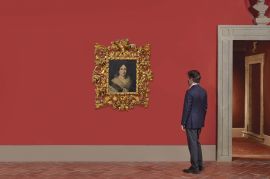
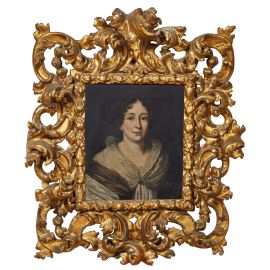
The carved and gilded frame surrounding the painting is splendid. The carved elements - and, in particular, the elegant band running around the canvas - indicate that it was crafted in Lombardy during the height of the 17th century, that is, at the same time the painting was created.