

Baldassarre d’Este
(Reggio Emilia, 1432 – Ferrara, 1510)
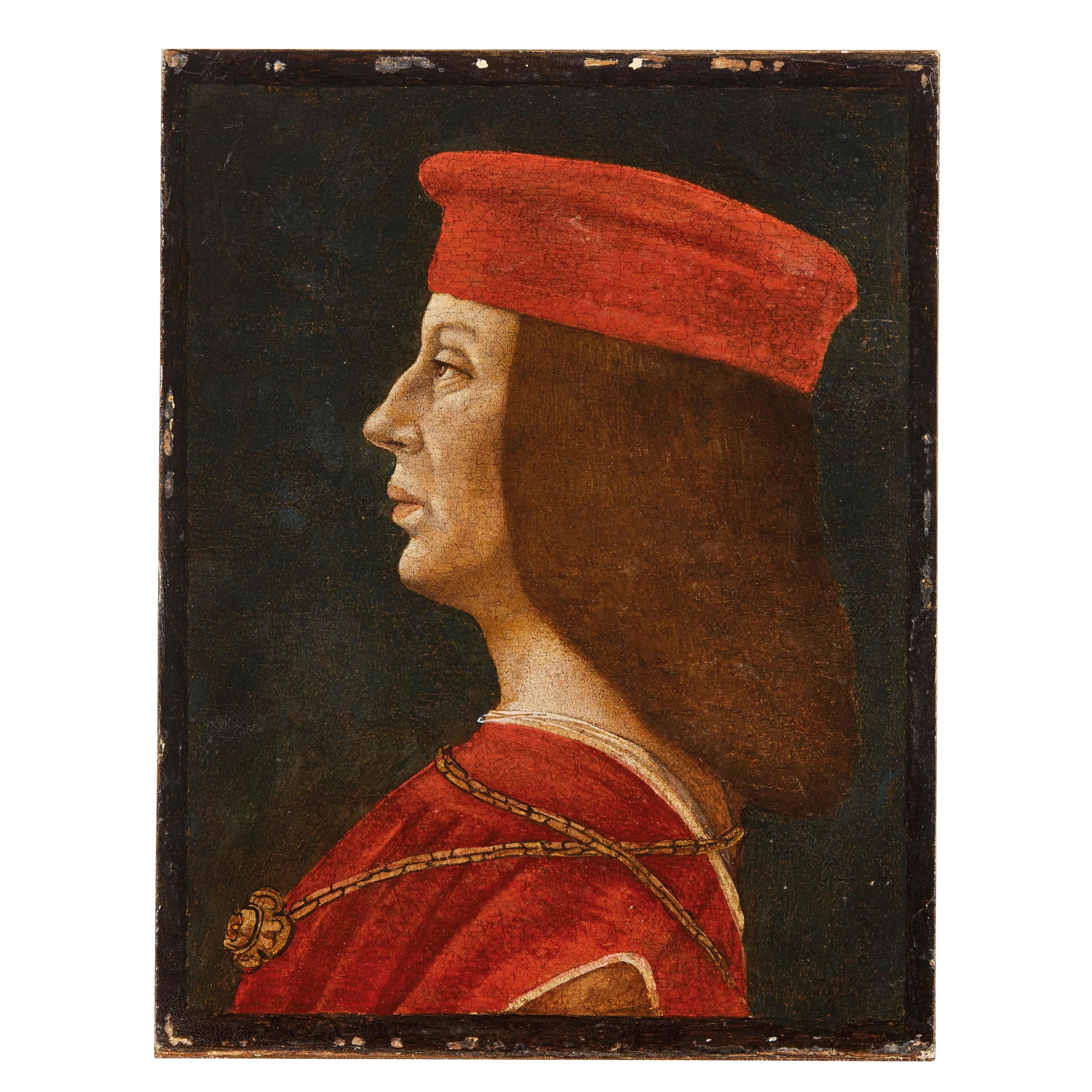
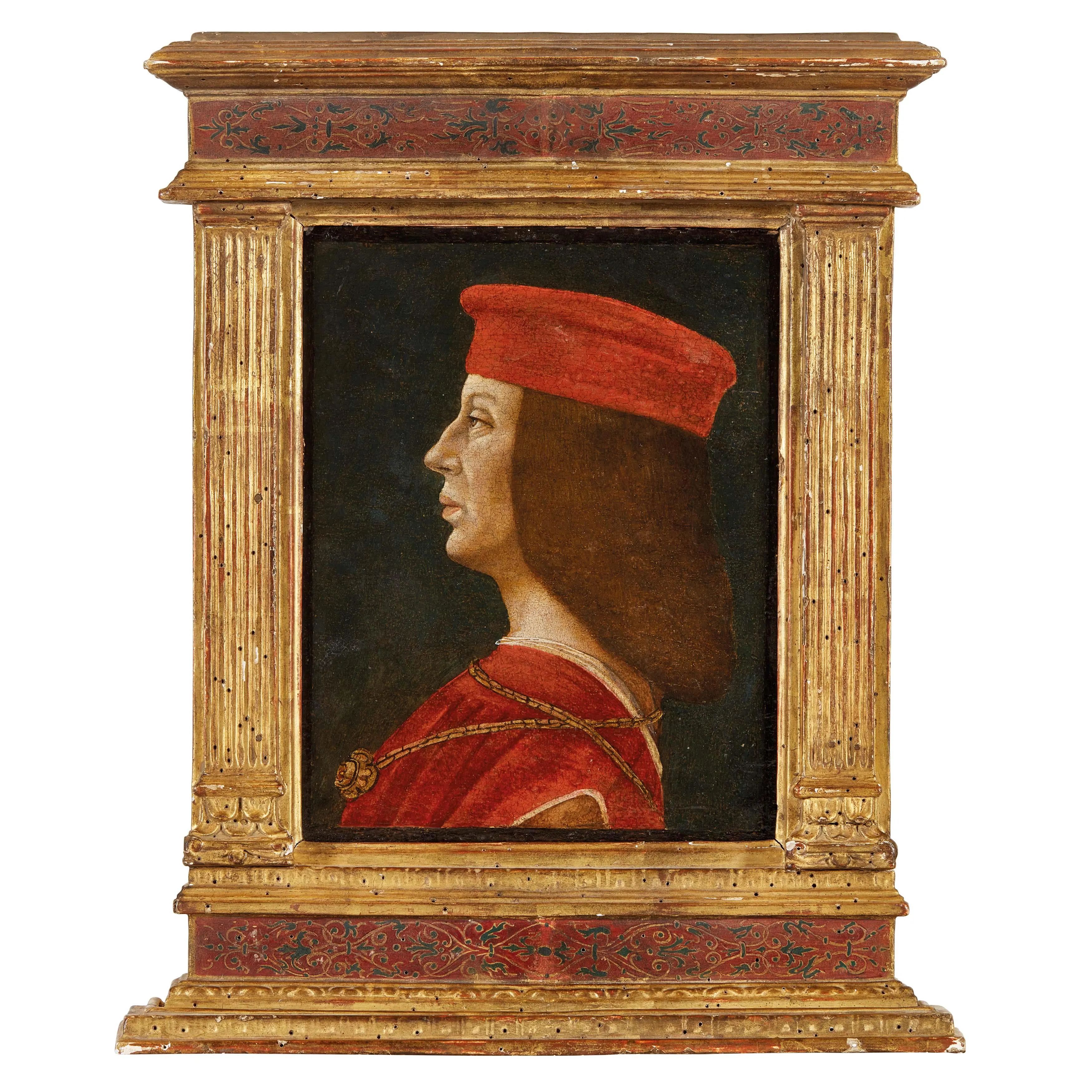
PORTRAIT OF A YOUNG MAN IN PROFILE FROM THE MALATESTA FAMILY
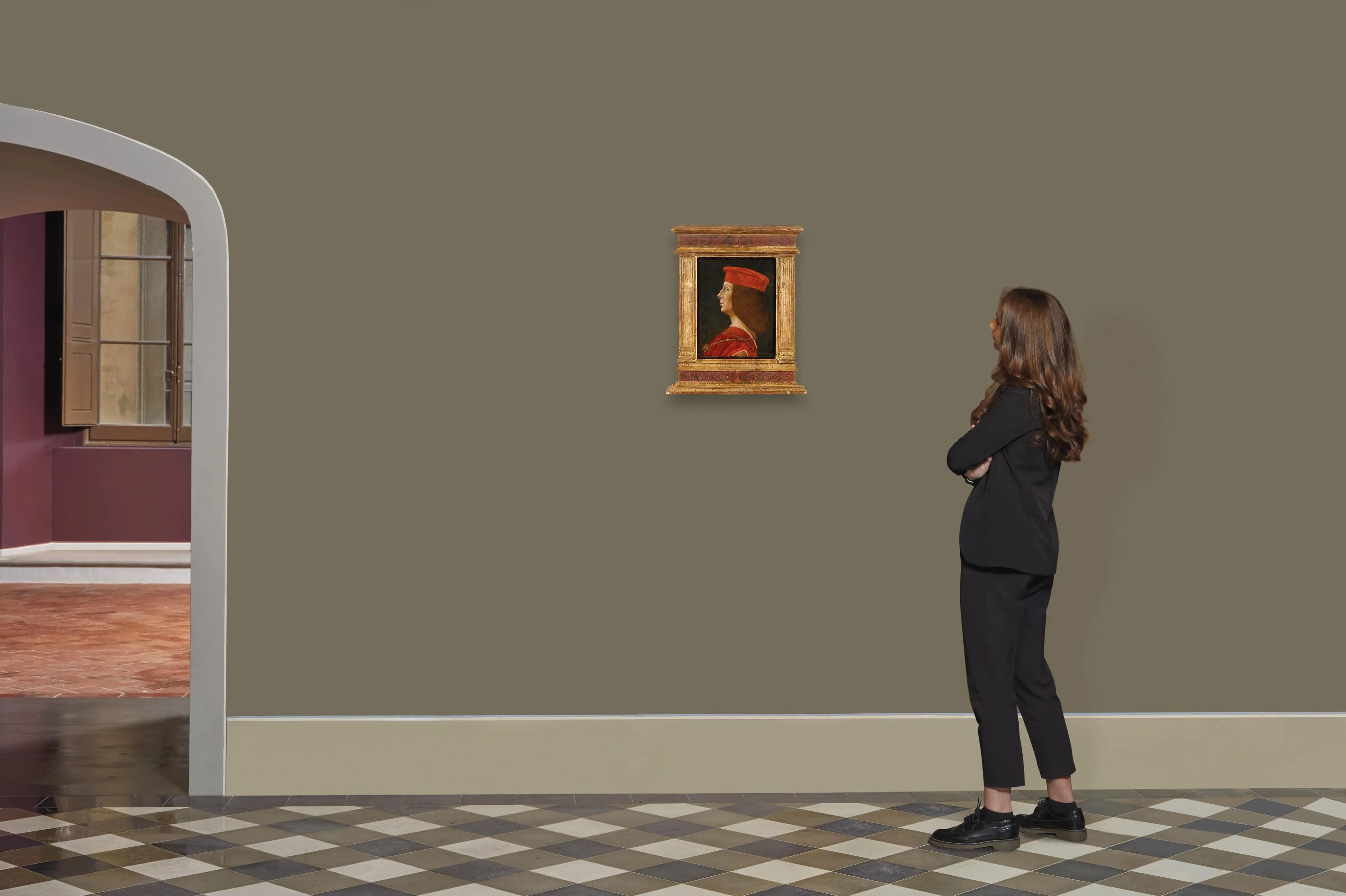
oil on panel, 28x22 cm
RITRATTO DI GIOVANE UOMO DI PROFILO DI CASA MALATESTA
olio su tavola, cm 28x22
Provenance
-New York, Wildenstein & Co.;
-Paris, Christie’s, 25 June 2004, lot. no. 65.
Bibliography references
- S. Buganza, Intorno a Baldassarre d’Este e al suo soggiorno lombardo, in “Solchi”, IX, 1-3, 2006, pp. 3-69.
Photographic references
-Bologna, Fototeca Zeri, file no. 28102.
A court painter to the Este family and one of the most refined portraitists active in Ferrara during the second half of the fifteenth century, Baldassarre d’Este developed a style deeply rooted in Ferrara’s figurative tradition, distinguishing himself through his rigorous rendering of facial features and his preference for profile portraits, derived from the tradition of medal making and the example of Pisanello. His career is first documented at the Sforza court in Milan and Pavia and, from 1469, in the service of Borso and Ercole I d’Este in Ferrara, where he was celebrated above all as a portraitist.
The work presented here depicts a young man from the Malatesta family, portrayed according to the official iconography of the full-profile portrait against a neutral background. The attention to physiognomic detail, the linear elegance of the outline, and the understated rendering of the clothing recall the finest examples of Baldassarre’s portraiture, in which individual observation is combined with the courtly ideal of dynastic representation. The subtle brushwork and the carefully calibrated play of light contribute to giving the face a vivid psychological presence, even within the rigorous formal structure characteristic of Ferrarese portraiture from the third quarter of the 15th century.
The style of this painting bears striking similarities to the profile portraits attributed to Baldassarre d’Este, in which the artist achieves results of great descriptive finesse, positioning himself as an interpreter of a figurative culture that blends Flemish influences, the humanist tradition, and the sensibility of the Po Valley.
It is no coincidence, in fact, that Zeri, in the 1970s - when the work was at Wildenstein in New York -attributed the painting to the artist, a native of Reggio Emilia.