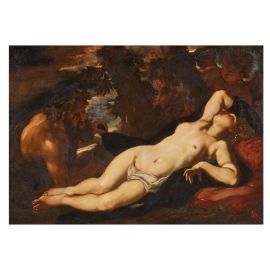


Antonio Bellucci
(Venice, 1654 - Soligo, 1726)
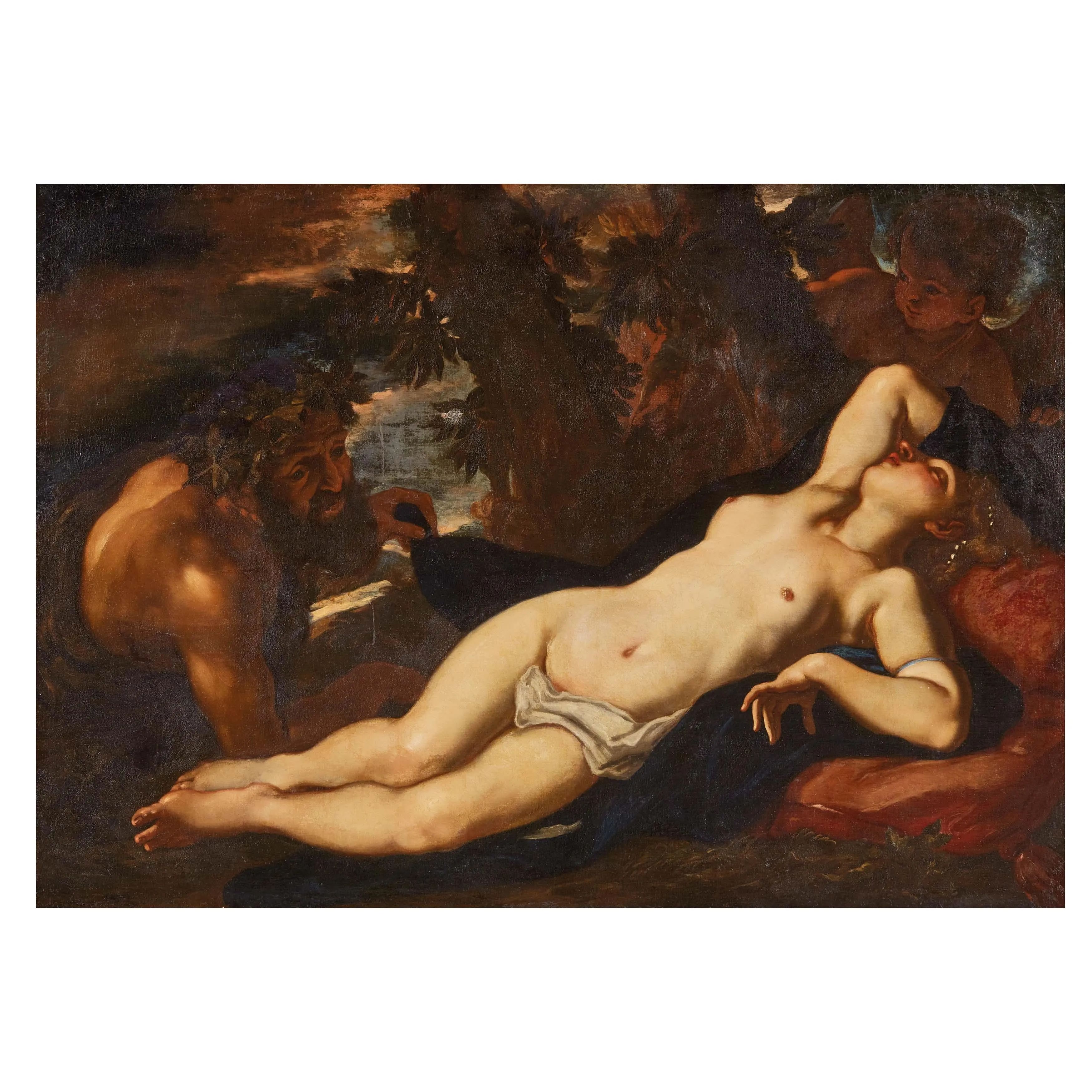
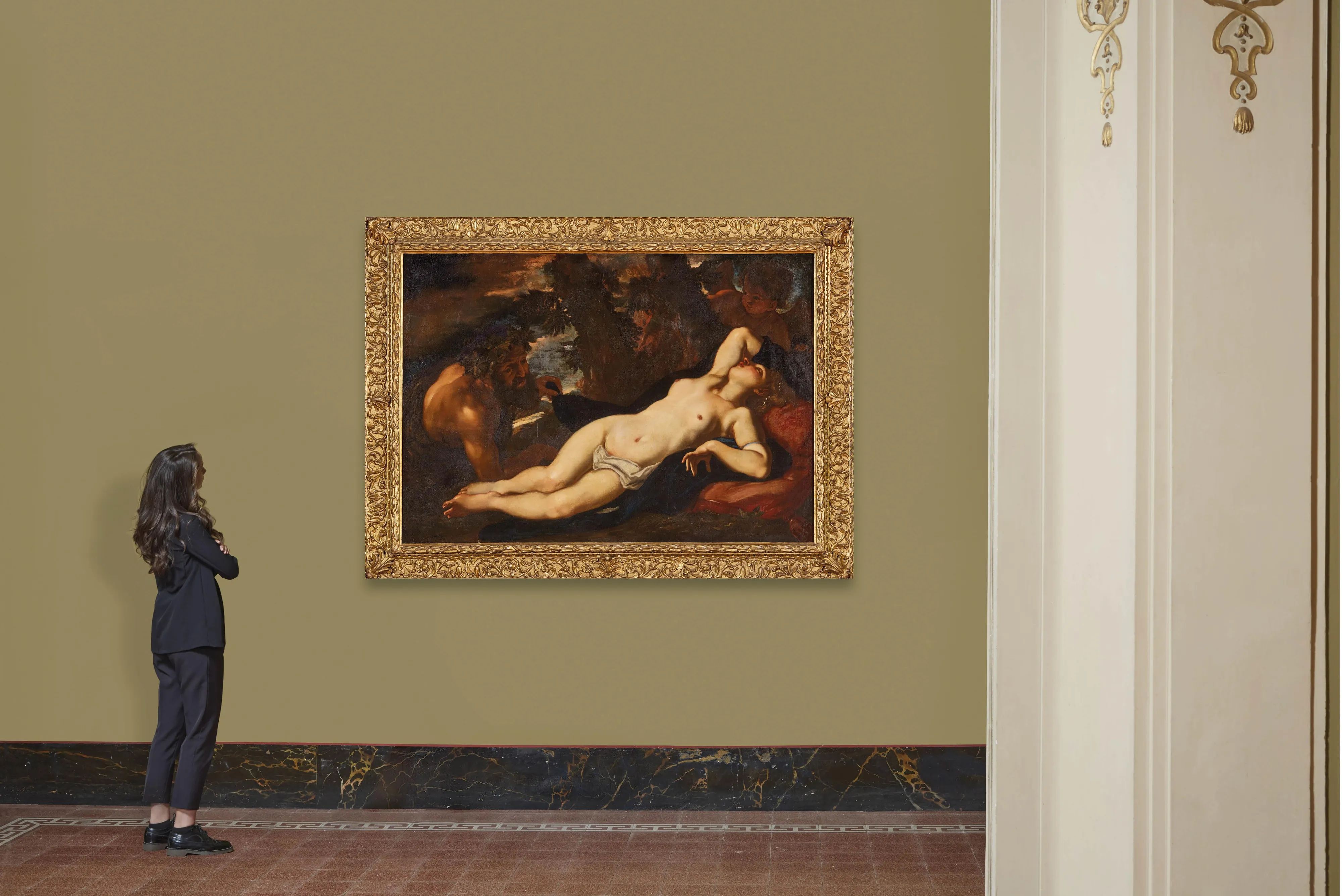
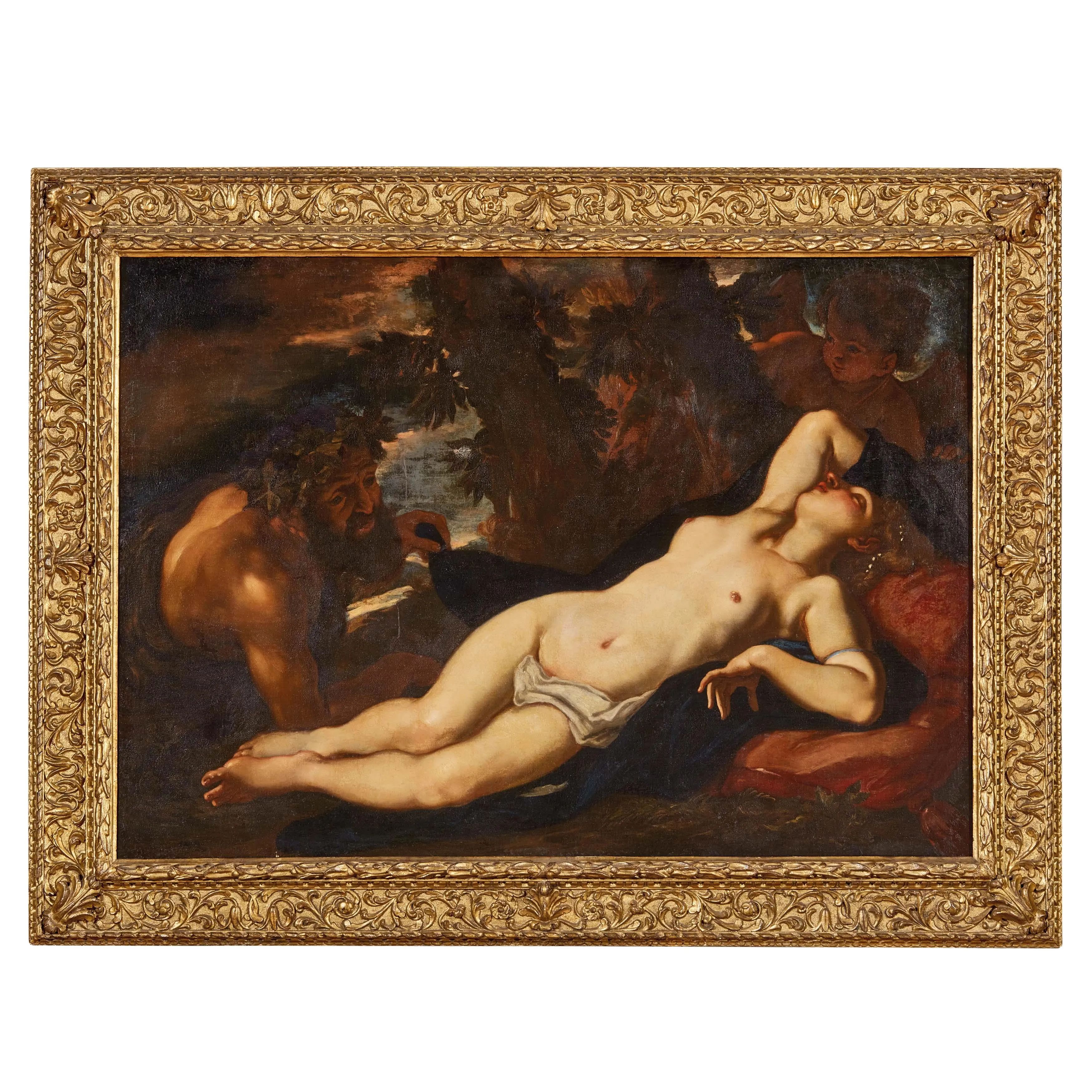
BACCHUS AND ARIADNE
oil on canvas, 120x176 cm
BACCO E ARIANNA
olio su tela, cm 120x176
Reference bibliography
- F. Magani, Antonio Bellucci. Catalogo ragionato, Rimini, 1995.
One of the leading figures in Venetian painting between the 17th and 18th centuries, Antonio Bellucci interprets the famous mythological episode of the encounter between Bacchus and Ariadne with the narrative grace and refined chromatic sensibility that are the hallmarks of his mature work. The subject, drawn from Ovid’s Metamorphoses, depicts the moment when the god of wine consoles Ariadne - abandoned by Theseus on the island of Naxos - by promising her immortality through the transformation of her wreath into a constellation.
The composition unfolds within a balanced theatrical framework, in which the main figures engage in an elegant dialogue of gestures and glances. The sweeping scenic scope is enhanced by a warm, diffused light that renders the skin tones with soft shading, while the drapery, enlivened by a refined color palette, lends rhythm and movement to the entire scene. The quality of the brushwork - fluid and vibrant - reveals Bellucci’s full assimilation of Venetian Baroque culture, which he was able to translate into a style already oriented toward the elegance of early Rococo.
The artist, trained in the circles of Pietro Liberi, Antonio Zanchi, and Andrea Celesti, soon developed a personal style characterized by a measured classicism and a luminous decorativism that secured him a prestigious international career. Active in Venice, Vienna, Düsseldorf, and London, Bellucci made a decisive contribution to the spread of Venetian painting throughout the European courts, foreshadowing the artistic movement that would find its fullest expression in the works of Giovanni Antonio Pellegrini, Sebastiano Ricci, and Giambattista Tiepolo.
The subject of Bacchus and Ariadne belongs to the artist’s most successful secular repertoire, particularly well-suited to highlighting his ability to blend formal elegance, restrained sensuality, and a pastoral atmosphere. Critical sources emphasize, in fact, that Bellucci achieves one of the highest expressions of his artistic vision in his mythological compositions, distinguishing himself through his “precise draftsmanship,” the “softness of the tones,” and the “warm and vibrant luminosity” of the color composition - characteristics that this canvas displays with particular clarity.
In terms of size, quality of execution, and scenographic composition, the painting fits effectively into the body of work intended for the decoration of aristocratic residences - a field in which Bellucci achieved results of the highest caliber, blending classical culture, narrative invention, and refined decorative taste.
A painting with the same subject and composition but smaller in size and of the same quality was sold at auction in 2006 in Paris (Tajan. Tableaux anciens & du XIXè siècle, lot no. 7).