
Luca Ferrari, known as Luca da Reggio
(Reggio Emilia, 1605 - Padova, 1654)
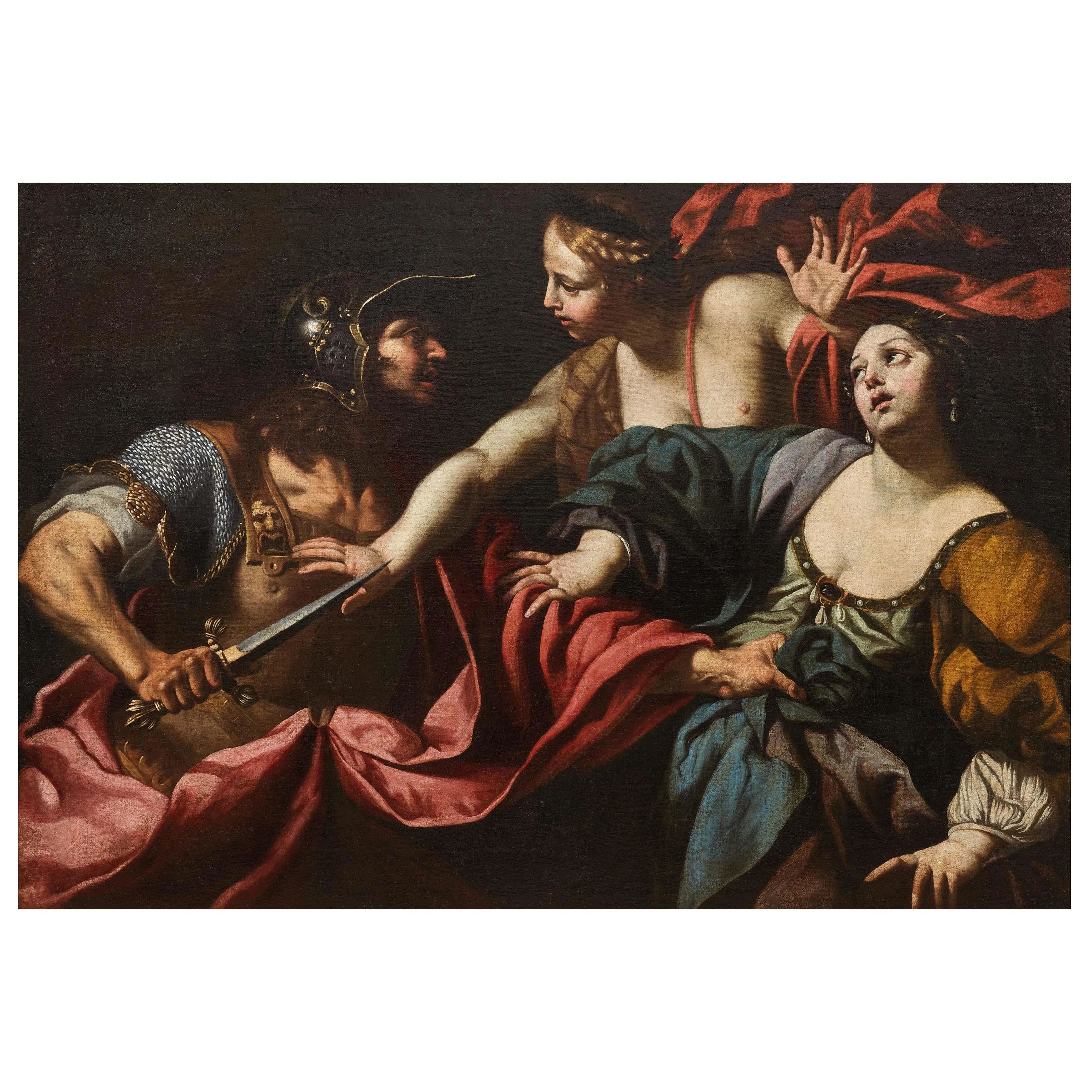
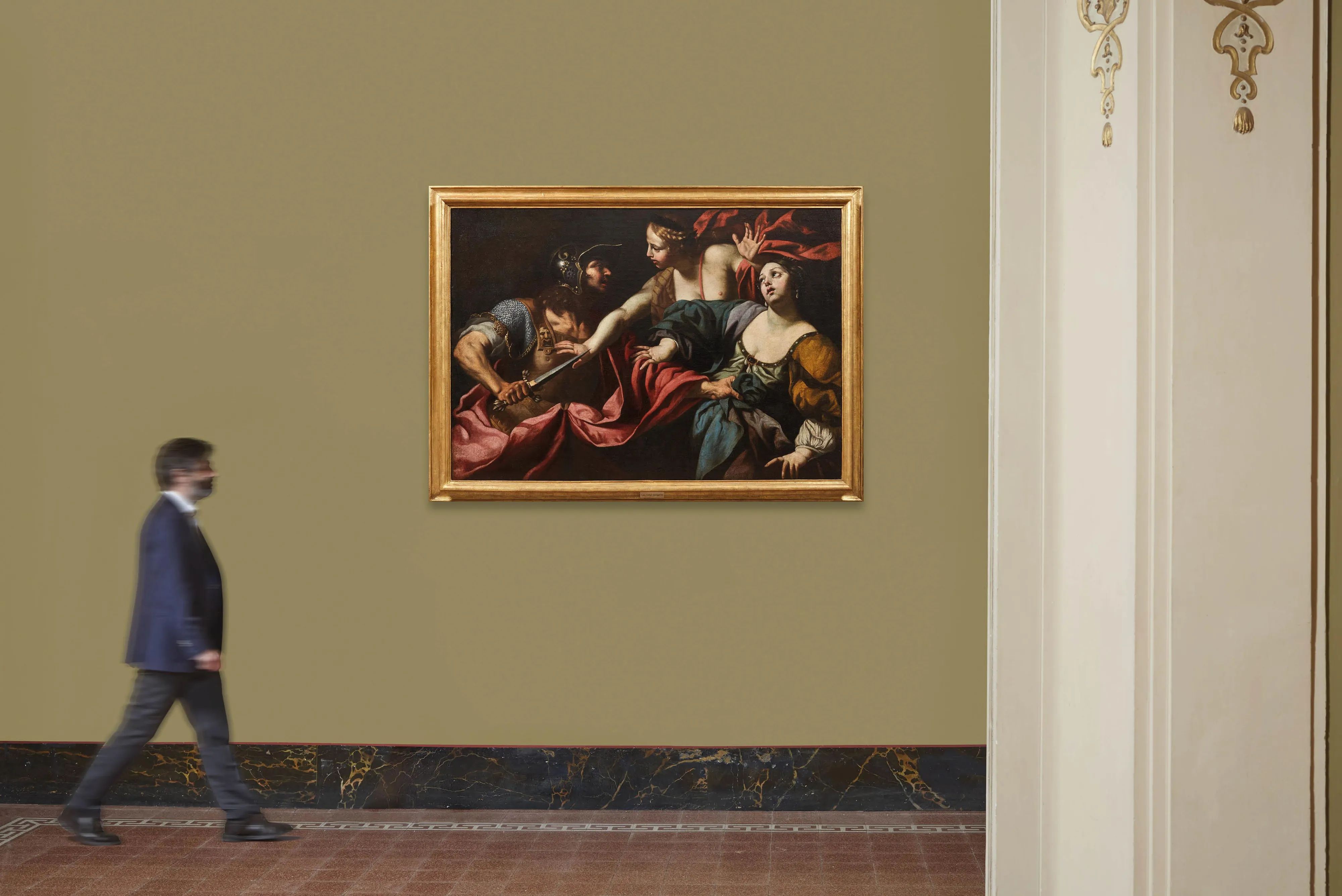
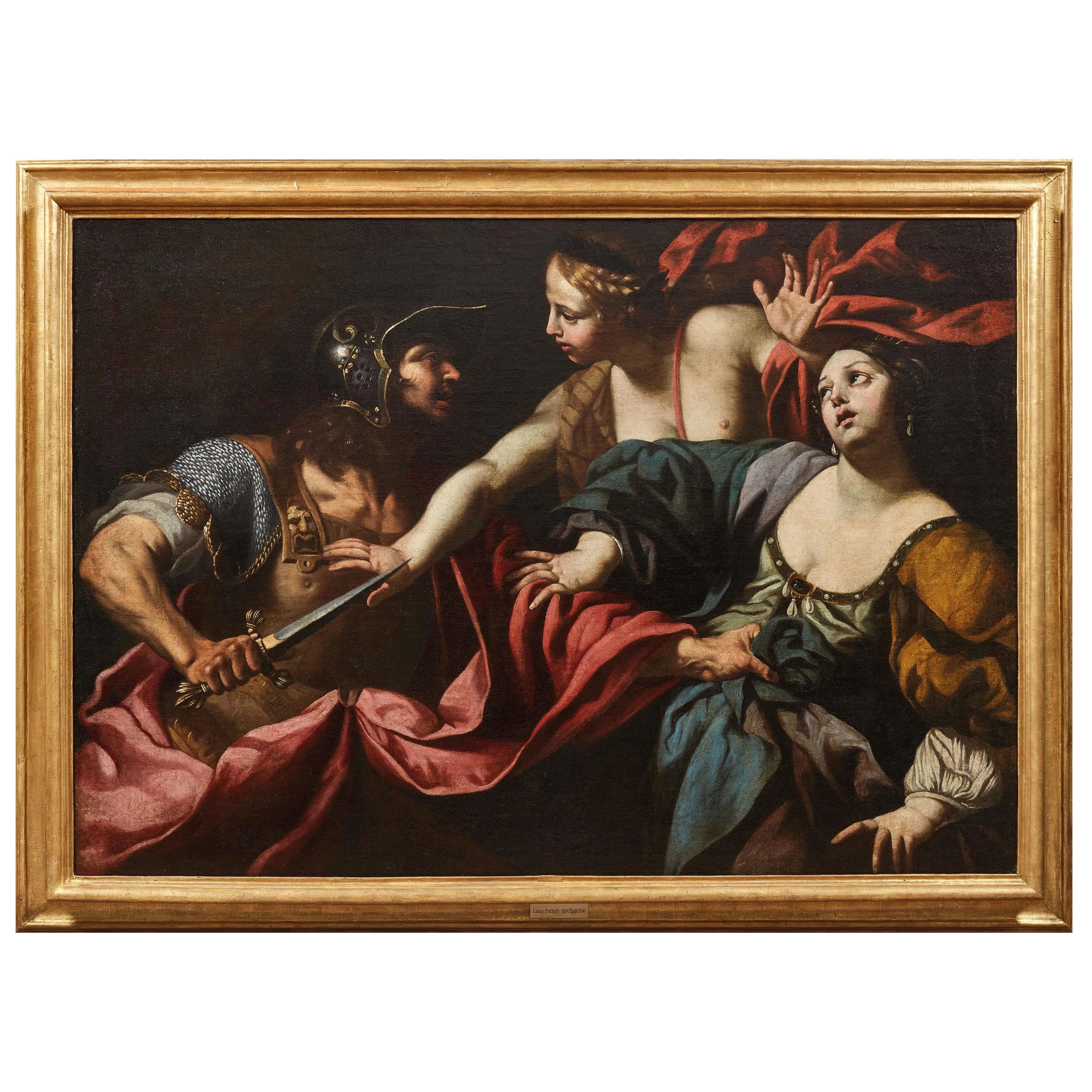
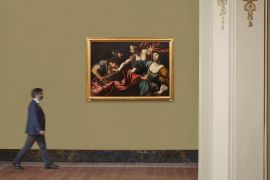
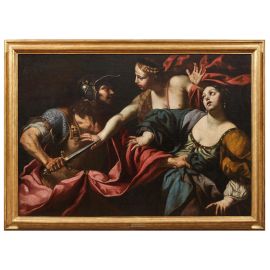
VENUS PREVENTS MENELAUS FROM KILLING ELENA
oil on canvas, 115x164 cm
VENERE IMPEDISCE A MENELAO DI UCCIDERE ELENA
olio su tela, cm 115x164
Provenance
- Florence, Pandolfini, Old Master Paintings, 14 May 2025, lot. no. 24.
Comparative bibliography
- M. Pirondini, Luca Ferrari, Manerba 1999, pp. 139-140, 249.
The composition presented here is part of the successful series of paintings that Luca Ferrari dedicated to the episode taken from Book II of Virgil’s Aeneid, in which Venus intervenes to prevent Helen’s murder during the sack of Troy. Although in the collecting tradition the protagonist is sometimes identified as Menelaus, the Virgilian source correctly identifies Aeneas as the hero held back by the goddess - his mother - at the climax of the action. This iconographic confusion is also documented in modern scholarship and in the work’s collection history.
The painting stands out for its vigorous Baroque composition: the figures are arranged within a tightly structured diagonal composition, while Venus’s imperious gesture halts the hero’s momentum with theatrical force. The refined contrast between Helen’s delicate beauty, illuminated by a clear light reminiscent of Reni, and the warrior’s powerful anatomy reveals the successful synthesis that characterizes Luca Ferrari’s mature period, in which he was able to combine the classicist elegance derived from the teachings of Guido Reni with a more energetic and naturalistic style, reflecting the Caravaggesque influences prevalent in northern Italy.
The painting bears a striking resemblance to the version considered to be by the artist’s own hand and housed at the Art Gallery of South Australia in Adelaide (128.3 × 169.5 cm), generally dated around 1650, from which it borrows the compositional structure and the arrangement of the figures. An early workshop copy is housed at the Pinacoteca Nazionale in Bologna, while a copper engraving, recognized as an autograph by Massimo Pirondini, is held at the Indiana University Art Museum in Bloomington. These comparisons also allow us to place this painting within the context of the artist’s full maturity, when Ferrari developed a style characterized by strong narrative and luministic impact, intended for a cultured and discerning clientele.
The quality of the execution, the fluidity of the painterly brushwork, and the effective orchestration of light confirm that the painting belongs squarely within the Reggio-born master’s oeuvre, offering further evidence of the popularity of one of his most cherished secular subjects.