
Giacomo Ceruti, known as il Pitocchetto
(Milan, 1698 - 1767)
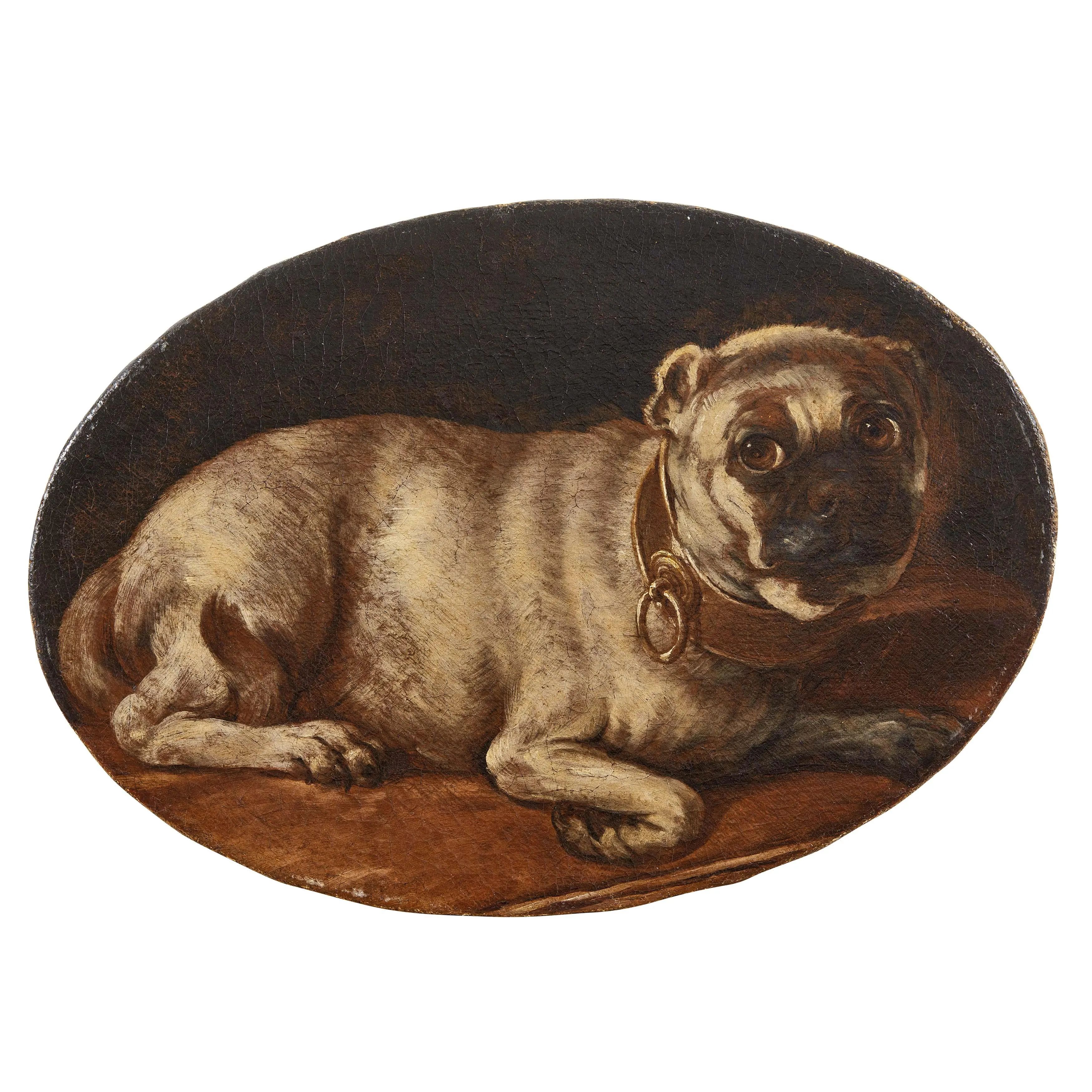
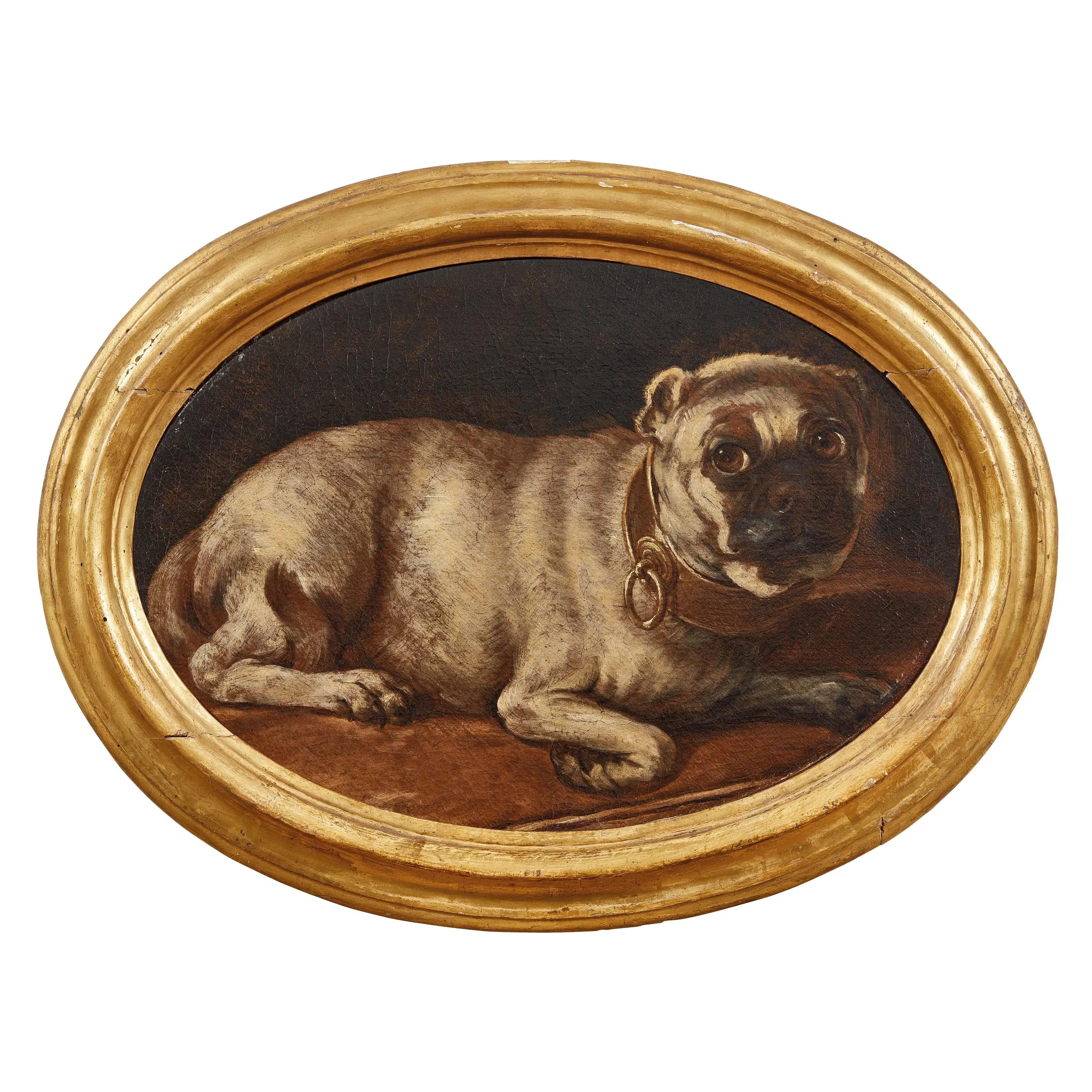
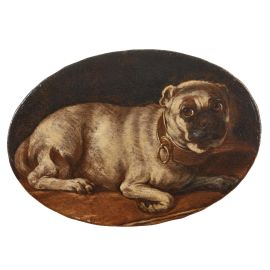
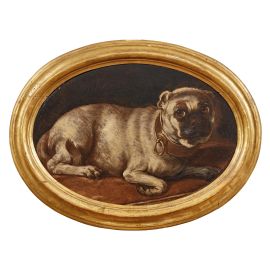
PORTRAIT OF A PUG
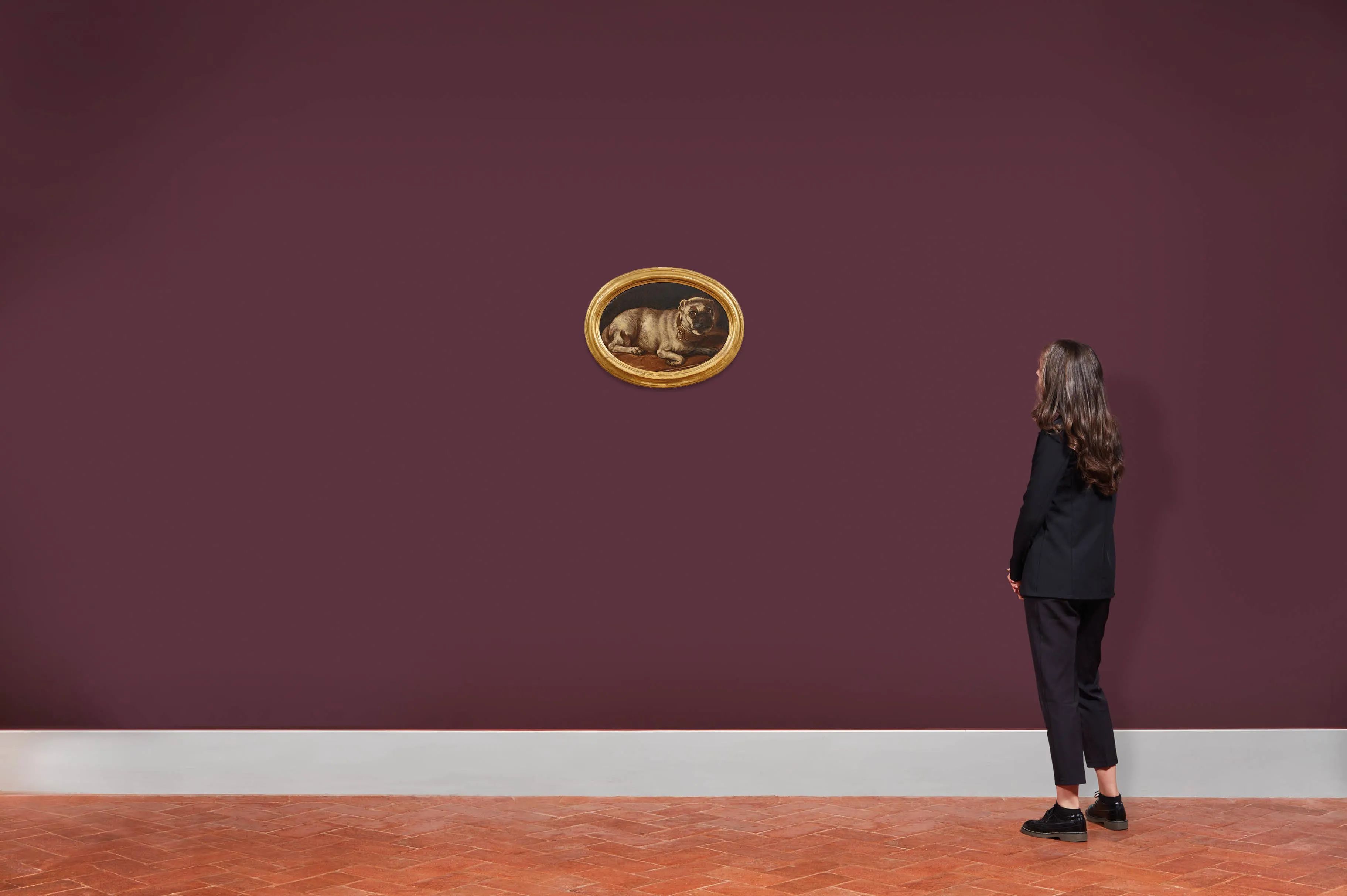
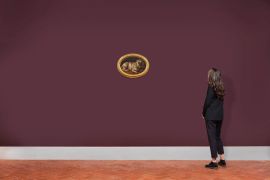
oil on canvas, 29.5x42 cm
RITRATTO DI CANE CARLINO
olio su tela, cm 29,5x42
Known above all as an extraordinary interpreter of 18th-century social reality, Giacomo Ceruti, known as “il Pitocchetto,” devoted a significant portion of his work to portraiture, demonstrating a rare capacity for psychological insight in both aristocratic figures and more humble subjects. This context also includes the refined Portrait of a Pug, a testament to the growing popularity that animal portraiture enjoyed in the 18th century as an independent genre and a symbol of the culture and taste of European elites.
The small painting depicts a pug posed in profile, captured with extraordinary immediacy and naturalness. The composition, simple and devoid of extraneous elements, focuses attention exclusively on the animal, rendered with a sensitivity that transcends mere naturalistic representation. The raking light shapes the tawny coat, bringing out the soft variations in the fur and lending volume to the body, while the characteristic dark muzzle is defined with a few confident brushstrokes that convey the subject’s alert gaze and docile nature.
The work reveals the most authentic qualities of Ceruti’s painting: a free brushstroke that remains meticulously attentive to textural rendering, a chromatic balance played out in warm, muted tones, and that profound emotional engagement that characterizes his entire body of work. Although it is a portrait of a pet, the painter endows it with an almost human dignity, avoiding any decorative indulgence and instead prioritizing a sincere and empathetic depiction.
The choice of the pug is no accident. A breed of Eastern origin that became widespread in European courts between the 17th and 18th centuries, the pug was one of the aristocracy’s favorite dogs and frequently appears in official portraiture as a symbol of loyalty, refinement, and social prestige. In this case, however, the animal becomes the undisputed protagonist of the composition, foreshadowing that particular focus on animal portraiture that would reach its full development in European painting during the second half of the 18th century.
In terms of technical skill, immediacy of observation, and sensitivity to light, the painting convincingly belongs to Ceruti’s mature period, confirming the versatility of a master capable of conveying his intense humanity even in his depictions of the animal world. The work also serves as a rare testament to a lesser-known aspect of his oeuvre, yet one that is perfectly consistent with the artistic vision of one of the leading exponents of 18th-century Lombard naturalism.