

Domenico di Jacopo di Pace, detto Beccafumi
(Monteaperti, 1486 - Siena, 1551)
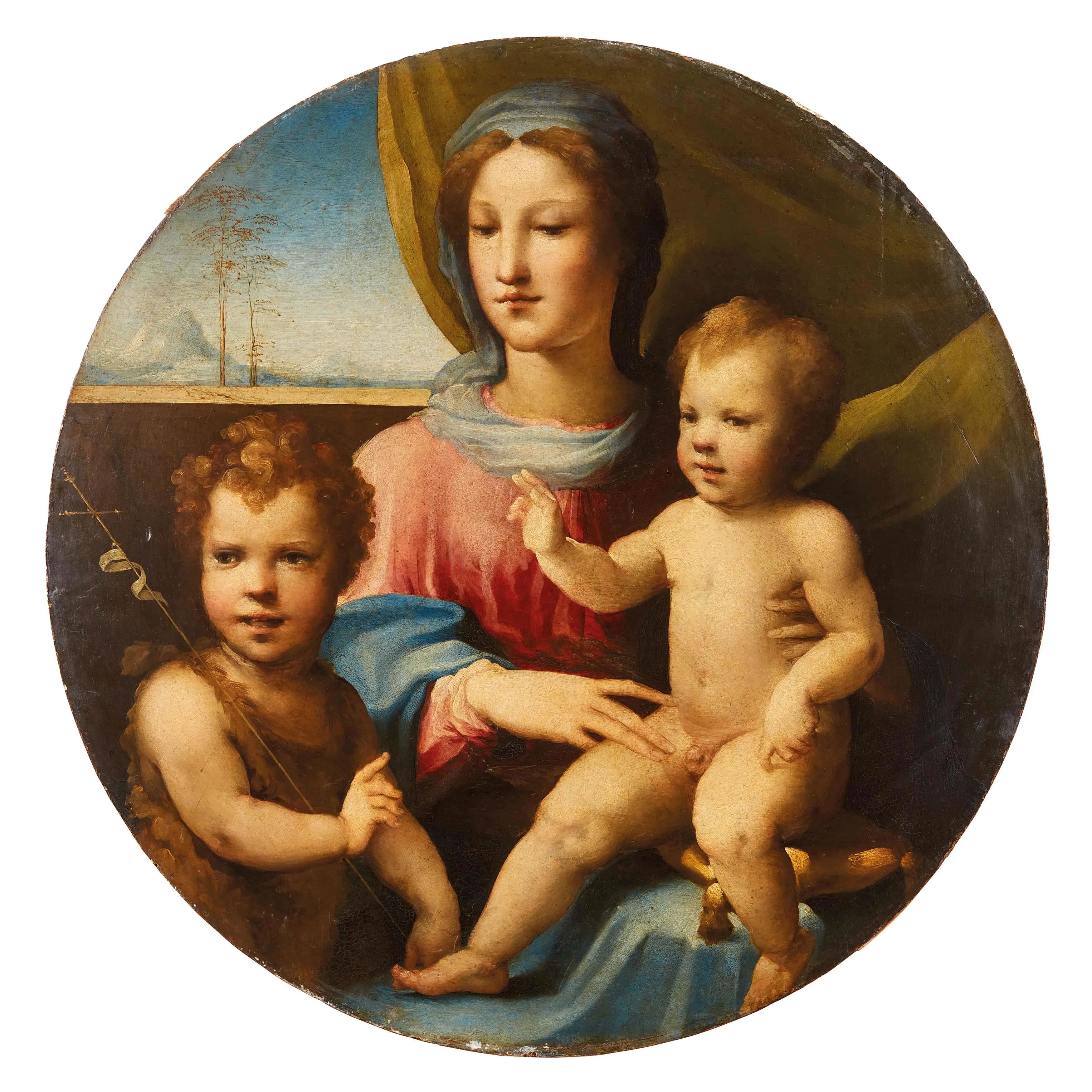
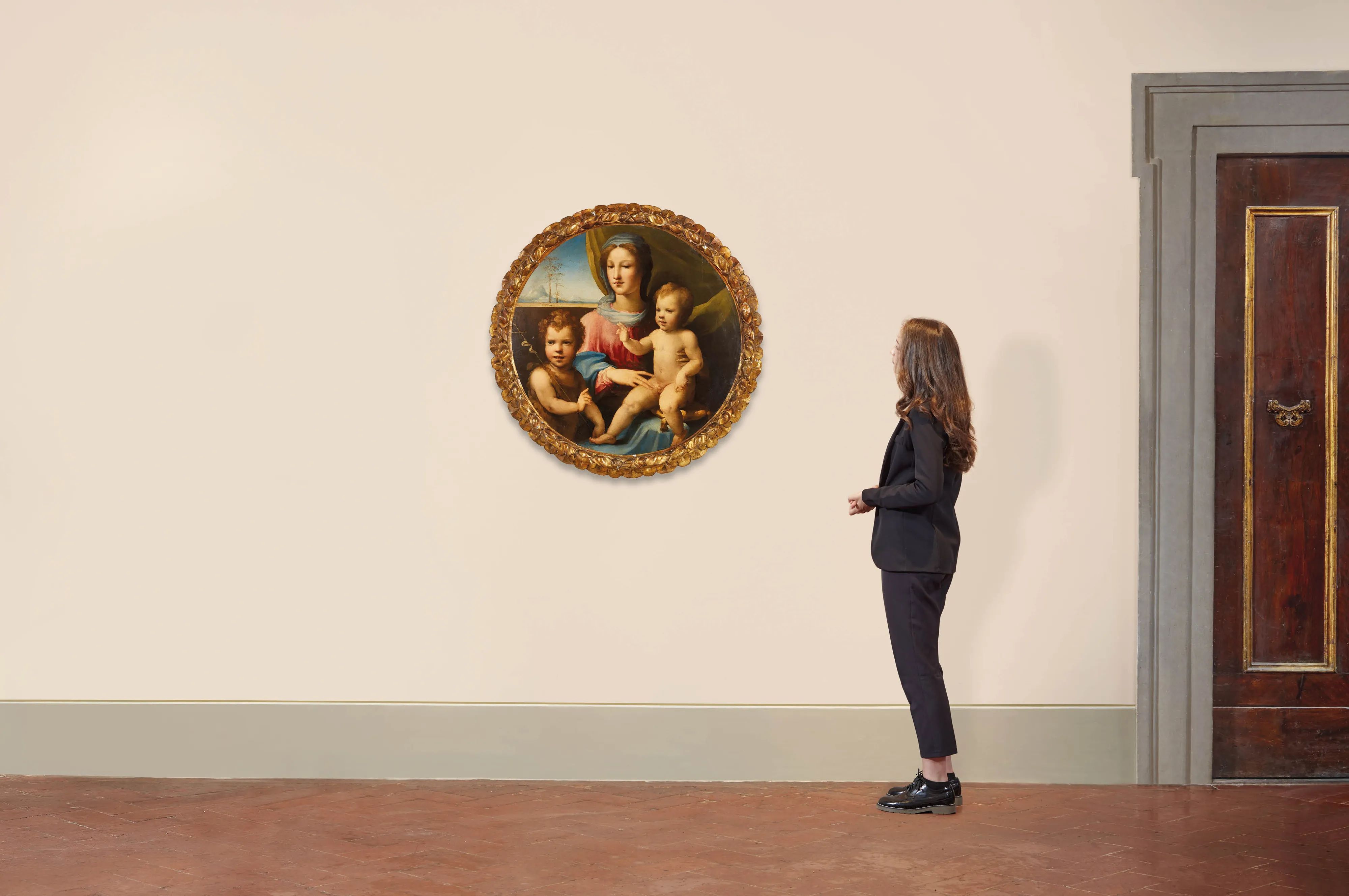
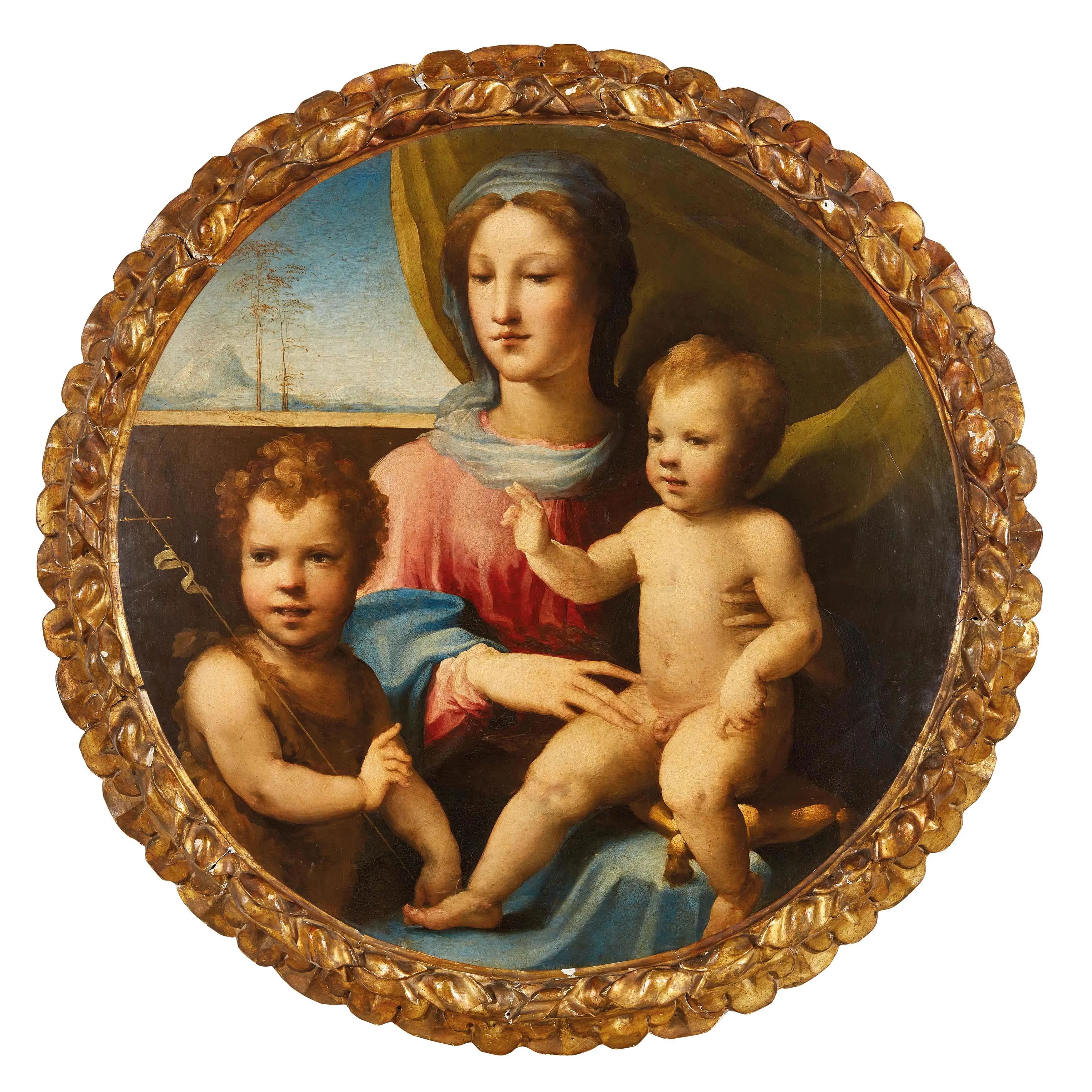
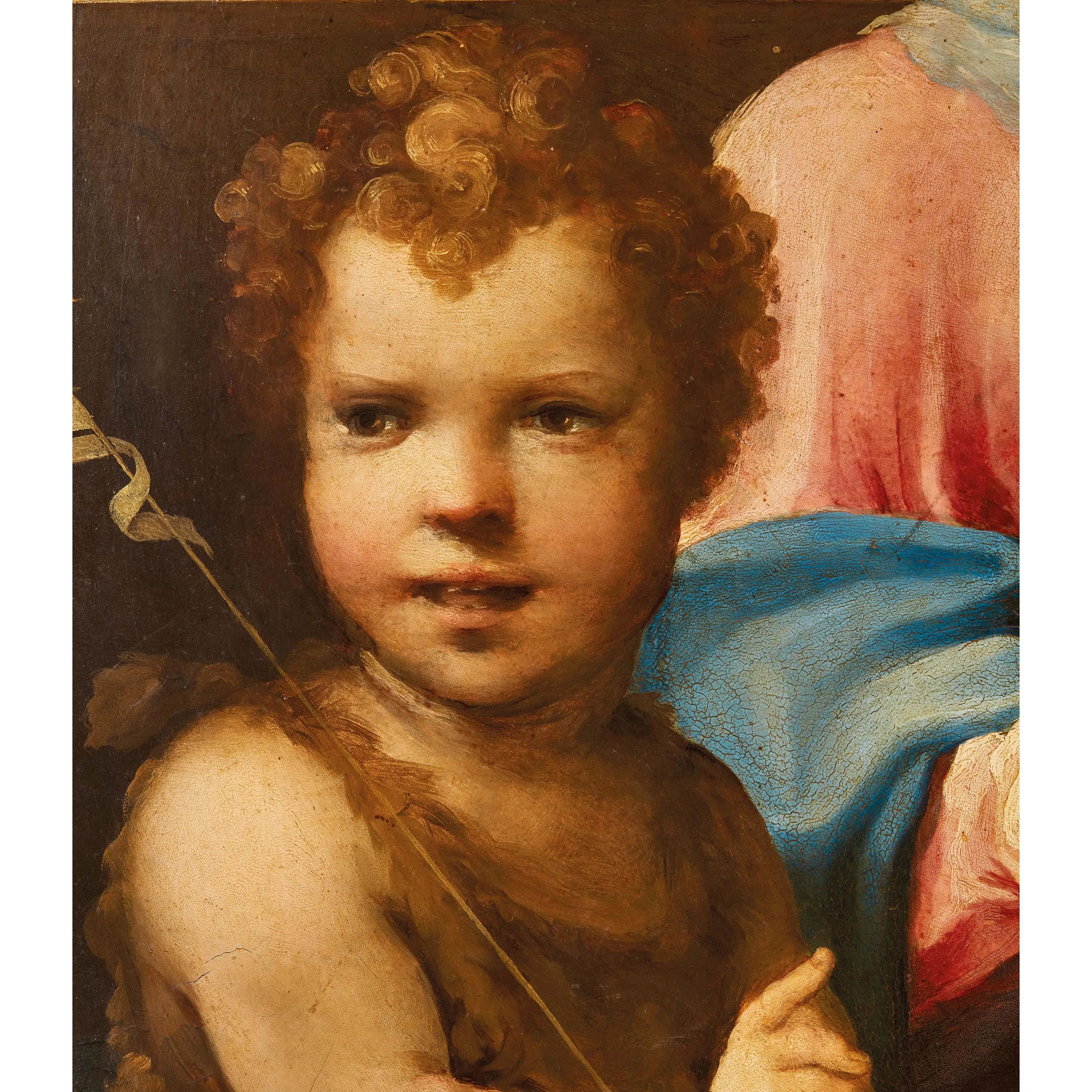
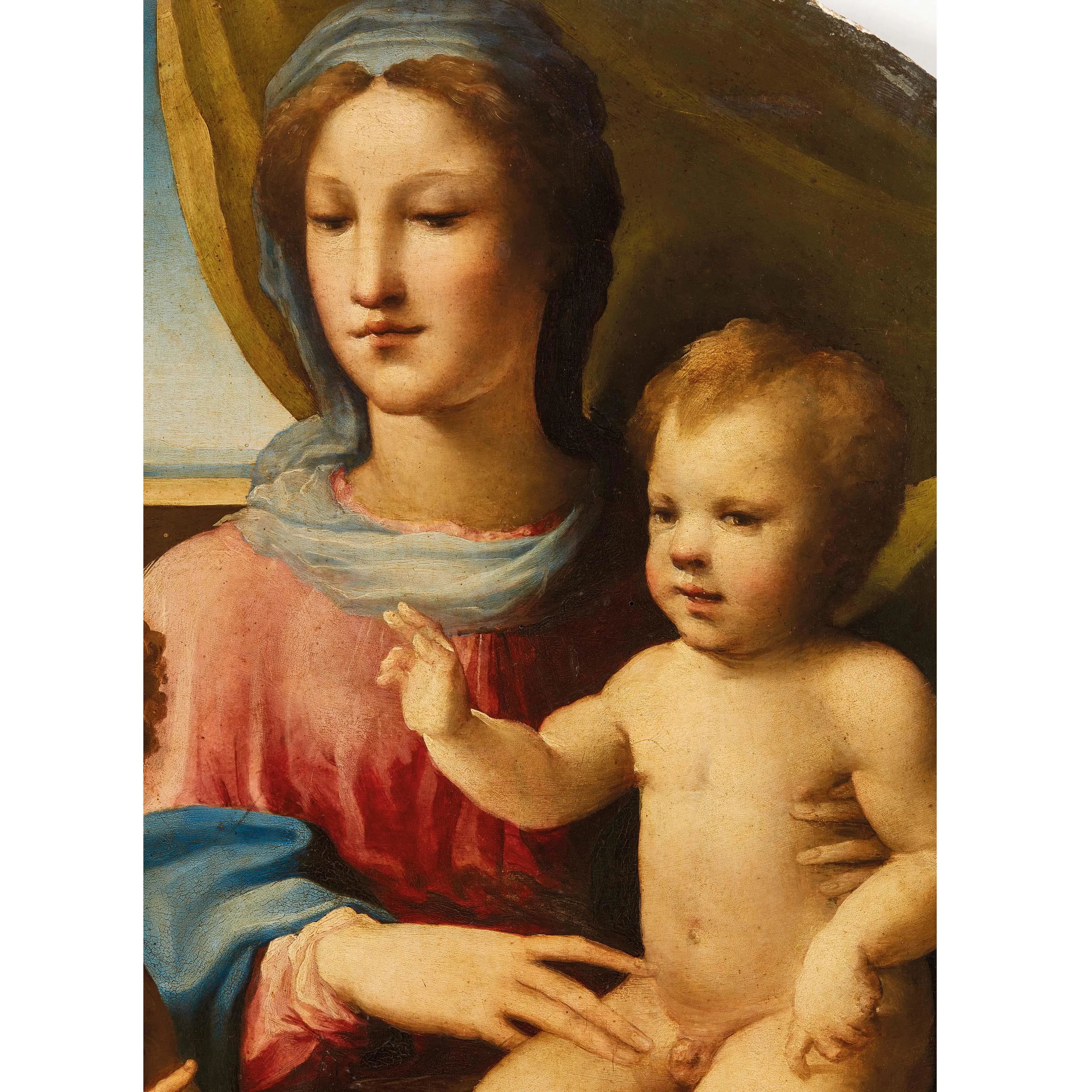
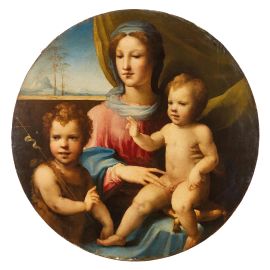
VIRGIN AND CHILD WITH SAINT JOHN THE BAPTIST
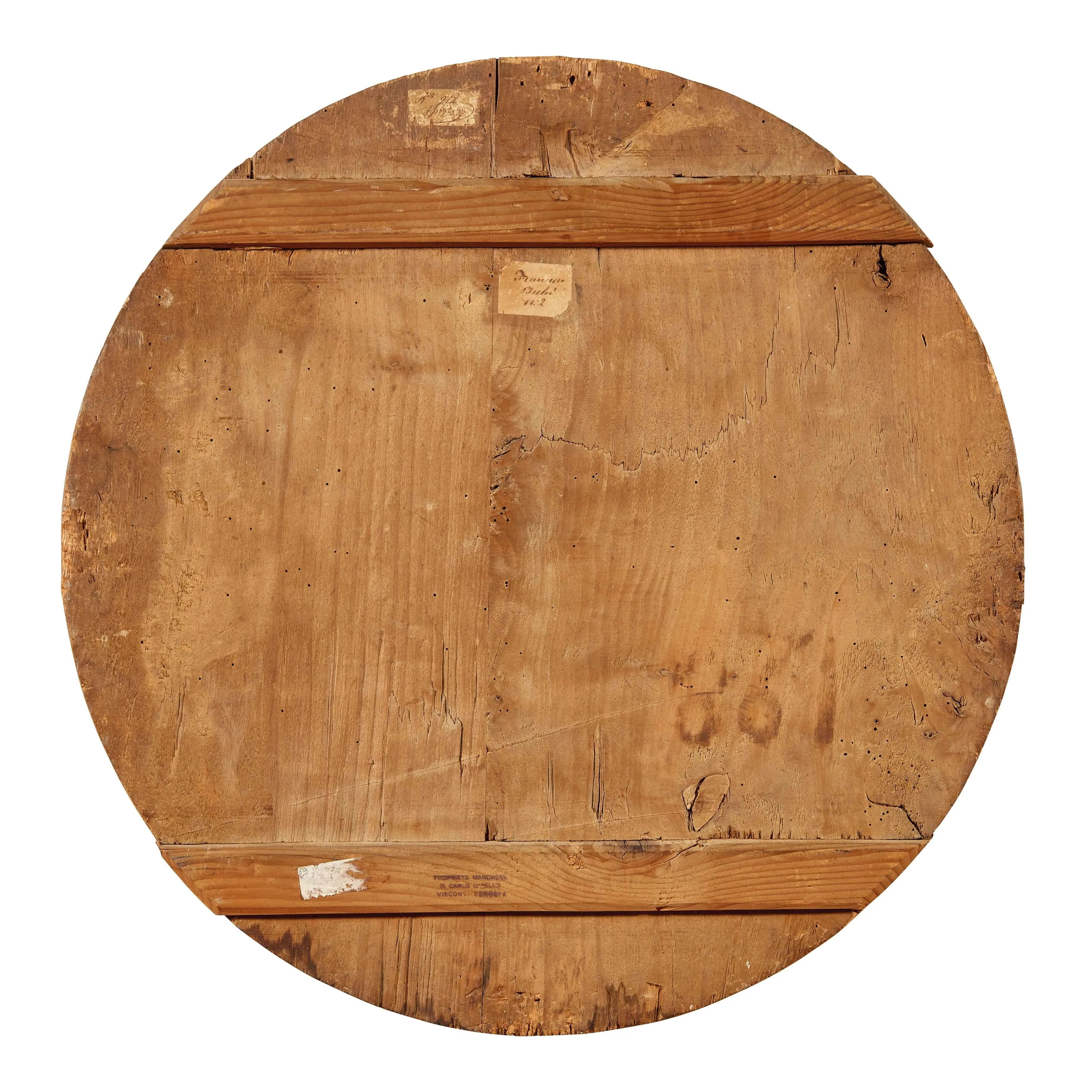
oil on panel, diam. 81 cm
MADONNA CON BAMBINO E SAN GIOVANNINO
olio su tavola, diam. cm 81
Literature
- L. Becherucci, Manieristi toscani, Bergamo 1944, p. 36;
- D. Sanminiatelli, Domenico Beccafumi, Milan 1967, p. 114, fig. 64;
- L'opera completa del Beccafumi, edited by E. Baccheschi, Milan 1977, cat. 133.
Among the most recurring themes in Domenico Beccafumi’s devotional works, the Madonna and Child with the Infant Saint John is one of the subjects in which the Sienese master experiments with particular freedom in his compositional and lighting choices. In this panel, the Virgin, absorbed in deep meditation, holds the Child, while the young St. John approaches with a devout gesture, establishing a dialogue of glances and movements that imbues the scene with a naturalness born of intense emotional engagement.
The work is firmly situated within the artist’s mature period, when the artistic language developed from the teachings of Fra’ Bartolomeo, Leonardo, and Michelangelo was reinterpreted through a distinctly Sienese sensibility, characterized by a highly personal use of light and a refined color palette. The figures emerge from a soft and vibrant painterly texture, defined by chiaroscuro passages of great subtlety, while the compositional structure reveals that dynamic tension which constitutes one of the distinctive elements of Beccafumi’s artistic vision.
Donato Sanminiatelli, after an initial dating proposal by Luisa Becherucci that placed the work close to the altarpiece in the Chigi Saracini collection (1528), shifted the work to a period of greater artistic maturity, specifically to the time of the Madonna del Cataletto of the Compagnia di Sant’Antonio Abate (1540). Chigi Saracini (1528), shifted the work to a period of greater artistic maturity, namely the time of the Madonna del Cataletto of the Compagnia di Sant’Antonio Abate (1540) and the Birth of the Virgin in the Pinacoteca di Siena.
The quality of the composition and the painting technique is confirmed by the work’s well-established critical reputation, documented as early as Luisa Becherucci’s pioneering studies and subsequently included in Dario Sanminiatelli’s seminal monograph and in the catalog raisonné edited by Enrico Baccheschi, where it is listed among the master’s authentic works.
The painting undoubtedly belongs in Domenico Beccafumi’s body of work and attests to his prolific output of tondi, created for private commissions.
Beccafumi engaged in this specific genre on several occasions in response to such requests, and many of his widely known masterpieces are housed in some of Italy’s most important and prestigious museum collections. Among these are the Madonna and Child with Saints Galgano and Paul at the Pinacoteca di Siena (inv. 438), the Holy Family with the Infant Saint John and a Donor at the Horne Museum in Florence, the Holy Family with the Infant Saint John at the Uffizi Gallery (inv. 1890, no. 780), the Holy Family with the Infant Saint John at the Gallery of Modern Art in Palazzo Pitti in Florence, the Madonna and Child between Saints Bernardino and Catherine of Siena in the Pauline Chapel of the Basilica of Santa Maria Maggiore in Rome; and, finally, the Mystical Marriage of Saint Catherine of Siena with Saint Giovannino and Saints in the Doria Pamphilj Gallery in Rome.